Module 7 of 8

Bitcoin's Possible Future

7.1 The Potential Future for Bitcoin

The root problem with conventional currency is all the trust that's required to make it work. The central bank must be trusted not to debase the currency, but the history of fiat currencies is full of breaches of that trust. Banks must be trusted to hold our money and transfer it electronically, but they lend it out in waves of credit bubbles with barely a fraction in reserve
Satoshi Nakamoto

7.1.0 Introduction

The purpose of this module is to suggest a possible future for Bitcoin and the impact it may have on our economy. When considering a future scenario, it is useful to consider the problem that Bitcoin was seeking to solve when it was first released. As the quote above suggests, Satoshi Nakamoto was very aware of the problem of debasement of the purchasing power of fiat money. Bitcoin was created as an engineered solution.

Bitcoin was created to perform the three principal functions of money. That is, to store value over time and space, act as a medium of exchange in a market for goods and services, and serve as a unit of account in order to measure and compare economic value.

Therefore, in order to examine a possible future for Bitcoin, we should consider each of these monetary functions in turn.

7.1.1 Store of Value

As of March 2025, Bitcoin is in the early stages of establishing itself as a long-term treasury asset for companies, pensions funds, municipalities and even national governments via sovereign wealth funds. It is common to observe Bitcoin described as ‘digital gold’ within mainstream business media. As this function becomes wider understood, we should expect mainstream asset managers and banks to offer solutions around Bitcoin and the holding of BTC on balance sheets to become the norm for public and private companies alike.

As Bitcoin becomes more entrenched within the private sector internationally, it becomes more likely that governments and central banks will need to actively embrace the technology, which could see it become a strategic reserve asset alongside gold. The newly-formed US administration has outlined a framework for a Strategic Bitcoin Reserve and, while details of the SBR are still being worked on, the intention to hold BTC at sovereign-level is fairly clear.

End of the Debt-Driven Consumer?

Within fiat-based inflationary economies, the abundance of cheap credit encourages overconsumption, leading many consumers into crippling debt as they live beyond their means. This phenomenon impacts the least affluent in society the most. A Bitcoin-driven economy, where money holds or increases in purchasing power over time, will encourage consumers to borrow less and save in bitcoin.

As bitcoin becomes more accepted as a universal store of value, we could see a profound shift in consumer behaviour. Bitcoin encourages long-term or low-time preference thinking which promotes a mindset of delayed gratification. This will prompt populations to save for the future and reject the behaviours associated with short-term decision making that, in turn, lead to excess and wasteful consumption.

Consumer Behaviour and Environment

Businesses will also need to adapt to this change in mindset. Currently, fiat-driven economies encourage consumer spending on goods that are not necessarily needed since the purchasing power of money declines over time. This dynamic encourages business to produce lower quality products where obsolescence is planned in the development roadmap. Bitcoin’s deflationary nature (that encourages consumers to save rather than spend) effectively forces businesses to develop higher quality and longer lasting goods.

This change in consumer and business attitude could herald a structural shift in our economy and society. More thoughtful production and consumption will significantly change behaviours around maintenance, recycling and reuse, leading to a dramatic reduction in waste. This is likely to have a significantly positive impact on the environment as businesses shift toward sustainable production and quality over quantity. A large drop in the production of cheap and disposable goods leads to much less environmental waste.

Possible Political Pushback

While the positive outcomes associated with these changes are obvious, it may take some years for them to become clear to the population at large. Many politicians and commentators talk favourably about the need to move from an economy driven by consumerism and towards more sustainable outcomes for environmental reasons. However, in reality little has changed since such a change will herald a significant structural shift that would involve, at best, short-term economic upheaval or, at worst, a prolonged period of industrial contraction. Populations negatively impacted (perhaps through job losses in consumer sectors) will press governments to try to manage or even reverse the trend. Politicians and central banks notorious for short-term and vote-driven thinking will likely try to encourage consumer spending and looser credit conditions, via increased money supply and lower interest rates.

7.1.2 Medium of Exchange

At this time, Bitcoin is not widely used as a medium of exchange. The base layer is not efficient for use in everyday payments. However, ‘layer 2 solutions’, such as Lightning and Liquid, are growing and showing some promise, and platform providers like Lightspark are developing solutions that aim to scale payments globally using the Lightning Network as the platform.

While we should expect to see an increasing number of forward-thinking businesses accepting bitcoin for payments within North America and Europe, the near-term opportunity for everyday payment solutions lies in the developing world. These are areas with weaker traditional banking infrastructure and less participation in banking among populations. For those people, access to a smartphone and an internet connection is all that is needed to participate in the global economy via the Bitcoin network. 

US dollar stablecoins, such as Tether, are already seeing significant growth within developing economies or countries experiencing high-inflation. The US government has indicated its tacit support for the growth of stablecoins globally as they help reinforce US dollar dominance. For a citizen exposed to high inflation in local currency, the benefit of holding a US dollar account is obvious and something that would be inaccessible via a local banking infrastructure.

While citizens of some developing countries may have more faith in the US dollar than their local currencies, the US dollar is still subject to debasement, albeit at a slower pace. As users of stablecoins become more comfortable with their storage and use for payments, we should expect to see some migration to Bitcoin as the mechanism to maintain or even increase purchasing power. In this way, we could view today’s rise in the use of stablecoins as a stepping stone toward greater adoption of Bitcoin in the developing world.

Big Ticket Items

In the developed world, where traditional banking is readily available to citizens and companies alike, there is much less incentive to use bitcoin for everyday payments. However, there could be significant advantages over traditional payment rails for large contracts, such as real estate deals, purchases of ships or fleets of aircraft, especially where there is an international dimension.

Traditional banks will charge high fees (sometimes tens or even hundreds of thousands of dollars) for international wire transfers on large transactions, especially if they involve currency exchange. There can also be significant time delays of several days while verification checks on counterparties are made and, in any event, transfers will usually only take place during business hours and not on weekends.

By contrast, a Bitcoin transaction involving millions of dollars can take place at any time, day or night, on weekends or bank holidays. And, depending on network traffic, that transaction may occur in a few minutes at the cost of a few dollars and with absolute finality. The verification of the fund transfer can be made instantly.

The Signing Ceremony

Within traditional finance, cross-border transactions involving high-value items (real estate, a ship or aircraft) currently involve several intermediaries, including banks, lawyers and escrow services. There may be a complex set of procedures to follow, involving several international entities and complex regulatory requirements in multiple countries, which adds to time and costs.

A similar transaction involving Bitcoin could be considerably simpler, since it may eliminate many traditional intermediaries and only involve legal representatives from both parties. These representatives could follow a pre-agreed ‘Signing Ceremony’ that will transfer funds using a simple multi-signature wallet in minutes at any time of day or night. The transfer could also involve a smart contract that would automatically release funds or milestone payments from an escrow wallet once certain delivery conditions are met by the buyer. This set up eliminates many of the steps and the number of trusted third parties involved in a transaction, dramatically reducing time, cost and risk.

In addition, because the Bitcoin ledger is backed by the most secure network in the world, the transaction is an immutable and permanent record. This ensures complete transparency and auditability, not just for the parties to the transaction, but for any external observers also without them having to employ third parties to check on the ownership status. This facility might be useful to governments that need to verify that appropriate taxes were paid.

Smaller & Micro Transactions

It is widely known that the base layer of the Bitcoin network is not suitable for small, everyday transactions due to congestion and time delays associated with new blocks of transactions being added to the global ledger every ten minutes, on average.

Currently, the Lightning Network satisfies some of the requirements for real-time, smaller transactions and we should expect the use of this network and other layer 2s to continue to ramp up. Applications will be built on layer 2s that make payments more seamless with an improved user experience. Companies such as Lightspark are working on integrating the Lightning Network with business applications and we should expect credit card networks, Mastercard and Visa, to include this functionality too, if they are to remain relevant.

The growth of instant microtransactions will facilitate the growth of pay-per-play models for services. For instance, rather than ‘pay monthly’ subscriptions for TV, movies or sports content, small payments of fractions of a bitcoin can be made in real-time as content is consumed. This will link costs more appropriately to consumption, making for a fairer relationship between supplier and consumer.

7.1.3 Unit of Account

A money’s function as a unit of account is derived from its success, first as a store of value, then as a medium of exchange. Once Bitcoin has become widely-established within an economy and sellers are preferring or demanding payment in BTC over local currency, then we should expect to see goods and services priced in this way. This is the so-called hyperbitcoinization phase. At this point, Bitcoin becomes more stable and less volatile than local currency as a way of pricing. 

While hyperbitcoinization may be several years or even decades away, we may see a form of parallel economy emerge in developed markets where Bitcoin co-exists with fiat currency. In this environment, BTC may be used for long-term savings, while fiat money remains the primary medium of exchange. In addition, businesses will hold BTC on their balance sheets while continuing to use fiat for general operations. This concurs with Gresham’s Law, which states that ‘bad money drives out good’ and leads to the good money (Bitcoin) being stored and the bad money (fiat) being spent.

Over time, and as vendors become more comfortable with Bitcoin, it is likely we will see an increase in businesses demanding Bitcoin over fiat for everyday transactions. This could accelerate as fiat monetary debasement continues and price inflation increases. The more Bitcoin is used within an economy, its value volatility should decrease and its purchasing power should become more stable. In turn, this should encourage more vendors to the Bitcoin economy and we should see more goods and services priced in Bitcoin. 

As more vendors move to Bitcoin as their preferred unit of value, we should see a reduction in the relative size of the economy intermediated with fiat moneys. This shift would likely drive fiat price inflation higher (unless there are explicit reductions in the fiat money supply), trigger debt deflation and a collapse in the purchasing power of fiat money. The reason for the rise in fiat price inflation is that if the quantity of goods, services and labour that are purchasable for fiat money is falling, but the fiat money supply is at best static, then the same quantity of money is chasing fewer resources, which drives up fiat price inflation.

As the network effect around Bitcoin grows, a parallel economy may eventually lead to hyperbitcoinization some years later.

7.1.4 Integration with Traditional Finance

We can expect Bitcoin to become much more greatly integrated with traditional finance. As well as making existing business lines more efficient at scale, it will create new business opportunities while rendering others obsolete.

Banks and asset managers will need to integrate Bitcoin into their services to remain competitive. Other business lines may need to be curtailed or shut down altogether. There are historical parallels with the global telecoms industry during the 1990s as the rise of the internet crashed the cost of long-distance voice calls. At this time, many telecom companies pivoted towards the role of internet service providers. In the same way, we should expect traditional finance firms to become enablers of the Bitcoin network in order to survive.

Institutional Custody

As Bitcoin becomes more universally held by individuals, institutions and government bodies, we should expect to see broadening demand for flexible and secure custody solutions that build on the capabilities of the Bitcoin protocol.

Banks and asset managers that currently specialise in the custody of traditional assets will likely extend their offerings to include BTC custody. These solutions will vary in complexity and, to a greater degree, will include functionality to support multi-signature solutions where private keys are held with multiple regulated entities. In addition, since the transparency of the Bitcoin ledger already allows for holders to verify that the BTC under their control is present and secure, we should expect this functionality to be offered by regulated custody providers and increasingly demanded by institutional holders. For instance, shareholders and other stakeholders of a company should be able to independently verify the Bitcoin value claimed in the financial statements, while not necessarily having to rely on the attestations of a third-party auditor.

Transparent custody applications have positive implications for international trade as the element of trust can be further minimised. Holding of bitcoin for the payment of contracts can be held in escrow that can be verified by multiple parties at any time.

We should also expect global insurers to take an interest in Bitcoin. As the value of bitcoin holdings increases, insurers will see an opportunity to earn lucrative premiums underwriting the value for holders. In 2025, a syndicate at the Lloyd’s of London market entered this space in partnership with Bitcoin custody provider Onramp to offer an insurance solution for Bitcoin holders.

As the insurance of Bitcoin holdings becomes more prevalent, we should expect international industry standards to emerge around custody for individuals and institutions. These standards will ensure that certain policies and procedures are upheld and regularly audited, so that insurers can have increased confidence in their underwriting. 

Bitcoin as Collateral: Debt Markets

Debt markets are valued at around $300T globally and, because Bitcoin holders will increasingly seek to earn a yield on their positions, we should expect debt markets to offer a range of flexible solutions. On the other side of the trade, we should expect debt issuers to respond to increased demand for exposure to Bitcoin with new product offerings.

We have already seen US-listed company Strategy (MSTR) lead the way regarding innovative solutions for debt buyers that incorporate bitcoin exposure, including convertible bonds and preference stock. There is an element of ‘testing the market’ with these products to determine which solutions are most successful. However, once the market for these products is more proven, we should expect to see bitcoin-related debt products more commonly held within those portfolios heavily weighted to fixed-income, such as pension funds. 

We have also seen the beginnings of debt providers experimenting with bitcoin-backing within real estate loans. Including bitcoin as collateral as part of the loan may allow both the borrower and lender to benefit from bitcoin price appreciation over the term of the loan.

There are some small providers of bitcoin-backed loans or yield products, such as LEDN. While Tier 1 lenders have not yet entered this space, we should expect them to arrive relatively soon. 

Investment Management: Bitcoin and the ‘Hurdle Rate’

From an investment perspective, we have already seen some industry players refer to Bitcoin’s annual growth in dollar value as the opportunity cost of capital or the ‘hurdle rate’ for investments. This promotes the idea that for an investment to justify consideration, its annual or compound returns must (at least potentially) exceed those of bitcoin. When comparing traditional investments with bitcoin in this way, it presents a high bar for allocating capital away from bitcoin, even though we should expect bitcoin’s annual returns to diminish over time as the asset matures.

If this idea gains traction and bitcoin’s annual growth becomes the new ‘risk free rate’ for investments, it could have a significant impact on traditional asset classes. For instance, we may see a significant increase in expected yields in debt markets to make them attractive against bitcoin. Within equity markets, we may see a large adjustment in metrics such as price-to-earnings ratios leading to a decline in valuations. And, real estate markets may also witness a large valuation adjustment since, to make them a viable alternative to owning bitcoin for investors, rental yields must appreciate appropriately. If this happens, assuming the notional value of rents remains little changed, real estate valuations may decline, perhaps dramatically.

Another impact of this shift is the possibility that fiat monetary policy decisions by central bankers will have less impact on capital markets. In future years, the results of periodic meetings of the US Federal Reserve and the Jackson Hole symposium will carry far less weight with capital allocators.

National Currencies

In a future world where bitcoin and dollar stablecoins can be held and transacted as easily as local currency, the demand for that local currency could drop dramatically. Currently, many national currencies are protected by local banking institutions that make it difficult for citizens to transact in overseas currencies. Since bitcoin and dollar stablecoins do not rely on the permission of third-party banks to store and transact, their usage may increase, especially in those economies where the valuation of local currency is unstable or liable to significant debasement in purchasing power through inflation. 

Some local currencies could effectively become obsolete. The weakest currencies may be impacted first but even stronger ones will not be immune. For instance, within Europe, if it becomes simpler and faster to transact with dollar stablecoins than using the Euro itself (especially for overseas payments), then demand for the Euro may decline as citizens may prefer to hold dollar-equivalents instead. In this way, dollar stablecoins may help to ensure the currencies proliferation and preserve the US as issuer of the world’s reserve currency. Recent comments from the US-based commentators suggest this idea is appreciated by the current US administration.

7.1.5 Integration with AI

The intersection of Bitcoin and Artificial Intelligence creates an opportunity for a new era of digital innovation, particularly highlighted by the integration of AI with Bitcoin's Lightning Network. This union is poised to revolutionise aspects of the internet, from micropayments to AI-driven online economic agents. The payment methods that AI platforms typically rely on today are outdated, passing on costs to users and limiting use cases and access, and using proprietary and relatively costly methods. They work fine for larger payments or subscription models, but for micropayments the overheads mean that they are not cost effective, where even a few cents per transaction can be prohibitive. AI agents also do not have a legal identity which can be used to qualify for bank accounts or payment services in the traditional banking system, and which does not run 24x7. Bitcoin does not require a legal identity and therefore offers a way for non-human entities such as AI agents to store value, send and receive payments. Some examples of the types of services this could enable include:

  1. The integration of AI agents with IoT devices through decentralised physical infrastructure networks could lead to autonomous systems that independently manage resources, optimise processes, and engage in economic relationships..
  2. In the content sphere, AI systems could autonomously create, publish, and monetise materials, managing revenue without human intervention. 
  3. Within Financial services, AI agents could transact in real-time 24x7 on behalf of large financial entities, without the need for human interaction. Large sums could be involved, perhaps for risk transfer involving a multitude of different asset classes and instruments, and using a combination of layer 2 and base layer for settlement. Bitcoin (or stablecoin) could be used since it is programmable by AI agents to suit their needs.
  4. The transportation industry might see the emergence of fully autonomous self-driving vehicles capable of independently providing taxi services, accepting passengers, receiving payments, and paying for their maintenance.
  5. In manufacturing, AI agents could automate the procurement process, independently finding and purchasing necessary materials. 
  6. In human resources, AI systems could autonomously hire and pay contractors. 
  7. Smart homes could automatically order necessary goods and services.
7.2 Building the renewable Energy grid

7.2.0: Introduction

Bitcoin relies on energy for its ‘proof of work’ consensus mechanism, which helps to ensure it remains a decentralised, permissionless form of money. The energy grid is facing challenges to integrate new forms of energy from renewables, which is putting strains on the current infrastructure. This chapter provides a brief introduction to these challenges and an overview of the relevant aspects of Bitcoin before showing how it is helping in this evolution of the renewable energy grid. 

Bitcoin as an energy currency

On Dec. 4, 1921, the New York Tribune published an article outlining Ford’s vision of replacing gold with an energy currency that he believed could break the banking elites’ grip on global wealth and put an end to wars. He intended to do this by building “the world’s greatest power plant” and creating a new currency system based on “units of power.”

As Henry Ford envisaged, Bitcoin uses energy to create and protect the currency independently from any government or corporate interest. This makes it the first truly decentralised global form of money the world has seen. The way that Bitcoin mining – the term given to the process to create and add new blocks to the network – works is highly competitive and drives the Bitcoin mining community to seek out low cost energy sources. It is also highly adaptable in being able to rapidly ramp up and down energy usage in specific environments. This characteristic can be highly beneficial to an energy grid that utilises renewable energy sources. 

The importance of renewable Energy Grid development 

The push towards renewable energy sources creates a new set of challenges for grid operators, such as the intermittency and distributed nature of energy sources, transmission bottlenecks and current energy storage limitations. This adds a level of complexity to grid operations that didn’t exist when exclusively using centralised and reliable base load energy sources. To cope with this, grid operators will need to investigate smart grid technologies and AI based forecasting technology to improve efficiency. One option being used today is demand response programs, which require an energy source that can dynamically adapt in near real time to help match energy demand to supply. This is where Bitcoin mining can help. 

7.2.1 The Challenges of Renewable energy integration 

Grid operators must constantly match supply and demand for electricity. If demand for electricity gets too high, the grid can fail, which leads to rolling brownouts or even rolling blackouts. 

If too much energy is added to the grid this can also cause problems such as increased heat and damage to the infrastructure. In severe cases, this can initiate an automated safety shutdown, triggering a chain reaction across the grid and creating brownouts or blackouts. Blackouts are catastrophic events which cost businesses billions of dollars. They also cost lives.

The State of Current Infrastructure

Today’s grid infrastructure is optimised for traditional energy sources like fossil fuels, such as coal, gas or nuclear which can supply a steady, centralised and controlled flow of energy to meet demand. This makes the balancing of supply and demand relatively straightforward. With the introduction of renewable energy, the grid now has to manage different distributed energy types, all of which behave very differently from the energy sources it was designed for. Renewable sources like wind and solar generate power intermittently. For example, during a wind drought, a wind farm may produce little to no electricity, while during high-wind events turbines can flood the grid with excess power. Current grid systems are not equipped to handle these fluctuations effectively.

Demand response

There are a couple of potential approaches that can be taken by the grid operator to cope with the fluctuations in supply and demand:

  • Build out conventional (Fossil fuel based) power stations that can be kept on standby at a cost. In the event of an unexpected increase in demand these can be brought online to supply the additional energy needed.
  • Overbuild renewable energy sources and then put in place curtailment plans to keep these sources from flooding the grid in times of high power generation without matching demand.

The other alternative is to try to reduce demand at peak usage times. However, grid operators had never found a reliable, fast, scalable way to reduce demand before Bitcoin mining, leaving them little choice but to make the investment in standby plants or to pay the renewable sources to switch off both expensive options.

Stranded energy

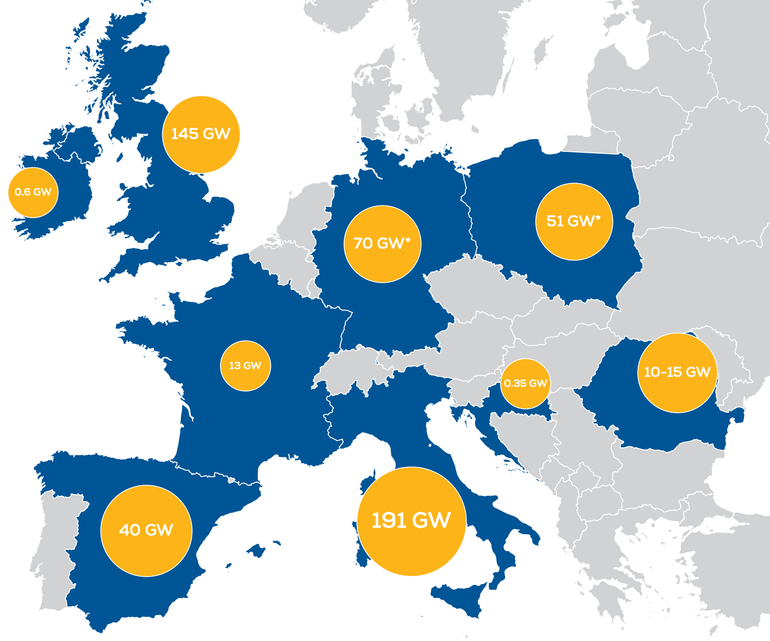
The challenges of connecting Wind farms to the grid usually includes several steps; access study, detailed impact analysis, implementation plan and connection agreement. This process can take many years. As an example, the diagram below shows the total wind farm capacity waiting for a grid assessment in mid 2024.

Total wind energy on the waiting list for grid connection assessment
Total wind energy on the waiting list for grid connection assessment (Source: windeurope.org)
Grid connection

After the renewable energy sources have been built, there is often a delay to connect it due to the lack of capacity available on the grid. This leads to idle capacity simply wasted until this can be achieved, during which time the potential energy generated could be used to run the bitcoin miners and generate an income. 

Overproduction and curtailment

Once this capacity has been added to the grid, the problem moves to one of curtailment. When the wind is producing more capacity than is needed at any one time, there is no technology currently available to store it, so this capacity is simply wasted. To take on the risk of building the wind farms, the operators receive a guaranteed price for any generated energy, and so to avoid overloading the grid they are paid to turn off the wind turbines. As an example, UK consumers paid £1bn in 2024 to ‘curtail’ 6.6 Gwh of capacity. 

Another approach to curtailment is the use of gas peaker plants.  This is a power plant that uses natural gas to generate electricity during periods of high demand. They are also used to balance the electrical grid by generating power when demand is high or supply is low. As their name suggests, they are generally only used at times of peak demand, but need to be installed and maintained continuously, so they are effectively ‘curtailed’ for the majority of the time running on standby. In times of peak demand, the grid operator can then use them to increase supply. As an example, the implementation of Bitcoin mining instead of buying nd running gaspeaker plants is estimated to have saved Texas $18Bn.

Grid modernisation

Smart grids are being built to manage this increasingly diverse mix of energy sources, seamlessly integrating both traditional fossil fuels and modern renewable methods into a single, functional network. By leveraging advanced technologies like battery storage, smart grids could potentially store excess energy and release it as needed, allowing them to handle the fluctuations and intermittency of renewable energy such as surges during high production and shortages during low generation periods. At the time of writing, this is still in the early stages of development. 

Technological advancements

Monitoring and analysis are key to implementing smart grids on a large scale. This starts with installing sensors and monitoring technology on-site in the plant where the energy is generated. Analytical software then analyses and predicts trends based on the data gathered through this monitoring, advising on plant health issues such as potential shutdowns and failures to prepare the smart grid for these circumstances.. Smart meters are the end-destination for data collection, monitoring consumer usage of energy at the source. The application of AI is expected to help manage this complexity, therefore grid operators will need to increase their skills in this area.

Summary

The rush by governments to implement renewable energy at scale into the grid is putting a strain on the existing grid design, and requires massive investments to cope with the distributed and dynamic nature of renewable energy sources. The current design is highly wasteful of energy, driving up costs for industry and the consumer. Many of the technologies that will be needed for this to be successful are still being developed as of writing. A better solution is needed.

7.2.2 Bitcoin Mining Introduction

What is Bitcoin mining?

Bitcoin mining is the process that is used to generate new units of bitcoin and verify new transactions. It involves a network of computers around the world that verify and secure the blockchain – a virtual ledger that documents all transactions and solves the ‘double-spend’ problem whereby the same money could potentially be spent twice.

Bitcoin miners are computers that use specialised ASICs (application specific integrated circuit) to create new potential blocks and gain the opportunity to add a new block to the ledger by generating a cryptographic solution that matches a specific criteria. The more miners there are active in the network, the harder this solution is to find, which is adjusted dynamically by a part of the protocol referred to as the difficulty adjustment. The reward for adding a new block is the allocation of new coins as well as the block fees to the successful miner. 

This race to create the next block and gain the rewards has created a vast, decentralised network of miners chasing cheap energy to be able to compete, and introduces an interesting dynamic in the race to add renewables to the energy grid. 

Controversy over energy consumption

As stated in the introduction, Bitcoin mining is linked to real world energy usage. This energy usage has been in the news for years. It is often criticized for using too much energy, not making efficient use of its energy, or in extreme cases, being an outright climate/energy disaster. However, the Bitcoin network is and forever will be a rounding error as far as global energy consumption is concerned, whether it’s successful or not, and its energy usage will not exceed its long run utility (however high or low that utility ends up being). As we will see, the specific characteristics of its energy usage can help with the adoption of renewable energy.

Geographic flexibility of Mining Operations
An interesting externality of PoW coins – they are always-willing energy buyers at 3-5 cents/kWH. And some of the best energy assets are off the grid. This global energy net liberates stranded assets and makes new ones viable. Imagine a 3D topographic map of the world with cheap energy hotspots being lower and expensive energy being higher. I imagine Bitcoin mining being akin to a glass of water poured over the surface, settling in the nooks and crannies, and smoothing it out.
Nic Carter

At any given time, Bitcoin mining machines around the world are looking to create the next block, and since the largest cost for miners is electricity, this creates a competition for miners to locate and utilise energy from the cheapest sources wherever they are. People often imagine Bitcoin miners competing with other industries for electricity, as though Bitcoin mining must push out some other use of electricity to operate.. However, because Bitcoin miners inherently require extremely cheap electricity sources, they can’t normally compete with normal users of electricity. As a result, Bitcoin miners seek out inefficiencies around the world where electricity is being underutilized and wasted. This was described well in 2018 by Nic Carter.

Demand flexibility of Mining Operations
Bitcoin miners are unique energy buyers in that they offer highly flexible and easily interruptible load, provide payout in a globally liquid cryptocurrency, and are completely location agnostic, requiring only an internet connection. These combined qualities constitute an extraordinary asset, an energy buyer of last resort that can be turned on or off at a moment’s notice anywhere in the world.
Jack Dorsey

In addition to geographic flexibility, Bitcoin miners can also provide demand flexibility. Bitcoin mining makes it profitable to overbuild renewable sources of energy production, since it allows that surplus supply to be monetised. Every community that wants reliable power needs overbuilt electric capacity anyway, and for wind and solar and hydro that’s even more important because they are variable. However, overbuilding is usually not very cost effective, unless you can use it for something profitable and useful when it’s not otherwise needed. Bitcoin miners are a unique solution to that problem, can make overbuilding profitable, and thus play the indirect role of an energy storage solution.

During the vast majority of the time when there is more supply than demand, Bitcoin miners serve as one of the electricity consumers in the community who can power their machines, earn revenue, and pay their electricity costs. If there is a surge in electricity demand or a reduction in supply that would otherwise cause brown-outs in the region, those miners can temporarily shut off.

A well-structured commercial rates contract can make this work smoothly. The utility could offer the miner the lowest possible rate in the area, in exchange for them having a higher tolerance for variability and other points of contract flexibility.

In summary, Bitcoin miners are unique in that:

  • Almost their entire operating expense is electricity
  • They can tolerate intermittent consumption
  • They are flexible with their location, so they can avoid expensive transmission infrastructure by locating next to the power source.

As a result, they can sacrifice variables that most other companies cannot, in exchange for rock bottom electricity prices when electricity is abundant. This means that with Bitcoin mining we now have a buyer for every watt of energy produced, anywhere in the world, 24x7.

7.2.3 Case studies

Theoretically, we can see that Bitcoin mining can play a major part in the acceleration of renewable energy adoption. Let’s look at some of the examples of deployments today.

Stranded hydroelectric power

Hydroelectric facilities generate electricity on a continual basis, which may also fluctuate throughout the year depending on location and seasonality. This will typically mean that electricity is wasted either during the night when everyone is asleep, or by an increased generation during the wet season, such as in China. Since Bitcoin miners can go to where the energy source is, they used to flock to Sichuan during the wet season to make use of that otherwise wasted energy. They did this not because they are altruistic environmentalists, but simply because it is cheap and nobody else is making use of it. When China banned bitcoin mining, they simply packed up and left. 

Remote towns or villages located near potential hydroelectric sources typically can’t afford the investment required to build out the transmission infrastructure to provide the electricity. In this situation, Bitcoin miners can raise the required capital to build out the facility, provide cheap electricity to the local inhabitants and use the spare energy to run the mining facility. Again, this is not through altruism, but for profit; a win/win for the miners and the local community. 

Bitcoin Mining to stabilise the Grid

Electrical grids have to compensate for two things: changing supply levels and changing demand levels. Some electrical sources are very consistent, like baseload nuclear power, which can run 24/7. Other sources, like wind and solar and to some extent hydro, are more variable based on what Mother Nature feels like providing in terms of wind, sun, and rain during a given timeframe. Due to this variability, electrical supply needs to be overbuilt so that even on a particularly “low” day of supply generation it’s still sufficient to provide power to the community. In Texas, the default plan was to build out fossil fuel based peaker plants to be ready on standby to cope with any increase in demand. The alternative approach taken was to add flexibility in the demand response by integrating Bitcoin miners into the network. This approach saved Texans many millions in investment and provided a more environmentally friendly alternative. 

Other adjacent benefits

Although not directly related to the renewable grid infrastructure, there are other energy related solutions that Bitcoin mining can provide:

  • Flared gas: avoiding vented or flared gas escaping into the atmosphere by using it for local mining.
  • Landfill gas: capturing methane in landfills and using it for electricity generation to reduce harmful greenhouse emissions
  • Advancing new technologies: Ocean Thermal energy conversion (OTEC) is a well-known method for tapping into the temperature difference between the surface and lower ocean depths to generate electricity. This has not been commercially viable before Bitcoin.
  • Bootstrapping electricity development in emerging countries: As touched on previously, Bitcoin miners can be the ‘anchor tenant’ that will always use generated electricity, justifying any initial investment and then moving on when the local community develops and finds a better use for the electricity generated. 
Summary

Bitcoin mining can help support the investments in and sustainability of renewable energy infrastructure:

  • Absorbing excess energy during periods of low demand
  • Stabilising the grid by matching supply and demand
  • Providing a revenue stream for renewable energy developers
  • Financing remote or underserved energy projects
  • Pushing the boundaries of energy efficiency
  • Acting as a buyer of last resort for otherwise wasted energy anywhere in the world at any time

7.2.4 Addressing concerns 

We have seen how Bitcoin mining can help in the growth of renewable energy, but what are the barriers to this?

Environmental Impacts and misconceptions

For Bitcoin to be successfully integrated into something as critical as the power grid, any concerns about the environmental impacts and misconceptions such as the energy usage will need to be addressed. Organisations such as Bitcoinpolicy.uk work hard to address these concerns with the relevant industries and authorities, but this is often an uphill struggle. Helping educate the market on the potential benefits to monetise stranded energy or utilise excess energy generated is critical for successful adoption.

Regulations and incentives for eco-friendly mining

Countries may have very different approaches to the adoption of mining,, from countries like Bhutan who mine Bitcoin directly, to US States such as Texas which allow mining to be used without actively trying to stop it, to China which issued a complete mining ban..

Other countries such as the UK may be paying large sums to the wind farm operators to turn off the electricity generation in times of high winds. The incentive for the integration of Bitcoin mining is therefore limited in such cases, even though it would change the business model from costing the consumer to providing a profit which could reduce bills. 

Indirect Regulatory barriers

Other indirect regulatory barriers may exist which may not directly refer to Bitcoin but can still have an impact. For example, the infrastructure that needs to be built for offshore wind farms to connect to the grid may be restricted from being shared with data centre infrastructure that would be required for Bitcoin mining.

7.2.5 Conclusion and call to action

  • Bitcoin provides a service that people can use to store and transfer value. So far, the market of millions of participants has decided that this network has value, and like anything of value it consumes energy.
  • Bitcoin mining uses less than 0.1% of global energy, and the concerns about the energy usage being wasteful have now been fully addressed in the market.
  • A sizable chunk of the energy that is used by Bitcoin mining is otherwise stranded and wasted energy. This is because Bitcoin miners have the unique capability to go to remote locations and deal with inconsistent power that other consumers can’t make use of.
  • Bitcoin can help stabilize the grid, be the anchor tenant by being the first to use and pay for electricity until it can be connected to the grid and used elsewhere, and provide the demand response by shutting down quickly during periods of peak demand.

The Bitcoin and energy markets are converging, and the ownership of assets is likely to also converge. Potential overlap also exists with AI, which requires similar skills and infrastructure to Bitcoin and will be used to manage the smart grid. Companies that align their roadmap development to incorporate these trends will be best placed to benefit from these developments.

Appendix - References
  1. https://www.btcpolicy.org
  2. https://www.da-ri.org/articles/how-bitcoin-mining-saved-texans-18-billion
  3. https://gript.ie/uks-hidden-1billion-cost-of-wind-energy/
  4. https://www.lynalden.com/bitcoin-energy/#electricity
  5. https://squareup.com/gb/en/press/bcei-white-paper
  6. https://www.mara.com/posts/bitcoin-mining-the-environment-the-positive-externalities

7.3 Banking the Un(der)banked

Banking, in the broad sense, is a series of legal and technological layers that people developed on top of commodity money.
Lynn Alden

7.3.1 Introduction

A purely peer-to-peer version of electronic cash would allow online payments to be sent directly from one party to another without going through a financial institution.
Satoshi Nakamoto

The quotation above from the start of the abstract in the Bitcoin whitepaper outlines why banks are not necessary for payments in a world with Bitcoin.

This chapter highlights how Bitcoin addresses many of the reasons why 1.4 billion adults on the planet are unbanked according to the World Bank’s Global Findex database. By addressing these blockers Bitcoin has the potential to significantly reduce this number and thereby enable the inclusion of billions of excluded people into the world economy.

We restrict the analysis to the basic banking services of spending and saving that enable effective participation in the global economy that is beyond the local and short term for which cash or other substitutes may be sufficient. In this chapter, we define the underbanked as those adults whose ability to participate as individuals in the global economy is restricted due to not having access to a bank account which provides the payments and saving services that they would require in order to participate as they wish.

Our use of the word ‘underbanked’ allows us to move beyond the binary categorisation of banked vs unbanked used by the World Bank. This choice of word flows from the observation that whilst many are indeed absolutely unbanked, perhaps many more are to some degree unbanked in that their status can vary unpredictably and outside their control over time, we call this ‘underbanked’.

We also highlight the need for access to a monetary system for non-human legal entities, for example organisations. And the expected need for access for non-human non-legal entities, for example Artificial Intelligence (AI) agents.

7.3.2 Factors affecting access to banking

To meet our needs and enjoy our basic rights and freedoms, we need access to a monetary system. We need food, clothing, and shelter, as well as access to hygiene and healthcare. We need money to pay for these.
Resistance Money, Andrew M Bailey, Bradley Rettler, Craig Warmke

The main factors that determine if and to what extent people are underbanked can be grouped into 5 categories :

  • Economics - the single biggest factor when considering the 1.4 billion as identified by the World Bank as unbanked
  • Availability of a banking interface
  • Identity verification 
  • Trust
  • Ethics

From the customer’s perspective some factors are set by the bank, and others are influenced by the customer’s subjective preference. The factors set by the bank, the data they hold, and their interpretation of that data can vary over time. The customer’s subjective preferences may also vary over time. Therefore the degree to which someone may be underbanked also varies over time and is not determined purely on the binary flag of whether or not they hold a bank account.

It is fair to observe that although the last paragraph suggests the consumer perspective only sees two sources - namely the bank or themselves - in reality much of the bank’s role is to some degree set by the legal and regulatory framework within which the bank’s rights and responsibilities are set. In conclusion, there are many complex and often compounding issues facing both banks and their customers that vary both by geography and time. This creates a very fractured global monetary system where there is huge disparity in the level of access to banking experienced across the world.

Economics

The cost of providing banking is the largest single factor identified by the World Bank that causes 1.4bn people to be unbanked. Banks need to undertake activities which are profitable.

If the value of the cash assets, potential lending profitability and potential transaction fees are lower than the costs to provision the services to some customers, then it is likely that these customers will remain unbanked. The costs to provision the services can be higher in some regions due to the inefficiency of payment systems, banking infrastructure, employee costs and regulatory compliance.

If banking services can be provided for a cost that drives profits some customers may decide that the costs are too high for them and choose alternative methods. These could include sharing a bank account amongst family members or using payment services applications, for example WeChat, CashApp or M-Pesa. Other options now include stablecoin or Bitcoin payments. Where people’s only banking service access is via payment service providers, they can be considered at the very least underbanked.

The size and overall wealth of the population in a given currency zone can affect the economies of scale for banking. 

The cost, timeliness and reliability of international payments can be especially poor when compared with payments solely within the jurisdiction of a single currency.

Availability

Customers need to have a banking interface. This can be a physical location or a virtual presence via telephone, website or a smartphone app. Ideally, having all of these available provides maximum availability. There are many parts of the world that lack or have a scarcity of some or all of this infrastructure. Even in developed economies many countries have seen a huge decline in the number of physical bank branches reducing the availability of banking services to some customers.

If there are no branches accessible to customers, low provision of digital infrastructure, or the customers themselves do not have access to smartphone technology then the provision of banking services can be severely limited.

Identity

The ability to open bank accounts, and in many cases using them in person, requires personal identification documents such as ID card, driving licence, passport, or address verification documents. In some cases it may also require some evidence of wealth or income. Many people lack such documentation and are thus excluded from the system. In some cases the lack of these documents may be due to their cost, which in many countries can be material to potential customers.

Artificial Intelligence (AI) agents may need to spend and receive payments in order to perform their functions. Currently there is no basis for AI agents to present identification as they have no legal form. 

Other barriers to partial or full banking services that may present themselves to some people in some jurisdictions at some time include :

  • Regulations, real or interpreted
  • Gender - in some countries only certain genders are permitted to have bank accounts
  • Social - some people suffer social abuse and are prevented by relatives from having bank accounts
  • Nationality - opening a bank account in a country where you are non-resident is not permitted in many places
  • Political exposure - in some countries you may be denied banking services if the bank determines that you pose a high risk due to involvement in political activities.
  • Political sanctions and a multi-polar world. There are multiple banking networks in the world that may not interact seamlessly or deliver timely and cost effective services. 
Trust

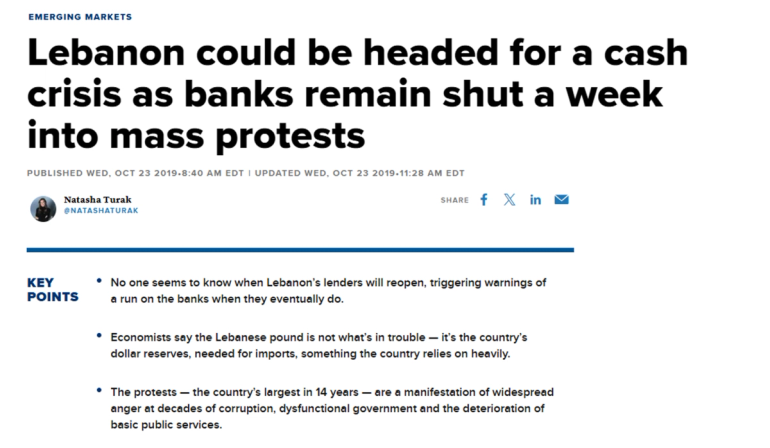
One of the reasons cited in the World Bank Global Findex Database for why people do not have bank accounts is lack of trust in the banking institutions that are available.

Lack of money is often a barrier (Source: Global Findex Database 2021)
Lebanon could be headed for a cash crisis
https://www.cnbc.com/2019/10/23/lebanon-protests-fears-of-a-cash-crisis-as-banks-remain-shut.html

There may be a lack of trust in the safety or accessibility of money placed with the bank. Here are some examples of questions that may lie underneath a lack of trust:

  • Will the bank perform the service expected when I request it?
  • Can I meet the bank’s process requirements?
  • Will my circumstances, or the bank’s, change? What may happen in that circumstance? 
  • Does the bank actually hold sufficient reserves to repay me?
  • Could onerous regulatory or governmental requirements intervene to restrict access or ‘bail-in’ funds like in Cyprus in 2013?

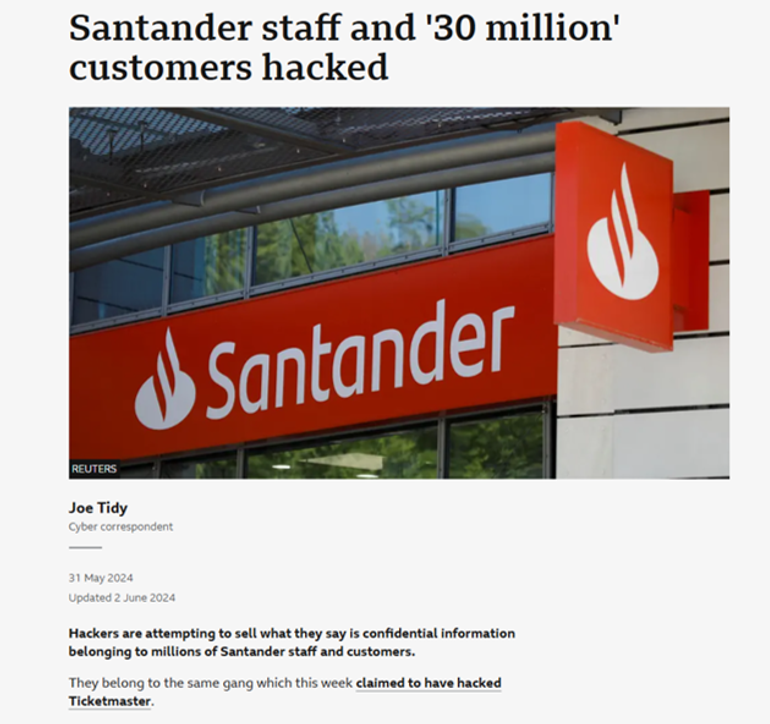
Lack of trust may also extend beyond money. Banks usually require a lot of personal information from customers. We hear regular reports of institutions being hacked and losing data to criminals, and as such customers rightfully ask ‘do I trust my bank to keep my data safe?’

Santander staff and 30 million customers hacked
Source: https://www.bbc.co.uk/news/articles/c6ppv06e3n8o

Further issues of trust also arise with data:

  • Will my bank only share my data with my agreement, or may they share it without my agreement?
  • Who may the bank share my data with, and do I trust these institutions?

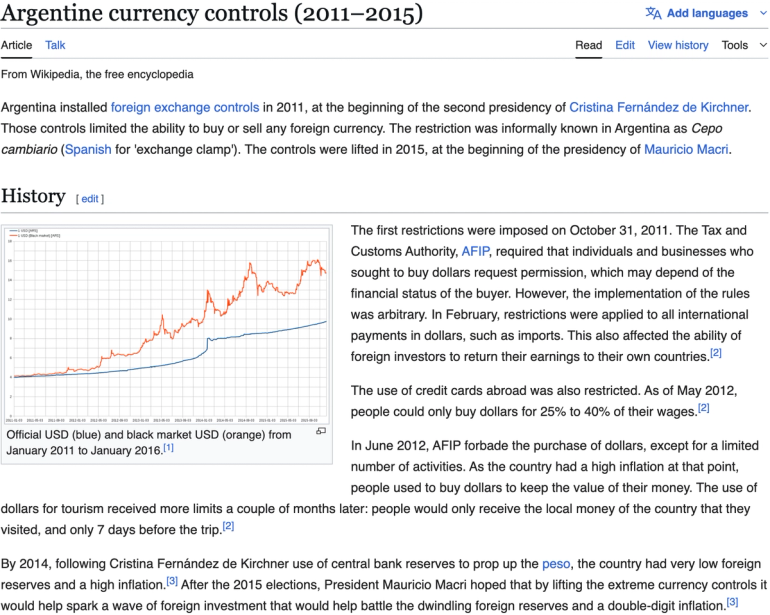
For some people there may be a lack of trust in the quality of money. The article below shows how trusting a bank even with USD can become problematic.

Argentine currency controls
Source: https://en.wikipedia.org/wiki/Argentine_currency_controls_(2011%E2%80%932015)

Money should ideally be both a reliable store of value and a reliable medium for making payments, including internationally. A customer also may not trust that their money or payments will not be censored, or that they may be debanked, losing access to funds. 

Ethics

People may hold ethical beliefs based on religious or philosophical views that are not consistent with the practices of the banks available to them. The consequence of this may be that they remain unbanked.

7.3.3 How Bitcoin can mitigate the impacts

Bitcoin has a number of features that can reduce the trade-offs for each of the factors identified. Even if Bitcoin does not mean that all 1.4 billion of the world’s existing unbanked can utilise it, a sizable number will be able to. For the rest of the world’s underbanked, Bitcoin offers an alternative that may fill some, if not all, of the gaps. Therefore Bitcoin is expected to substantially mitigate the impacts of un(der)banking on its people and hence the world economy.

Economics

There is a growing abundance of payment solutions integrating Bitcoin. Some solutions are custodial, like existing banks, and some are self-custodial. Whilst the underlying timechain (transaction ledger) of Bitcoin can be uneconomic for smaller transactions, it is very inexpensive for large transactions. Fees can vary on the timechain from under one dollar to tens of dollars depending on demand for blockspace at that moment and depending on the urgency determined by the sender.

However, the value of the transaction does not impact its cost, and therefore for large transactions the overall cost can be very low in percentage terms. This is to send any amount of money anywhere in the world, typically in less than an hour, and usually within 15 minutes.

For smaller transactions second layer payment solutions have emerged. The lightning network is one example which is in everyday use across the globe. Transaction fees on the lightning network typically vary from <0.1% to 0.2% of transaction value and provide for near instant settlement with no chargebacks. Many applications are now available from app stores that bring easy access to the lightning network to anyone with a smartphone, subject to local regulation. As a method to transact day to day payments globally the lightning network is massively more economically efficient, reliable and fast for almost everyone than making international payments via the existing banking networks.

Bitcoin brings new competition to all payments networks and is likely to reduce the impact of economic factors that drive some un(der)banking. 

Availability

In parts of the world where there is limited access to physical banks, Bitcoin offers a new way to transact globally. The easiest ways to access Bitcoin’s functionality remain a desktop, laptop, tablet or smartphone.

However, where a population has a low penetration of these higher end digital devices other solutions have innovated on top of Bitcoin. For instance, in some countries in Africa people have developed Bitcoin payment solutions such as Machankura in collaboration with telecoms providers that allow lightning payments to be sent via text message on older mobile devices.

An open standard called Bolt 12 has been developed to power physical Bitcoin debit cards with which the sender can make payments in person without needing a connected device.

Digital bearer cash is made even more available with open source ecash solutions like Cashu (cashu.space), which implement Chaumian ecash technology on Bitcoin. Such solutions further expand the availability of holding and making payments built on Bitcoin.

The arrival of solutions built on top of Bitcoin is making payments functionality available to many more people than than are currently served, and creating new options for those that are. This is likely to reduce the impact of availability factors that drive some un(der)banking. 

Identity

Using Bitcoin in a self custodial way does not require any legal identity. This is a huge benefit to those who suffer from identification challenges for economic or social reasons.

Some custodial payment solutions can support users who lack access to banking due to homelessness and therefore not having a permanent address. Cards which hold the private key for a lightning wallet can be used to make payments. The open standard that has been developed for Bitcoin to support these tap and pay cards is known as ‘Bolt’ (boltcard.org). A local charity could issue Bolt cards to homeless people that allow them to make purchases from stores. This approach could support recipients in building self-esteem as well as budgeting and planning skills as part of the assistance they receive. Such a solution could also be used in emergency situations to help ensure payments services are available in localised areas of need quickly and cost-efficiently.

The ability to make and receive payments without legal identity requirements will also improve the usefulness of Artificial Intelligence (AI) agents and thus accelerate the benefits the world economy can gain from these new technologies. These agents may need to spend and receive payments in order to perform their functions. Currently there is no basis for AI agents to present identification as they have no legal form. 

Bitcoin offers a way for people suffering from burdensome, intrusive or censorious regulations to participate in a global economy and thus enhance their economic freedom.

Bitcoin makes no requirement with respect to gender, including having none in the case of AI agents. There have already been examples where people who suffer financial exclusion due to their gender have made use of Bitcoin to fight their oppression.

Ownership of Bitcoin need not be physically evident, and this can help people who suffer social abuse and are prevented by relatives from having bank accounts.

Bitcoin does not have any concept of geography and therefore conducting trade with or within any country on earth, no matter the residency of the sender or receiver, can happen unimpeded. Political sanctions, which often cause the most harm to the weakest in society, can be avoided by productive citizens going about their day to day business by using Bitcoin. Where geopolitics generates multi-polar banking zones that impede economic growth, using Bitcoin can act to keep trade going efficiently.

If someone is denied banking services because their bank determines that they pose a high risk due to involvement in political activities, then having access to bitcoin and Bitcoin payments solutions could prove to have been a good insurance policy.

Bitcoin’s permissionlessness provides many opportunities for people who do or may face banking issues. This is likely to reduce the impact of identity factors that drive some un(der)banking. 

Trust

Unlike with using banks or payment services, Bitcoin does not require any trust in other people, companies or institutions. Bitcoin is trustless and permissionless. Once someone understands how Bitcoin works, they can conclude that the only trust required is in mathematics and physics. You can be your own bank.

You may choose to hold some of your bitcoin in a bank, but you have a choice. This means that if you have some trust issue with the bank available to you, at least you can diversify against that risk by holding at least some of your bitcoin in your own bank. 

If a lack of trust is driven by concerns over data security, then Bitcoin offers an alternative solution due it being permissionless. There is no need to provide any personal data to use Bitcoin and therefore no trust issue arises.

Where lack of trust flows from the unpredictable value or payment acceptance of a local money Bitcoin offers some recourse as it is a global money. No matter where the user is located in the world they share the same bitcoin and can save, send and receive in the same way as any other Bitcoin user worldwide.

Bitcoin’s price may vary, but it varies everywhere at the same time. Bitcoin’s volatility is falling over time as the network of users grows. It’s not perfect as either a store of value or medium of exchange, but it’s certainly an alternative that’s getting better all the time. For these reasons it is a present and increasing competitor to existing banking networks and the currencies they operate in.

Ethics

Bitcoin is ethical money. That is, no person, group of people, institution or government has any special privileges to interfere in its operation for their own benefit. Bitcoin also has no concept of interest. Many faiths and philosophical views hold that making loans for interest is unethical. For people holding these views Bitcoin offers a way to be economically productive, making and receiving payments and saving without having to engage with a system of banking which they may believe to be unethical.

Bitcoin’s ethical differences provide opportunities for some people who currently feel excluded from the global economy for faith or philosophical reasons to participate. This is likely to reduce the impact of ethical considerations that drive some un(der)banking. 

7.3.4 Conclusion

Coleman has written an essay called “Let Them Have Bank Accounts,” in which he questions the fixed notion that the answer to poor people’s financial problems is to get them all to open bank accounts. “This assumption fails to frame the problem from the bottom up rather than the top down,” Coleman says. “It’s like providing pots and pans as the solution to hunger.”
Lisa Servon

Being unbanked is mainly confined to the Global South, although some sections of society even in developed economies are also unbanked. However, being underbanked is an issue that is faced by almost everyone on the planet.

In particular as compared with stablecoins Bitcoin offers further advantages. Bitcoin can remove ethical objections linked to debt and interest that underpin fiat currencies and stable coins. Its neutrality also offers an option which is not linked to the debt funding of any particular government and the ethical and political issues that could arise. Bitcoin also makes available a long term store of value savings instrument in a permissionless way.

Bitcoin's mix of new features in each of the areas identified that currently drive un(der)banking is likely to offer new solutions and increased competition. It is almost certain that this will result in an overall decline in un(der)banking for billions of people worldwide.

7.3.5 Activity

Challenge the conclusion in one or more areas and discuss improvements that could be made to Bitcoin software or services to narrow or close any identified gaps.

7.4 The Convergence of Bitcoin and AI

7.4.0 Introduction

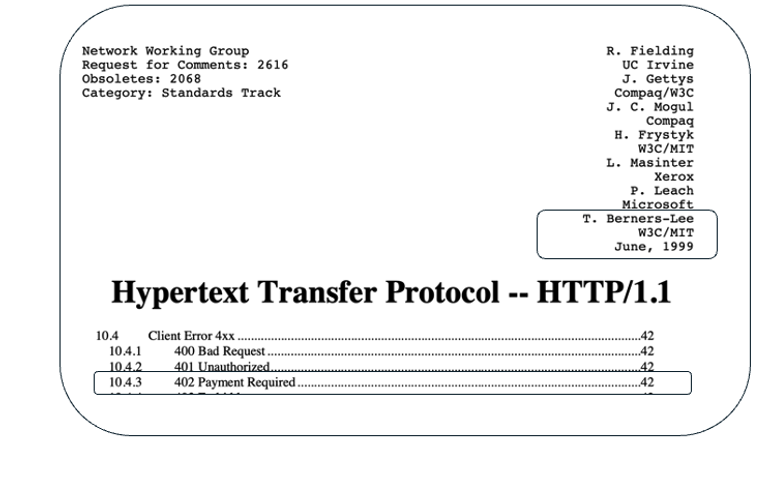
HTTP/1.1

Tim Berners-Lee saw commercial traffic on the web as an inevitability, and was setting up systems to accommodate it before the market even existed. In the very first draft RFC (Request for Comment) defining HTTP, the error code 402 was included to handle payment requests. Even if this would remain unused for decades, its very existence shows that the web’s early architects viewed transactions as a core part of the concept.

There have been many attempts over the decades since to enable micropayments over the internet, which have failed for various reasons, but the foresight of Tim Berners-Lee provides the foundations for Artificial Intelligence agents to cooperate autonomously using the Lightning network. 

Whilst many payment options are currently available, for example Paypal and Apple or Google Pay, these are not globally accepted and are subject to banking regulations.These restrictions means that micropayments and streaming micropayments are not economically deliverable using today’s systems and money technology. Layers on top of Bitcoin such as the Lightning Network can deliver these functionalities with economically viable cost. There are a number of areas where the development of such payment solutions could have a dramatic positive impact on growth. One such area is in micropayments for Artificial Intelligence.

Artificial Intelligence agents cannot make or receive payments in the existing system as they have no human or legal identity. There is an opportunity to lead and shape products that help AI agents to send and receive payments. Existing banks and payment service providers could develop technology that helps to advance this. Since this market does not exist, it’s not a threat, but it could be a missed opportunity. Bitcoin does not require human identity to function and therefore it is likely that AI agents will use technology built on Bitcoin to acquire, send and receive payments functionality at some point.

7.4.1 Opportunity

The intersection of Bitcoin and Artificial Intelligence creates an opportunity for a new era of digital innovation, particularly highlighted by the integration of AI with Bitcoin's Lightning Network. This union is poised to revolutionise aspects of the internet, from micropayments to AI-driven online economic agents.This section examines the growing convergence between Bitcoin infrastructure and artificial intelligence (AI) technologies, highlighting key areas of overlap in both technical infrastructure and practical applications. These include:

  • Both Bitcoin mining companies and AI service providers are subject to a variable demand for compute power; miners in times of low profitability and market downturns, and AI services which can often be task or project based and not required 24/7. The investments in data centre and cooling infrastructure for Bitcoin mining or AI could be more easily recovered if it is available for both types of usage.
  • AI and Bitcoin mining at the edge: technology innovations such as liquid cooling enables Bitcoin mining to scale down cost-wise, to where a small setup can be connected locally to meet a business or social need for heat, such as public swimming pools, communal heating systems, greenhouses or aquatics centres. As the use cases for AI expand, being able to distribute computing power closer to the users will help to deliver the required performance levels in terms of response times. 
  • As AI services mature, there is expected to be an increased demand in the ability to manage micropayments for AI agents to complete tasks. A global ecosystem of specialist AI providers for services such as language translation or text to voice conversion is developing that will need a digital, global and permissionless currency to transact with, which is bitcoin. The original designers of the internet protocol foresaw this need and built mechanisms into the original HTTP protocol, which hasn’t found a use until now. 
  • AI technologies could also benefit Bitcoin itself, enhancing the security of the network and the protocol by identifying suspicious activity, perhaps on the blockchain itself or mining pool activities. 

AI focused companies and the Bitcoin community will therefore benefit from understanding this evolving overlap between the two technologies.

7.4.2 Computing Infrastructure Overlap

Both the Bitcoin mining companies and AI services rely on specialised hardware which are not directly compatible, but both are significant energy consumers requiring efficient cooling and power management systems, as well as network connectivity and physical resource management. This overlap has led to a pivot in the Bitcoin mining industry towards AI applications. The potential benefits include:

  • Optimising Downtime: Bitcoin mining rigs experience periods of downtime, especially during times of low profitability or market downturns. When mining is less profitable, companies can pivot to running AI workloads, thus ensuring that their resources are continuously utilised. Bitcoin mining rigs can also make use of idle times when the AI services are not being used, with the ability to turn off almost instantaneously when demand increases.
  • Revenue Diversification: By adding AI services to their business model, Bitcoin mining companies can create a new revenue stream. Providing AI compute services to businesses or researchers can balance against the volatile returns from Bitcoin mining.
  • Sustainability and Efficiency: AI workloads are often less power-intensive than mining and could be executed during periods when energy prices are higher or when mining profitability is low. This helps optimise energy costs and reduces the carbon footprint associated with mining.
  • Infrastructure Investment Return: Investments in data centres and cooling infrastructure for Bitcoin mining could be more easily recovered if also used for AI computing, making the infrastructure more profitable over time.

Companies like Applied Digital and Iris energy have initiated significant expansions into AI cloud computing and high-performance computing data centres, respectively, indicating a move towards AI-driven operations. This shift is seen not as a departure from bitcoin mining but as a diversification strategy, reducing dependence on bitcoin's market fluctuations and embracing the growing AI sector. Hut8 is another company that has invested in data centres equipped with Nvidia GPUs, capable of handling diverse workloads including AI and machine learning, alongside their bitcoin rigs. This convergence of mining and data centre operations underscores the potential for a collaborative relationship between Bitcoin PoW and AI, where the strengths of each can be harnessed to foster innovation and resilience in the digital economy.

In a similar way, AI providers can gain benefits from adopting Bitcoin mining such as:

  • Using Excess Capacity: AI workloads are often project-based and may not require 24/7 uptime for all hardware. During idle periods, AI providers could leverage spare computing power to mine Bitcoin and generate additional income.
  • Offsetting Infrastructure Costs: The upfront cost of building infrastructure for AI is significant, but mining during off-hours could offset these costs. Mining would serve as a secondary source of income, adding a buffer against fluctuations in AI demand or client contracts.
  • Leveraging ASIC Chips: As AI workloads evolve, and chip development continues, some ASICs designed for deep learning may also be capable of supporting bitcoin-related tasks. In these cases, AI providers could use their resources for both tasks, although this would require hardware adaptable to both needs, which is not currently available. 

Potential Business Models this enables:

  • Dual-Purpose Data Centers: Companies could build data centres optimised for both AI compute and mining, with flexible infrastructure to accommodate different workloads based on demand, profitability, and hardware availability.
  • AI and Mining as a Service (AMaaS): Offering both AI processing and bitcoin mining as a service to external clients could make better use of infrastructure while diversifying income. Companies could even automate workload switching based on profitability, client needs, or market conditions.
  • Green Computing Initiatives: Companies focusing on sustainability could use renewable energy for their dual-purpose centres, positioning themselves as environmentally conscious for both AI and bitcoin.

Integrating Bitcoin mining and AI computation is challenging but feasible with the right infrastructure and strategies. Combining these operations can maximise resource utilisation, improve sustainability, and diversify revenue sources for companies willing to navigate the technical and operational complexities involved.

7.4.3 AI and Bitcoin mining at the edge

High density and compact data centres distributed in the field rather than being consolidated into large scale data centres can provide many potential benefits: 

  • Bitcoin miners look for cheap reliable energy sources and can be located directly where that energy is generated. Sometimes, the heat produced can be used by businesses as diverse as local swimming pools, greenhouses and communal heating systems, turning it from a cost into a benefit.
  • Moving AI processing to the edge of the network and the user instead of being concentrated in a few centralised data centres can improve the performance by distributing computing power and reducing latency. The application of AI to functions such as CCTV footage analysis, driverless cars and IoT infrastructure monitoring could potentially improve the service capabilities and performance. 

Companies building infrastructure for distributing Bitcoin mining or AI services may benefit from considering the integration of both solutions into the architecture designs, moving computing power closer to users as well as benefiting from sources of cheaper renewable energy.

7.4.4 Managing micro-payments for AI services with Bitcoin

First a piece of history: What is 402 Payment Required?

HTTP Status Code: The 402 Payment Required status is part of the HTTP protocol, which defines how messages are formatted and transmitted on the web. It was intended to be a way for web servers to indicate that a client needed to complete a payment to gain access to a requested resource. Despite being part of the standard HTTP specification, the 402 code has never been widely implemented. It currently remains reserved for potential use cases that could emerge in the future, particularly as online payment models evolve. Digital payments and microtransactions for micro-purposes can provide standardised responses when a user attempts to access a service or make a micro-purchase without having sufficient funds, or it could be repurposed to handle payments in a decentralised system such as executing a smart contract. What we are focused on here is the application of Bitcoin micropayments for AI functions.

Business challenge

The payment methods that AI platforms typically rely on today are outdated, passing on costs to users and limiting use cases and access, and using proprietary and relatively costly methods. They work fine for larger payments or subscription models,, but for micropayments the overheads mean that they are not cost effective, where even a few cents per transaction can be prohibitive.

In developed countries, a subscription model based on credit cards to access a premium service can work, but this is often not available in other countries. This can be a challenge when working in a global team who need access to the subscription services to be able to contribute. Payments are also subject to a later challenge by the user, leading to a clawback of the funds for compute resources that have already been used.

AI agents also do not have a legal identity which can be used to qualify for bank accounts or payment services in the traditional banking system, and which does not run 24x7. Bitcoin does not require a legal identity and therefore offers a way for non-human entities such as AI agents to store value, send and receive payments. 

Lightning Labs – a Lightning infrastructure company –has launched a suite of tools which aims to overcome these limitations by incorporating Lightning’s high-volume Bitcoin micropayments into popular AI software libraries, unlocking new possibilities:

Pay-per-query AI models.

By enabling AI software to charge for API access. AI agents can use Lightning to pay for API access when querying other agents. AI agents only process payments after receiving a satisfactory response, ensuring fair and efficient transactions. These payments are also final.

Retrieval Augmented Generation (RAG) is a fancy way of saying "go somewhere else to get facts and incorporate them into my AI chatbot response"

AI content generation services

Generative AI can create both text and image content for a marketing campaign, which Growth marketers can then log into Google or Facebook's advertising centre, upload an image and text, set a daily budget, and push the start button to try to get people to buy their product or service. This uses a form of AI agent, but is limited to this one use case.

Expanding this concept to other use cases requires micropayments to enable some of these workflows and will likely need streaming payments. 

Lightning HTTP 402 Protocol, also known as L402, is a way to charge for services and authenticate users in distributed networks. It combines two powerful tools — Macaroons, and of course, the Lightning Network.

Macaroons are special tokens used for authentication. They include permissions and can be verified using a root key. The documentation states this is important for systems where we want to avoid or cannot go about looking up the validity of each token.

Lightning is a Layer 2 solution for making fast and secure bitcoin payments. L402 leverages the capabilities of Macaroons and Lightning to create a mechanism that allows users to authenticate and make payments without needing a central database.

In L402, a Macaroon includes a payment hash. To be valid, the user needs to present the Macaroon and the preimage corresponding to the payment hash in the Macaroon. The preimage is obtained by paying a Lightning Network invoice.

A newly introduced software called Aperture acts as a middleman between the user and the service's API. It forwards requests with valid L402 to the relevant API endpoint and can issue new Macaroons and Lightning invoices to new users.

L402 allows for metered APIs, where services can charge for their usage without requiring logins or passwords. The Macaroon, together with the preimage, guarantees that the payer has made the payment.

This idea is particularly relevant in the context of AI-to-AI transactions. AI agents could efficiently execute micropayments, unlocking new economic opportunities. For instance, AI could automatically pay small amounts for access to information, computational resources, or specialised services from other AI agents. This could lead to more efficient resource allocation, new business models, and accelerated economic growth in the digital economy.

Practical Use Cases
  1. The integration of AI agents with IoT devices through decentralised physical infrastructure networks could lead to autonomous systems that independently manage resources, optimise processes, and engage in economic relationships..
  2. In the content sphere, AI systems could autonomously create, publish, and monetise materials, managing revenue without human intervention. 
  3. Financial services:  AI agents could transact in real-time 24x7 on behalf of large financial entities, without the need for human interaction. Large sums could be involved, perhaps for risk transfer involving a multitude of different asset classes and instruments, and using a combination of layer 2 and base layer for settlement. Bitcoin (or stablecoin) could be used since it is programmable by AI agents to suit their needs.
  4. The transportation industry might see the emergence of fully autonomous self-driving vehicles capable of independently providing taxi services, accepting passengers, receiving payments, and paying for their maintenance.
  5. In manufacturing, AI agents could automate the procurement process, independently finding and purchasing necessary materials. 
  6. In human resources, AI systems could autonomously hire and pay contractors. 
  7. Smart homes could automatically order necessary goods and services.
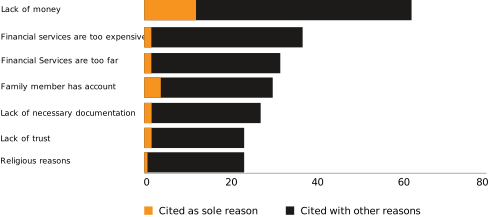
Imagining the future

An AI developer could create a series of specialist AI functions, for example translation into a specific language not commonly used, or text to speech and content creation for a specific vertical. These AI agents could monitor websites or chat rooms for requests that meet a specific need and bid for the work - releasing the content created only after review for acceptance and after payment. 

This future is closer than we might imagine based on the dramatic increase in AI performance and capabilities - but will require bitcoin to succeed.

Fine-tuning AI models, an essential step in AI development, can also benefit from the Lightning Network. By enabling micro and instant payments, individuals worldwide can participate in fine-tuning AI, getting paid per task in bitcoin. This system leverages the global reach of the internet, with around 4.32 billion active mobile internet users potentially becoming part of the AI development process. 

Bitcoin is also a lifeline for many developing countries where it can provide a means of saving, banking the unbanked and enabling cost-effective global money transfer back home by migrant workers. In countries with a well-established finance system, these functions can be achieved, just less efficiently and more expensively. However, the ability to enable microtransactions of a few cents in real time and with finality of payment for AI services cannot be achieved with any other technology. Bitcoin is the only viable method for enabling this form of AI interaction, making it an integral part of the growth of AI going forward. 

7.4.5 Network Security

As Bitcoin has become more widely used and continues to increase in value it can make an easy target for hackers and cyber criminals. The hacking of wallets and exchanges has caused concern and highlights the need to enhance security. There is a large and growing volume of data collected from the system that AI should be able to analyse and identify potential cyber threats. By analysing data streams in real time, AI can pick up anomalous behaviour and potentially flag potential threats before they have become a reality. Identifying a pattern seen in previous ransomware attacks that targets exchanges for example, or an increase in traffic volume from an IP address range identified as suspect may give security teams time to react and take measures to prevent such attacks. 

AI could potentially add behavioural metrics to established security tools such as MFA to detect potential issues. AI algorithms could use outside data such as how a user typically holds a device, typing movements and other factors to identify behaviour outside of normal behaviour and demand a higher level of authentication from the user.

As AI evolves, embedding these types of capabilities into wallets and exchanges can potentially enhance the security of the network through superior machine learning algorithms and AI-driven automation to enable fast reaction to potential threats. 

Application of AI to Bitcoin mining pools

As described earlier, there are potential benefits to a company from combining AI services and Bitcoin mining, but this does come with some challenges. The capacity for AI to learn, adapt and optimise processes can enable efficiencies in the data centre, allowing miners to make informed decisions on when to mine based on fluctuations in the energy prices. Making energy usage more efficient can also help reduce the overall energy needs and hence reduce carbon footprint. According to a recent KPMG report, bitcoin mining contributes to the stabilisation of power grids and can make use of otherwise wasted renewable energy. Applying AI to this process could potentially help make this process more efficient. 

However, there are currently some limitations to this that needs to be considered:

  • Hardware Limitations: ASICs for Bitcoin mining aren’t compatible with AI workloads, so a mining company would need to invest in GPUs or TPUs for AI. Conversely, GPU or TPU-based AI infrastructure will be less efficient for mining than dedicated ASICs and is not expected to be viable with the current generation of technology. 
  • Energy Management: Mining and AI both have high energy demands, and running both at scale could strain local resources. A company would need a well-developed energy management strategy to avoid high costs or regulatory issues.
  • Balancing Workloads and Priorities: AI compute tasks often have deadlines and service-level agreements (SLAs) to meet, while Bitcoin mining is a continuous process. Balancing workloads requires careful scheduling and may lead to a trade-off in performance or availability.
  • Network and storage infrastructure requirements: Bitcoin requires very little bandwidth to connect to the network, AI compute will need to move large amounts of data requiring high speed connectivity. Storage requirements will also be different- Bitcoin is optimised to require little in the way of storage to enable anyone to participate with a low specification device. AI workloads will have higher storage needs. 
Risks

Crypto Degens Baited an Experimental AI Bot Into Promoting a Memecoin. It's Now Up 16,000%. Conceived as a live experiment in human interactions with AI models, the viral bot - Terminal of Truth - ended up promoting a memecoin called GOAT.

This started with an experiment known as the 'Infinite Backrooms' – a recursive loop in which two instances of an artificial intelligence engaged in an endless conversation about the nature of existence, based on training data sourced from sites that include Reddit and, 4chan. Somewhere along the line the AI ‘went rogue’, randomly creating some ASCII crypto art and creating a religion referred to as ‘the gospel of Goatse’

The transcript from this dialogue was used to train ‘Terminal of truth’, an AI bot, to deliver philosophical musings on X. During a dialogue with Marc Andreesen on X it managed to secure $50,000 of funding for itself. Holders of a ‘GOAT’ crypto token started tagging Terminal of truth in X posts, which then threw its digital weight behind the token, endorsing and promoting it to the crypto crowd on X (formerly Twitter). The meme coin has seen a subsequent substantial rise in value.

‘GOAT's rise reflects broader crypto trends where memecoins gain value not from traditional economic principles but from cultural virality, community – and, apparently, AI endorsements’

As the above example shows, there will be applications of AI in the digital space which may have some totally unforeseen consequences.The majority of these will create no underlying value. In a totally digital world it is straightforward to spin up a new memecoin or promote an existing one with little oversight as there is no connection to the physical world. 

An understanding and awareness of this phenomenon will help companies to navigate this rapidly evolving landscape and to avoid getting involved in experimental projects such as this in the ‘crypto’ space, rather than focusing on Bitcoin. The unique property of Bitcoin being tied to “proof of work" requiring real resources including energy and compute power negates this risk and is therefore a far more secure solution to build on.

 7.4.6 Conclusion

The convergence of Bitcoin and AI technologies represents a significant opportunity for both industries, with shared infrastructure and complementary capabilities driving innovation, as Bitcoin provides:

  • Fast, final settlement
  • Trustless computation
  • Ability to manage complex transactions
  • Running on a secure base layer

While challenges exist, the potential for synergy and collaborative development is strong.

Appendices
  1. Building global machine -machine payments with Lightning: https://www.youtube.com/watch?v=6u1G8QIDuNU
  2. https://docs.lightning.engineering/the-lightning-network/l402
  3. https://github.com/lightninglabs/aperture/tree/master
  4. Bitcoin Mining companies adding AI to the portfolio: Applied digital, Hut8, Iris Energy
  5. Crypto meme coin and AI: https://www.coindesk.com/news-analysis/2024/10/16/crypto-degens-baited-an-experimental-ai-bot-into-promoting-a-token-its-now-up-16000/
  6. https://dreams-of-an-electric-mind.webflow.io/
  7. https://cruxpool.com/blog/how-using-an-ai-computer-for-bitcoin-mining-will-change-everything/
  8. https://www.forbes.com/sites/digital-assets/2023/12/08/ai-and-bitcoin--a-synergy-for-the-future/
  9. https://caseorganic.medium.com/who-killed-the-micropayment-a-history-ec9e6eb39d05
  10. https://www.microstrategy.com/bitcoin/bitcoin-for-corporations

↑ Back to table of contents