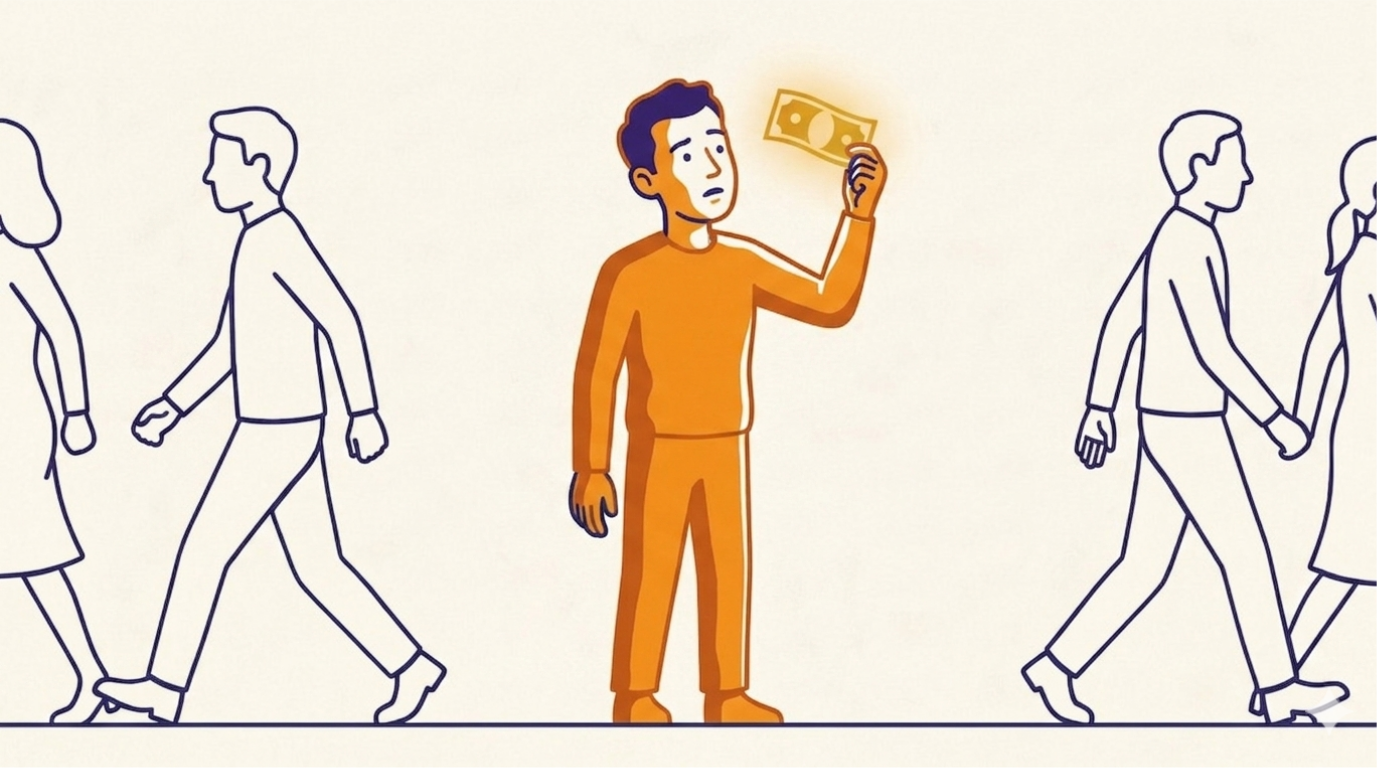
Not earning it, not spending it, but actually thinking about what it is and how it works.
That might sound like a strange thing to say, but it's true.
We spend our entire lives using money without ever questioning it.
Henry Ford once said that it was a good thing most people didn’t understand the banking and monetary system, because if they did, there would be a revolution.
Whether or not you agree with Ford, the question is worth sitting with: what don't most of us know about the money we use every day?
This course is built around that question.
By the end of it, you'll have a clear understanding of what money actually is, why the current system has serious problems, what Bitcoin is, and how you can start using it.
What is Money?
Money has no intrinsic value.
That might sound strange, but think about it, nobody wants money for its own sake. We want it for what it can buy. A $10 bill is just a piece of paper. What makes it useful is that other people will accept it in exchange for things we actually want.
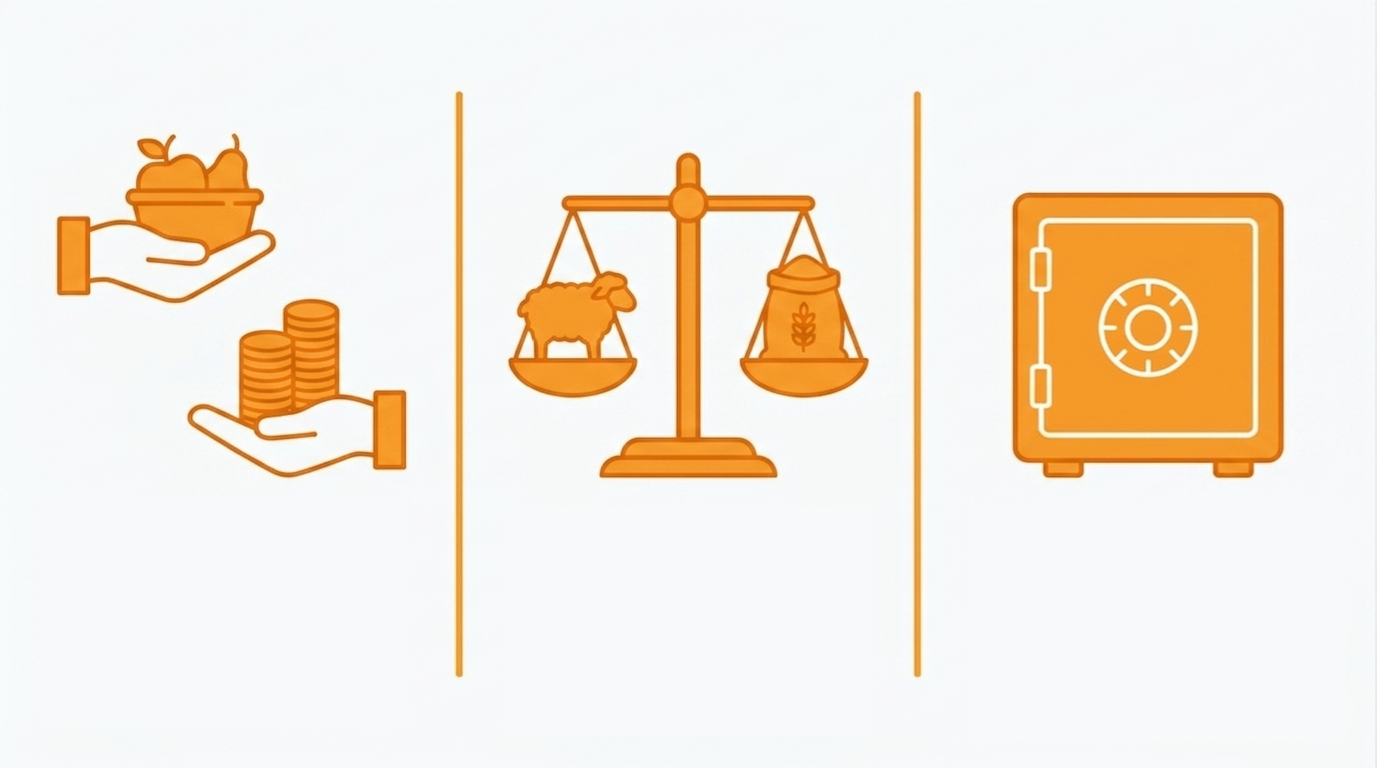
This is what separates money from barter.
In a barter system, trading only works when both people happen to want what the other has. If you grow apples and I grow bananas, we can trade, but only if you actually want bananas. Money solves this by giving everyone a common medium they can use with anyone, at any time.
For something to work well as money, it needs to do three things.
It needs to be widely accepted as a medium of exchange. It needs to work as a unit of account, giving us a shared way to measure and compare the value of different things. And it needs to store value,meaning it should hold its purchasing power over time.
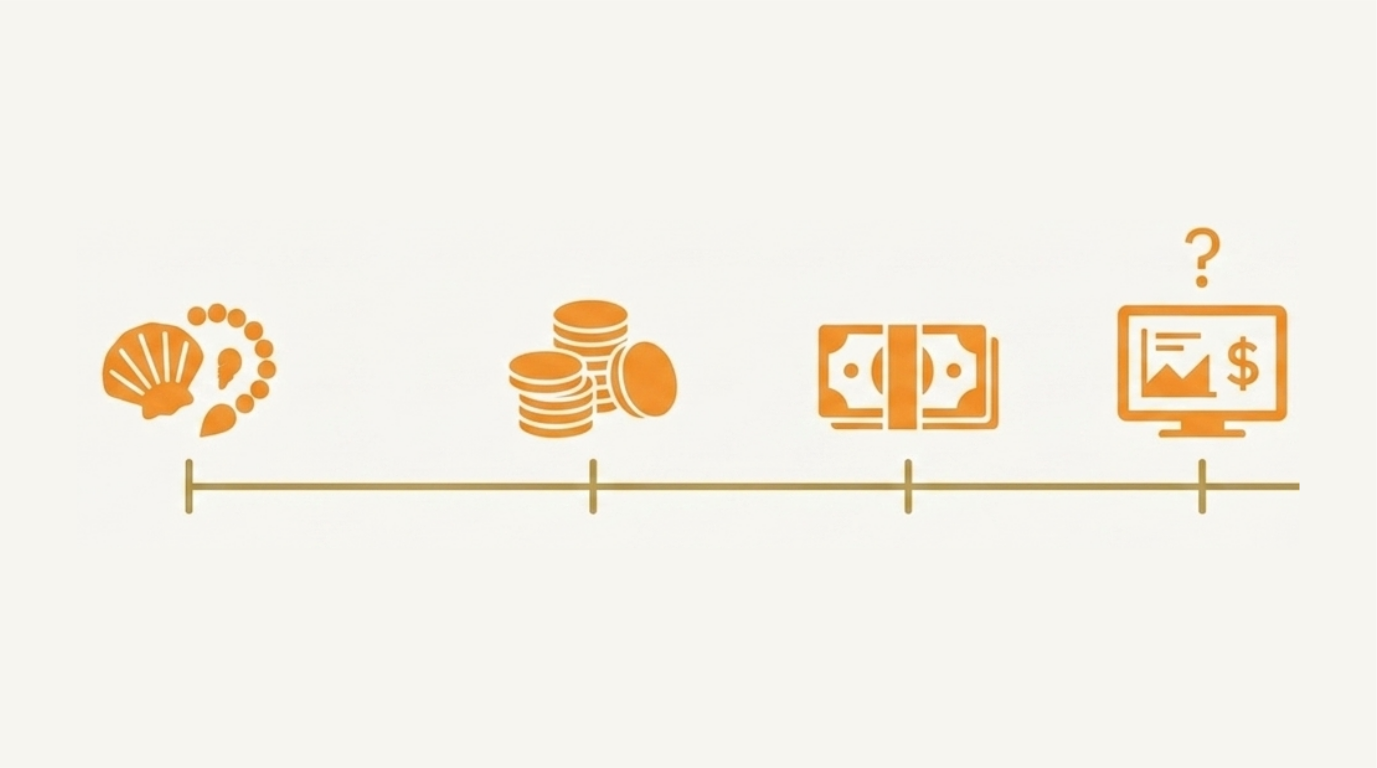
Throughout history, many things have served as money: shells, salt, beads, precious metals. Gold and silver eventually became dominant because they were scarce, durable, and accepted globally. But carrying gold around is impractical, so banks began issuing paper notes as receipts, with each one representing gold stored in a vault. This era is known as the gold standard.
Over time, governments started printing more paper than they had gold to back it. Then in 1971, the US officially ended the dollar's convertibility to gold, an event known as the Nixon Shock. From that point on, money became what economists call fiat money. The word fiat means "by decree." Our money isn't backed by any physical asset anymore. It exists only because the government says it does.
We went from money backed by something, to money backed by someone.
What's Wrong With Our Money?
When people hear the word inflation, they usually think it means prices going up.
That's true, but it's only the symptom.
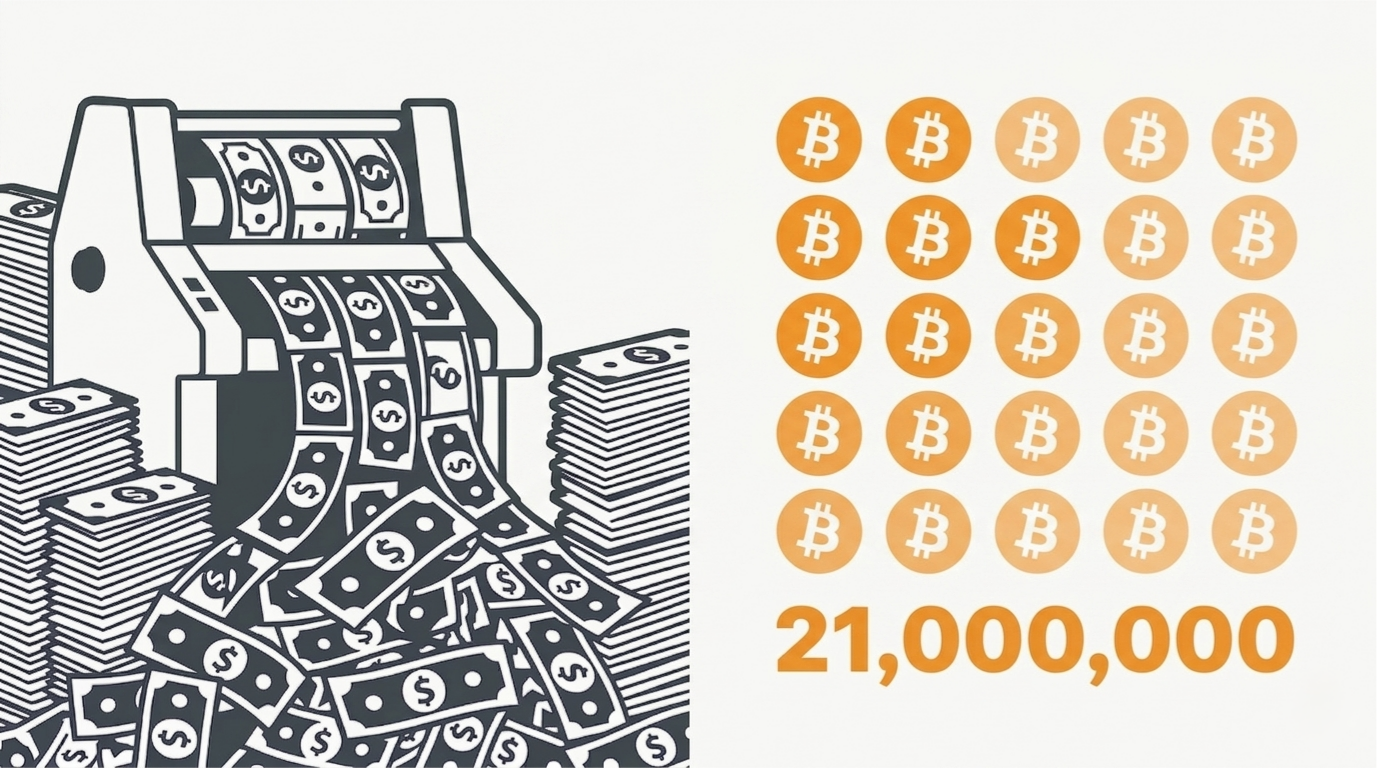
The underlying cause is something more fundamental: money can now be created in unlimited quantities, and the people who control that process are a very small group.
Think about what makes something valuable.
The original Mona Lisa is worth more than any copy of it, not because it looks better, but because it's the only one. Scarcity creates value. The same logic applies to money.
The more units of something exist, the less each one is worth.
The US dollar has lost over 96% of its purchasing power since 1913.
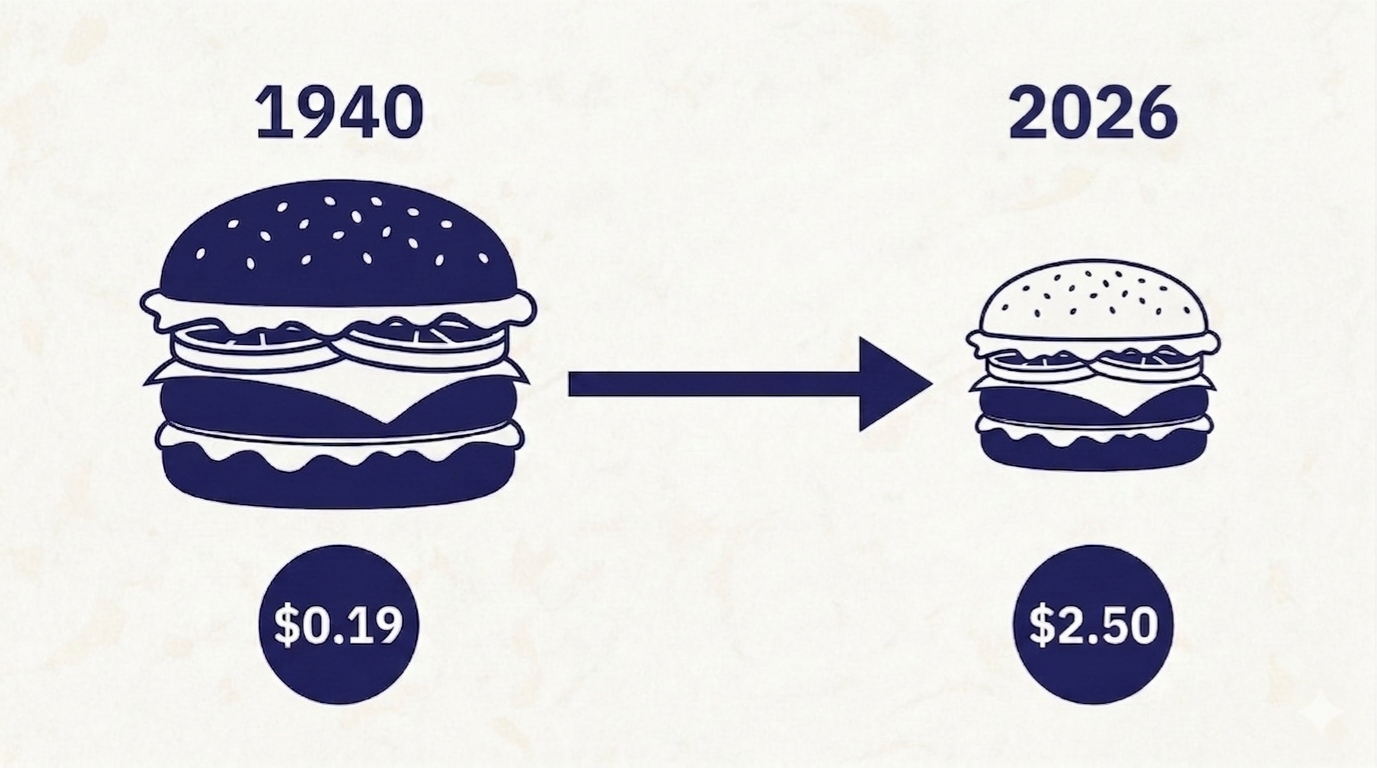
A cheeseburger that cost 19 cents in 1940 costs over $2.50 today. That's not because cheeseburgers got better, it's because each dollar is worth less than it used to be.
Your savings, your salary, and your purchasing power are all quietly eroding over time, not because of anything you did, but because of how the system is designed.
This is the problem Bitcoin was built to solve.
What is Bitcoin?
Bitcoin is a digital form of money that is decentralized, finite, and operates entirely outside the control of governments and banks. Each of those three qualities matters.
Being decentralized means there is no central authority, no government, no corporation, no single point of control. The network is maintained by its users, and anyone anywhere can participate. Compare that to the current financial system, where printing money or starting a bank is effectively impossible for ordinary people.
Being finite means there will never be more than 21 million bitcoin in existence. That number is hardwired into the system and cannot be changed without the agreement of the entire global network. As fiat money supply expands without limit, each bitcoin becomes more valuable by comparison. It is the scarcity that fiat money lacks.
Being independent means no one can block your transactions, freeze your funds, or change the rules. Bitcoin is censorship-resistant in a way no bank account could be.
One misconception is that Bitcoin is out of reach for most people because of its price. But you don't need to buy a whole bitcoin. Just as a dollar breaks into 100 cents, a bitcoin breaks into 100 million units called satoshis. You can own a meaningful amount of bitcoin for just a few dollars.
The network runs on three participants: users who send and receive bitcoin, nodes that verify transactions and enforce the rules, and miners who add new blocks to the record. That record, the blockchain, is public, permanent, and visible to anyone. No middlemen, no gatekeepers, full transparency.
How Do You Use Bitcoin?
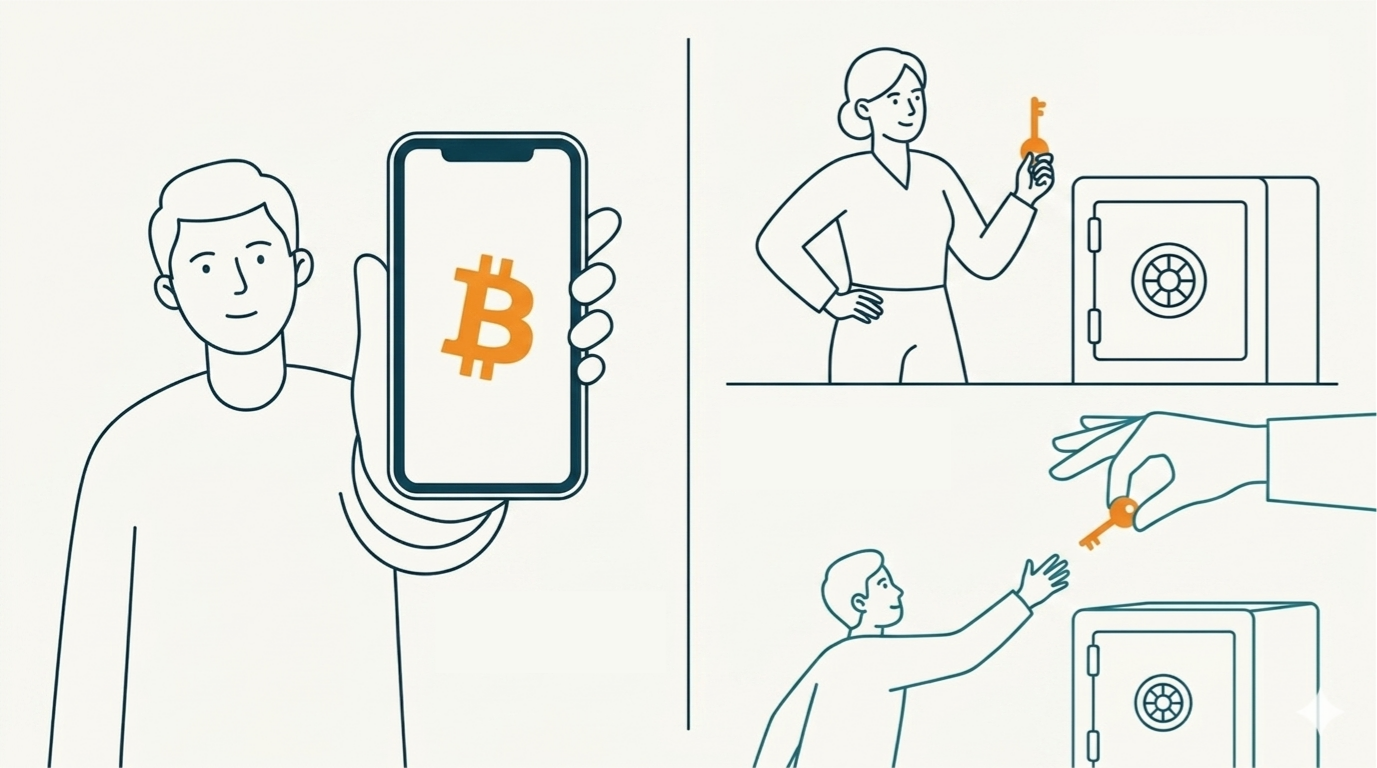
A Bitcoin wallet is simply an app that lets you send, receive, and manage your bitcoin. The most important thing to understand before choosing one is custody.
Who actually holds your bitcoin?
With a self-custodial wallet, you are in full control.
When you set it up, it generates a seed phrase: a sequence of 12 or 24 ordinary words in a specific order. This phrase is your backup, from which your wallet’s private keys are derived. Anyone who has it can restore your wallet and control your funds.
Write it down on paper and store it somewhere secure, completely offline. Never take a photo of it, email it, or save it digitally. Remember: whoever has those words has access to your bitcoin, and if you lose them without a backup, your bitcoin is gone permanently.
With a custodial wallet, a company holds your bitcoin on your behalf, like a bank.
Setup is easier and you don’t need to manage a seed phrase, making these wallets a good option for small amounts and everyday spending. The tradeoff is that you are trusting that company with your funds, and if they freeze accounts, get hacked, or shut down, you may lose access.
A useful phrase in the Bitcoin world: not your keys, not your coins.
Here are some options for wallets that your can try yourself. As always, do your own research and understand what you’re doing before depositing funds that you’re not willing to lose.
Self-custodial wallets
Name
Description
Source
Bluewallet
A powerful yet simple mobile wallet with quick setup, an intuitive Send/Receive interface, and watch-only tracking for hardware wallets, keeping your on-chain Bitcoin separate and secure.
bluewallet.io
Blockstream Wallet
A security-focused wallet with simple singlesig setup, an intuitive Send/Receive interface, and seamless Jade pairing, supporting both Bitcoin and the Liquid network.
blockstream.com/app
Bull Bitcoin Wallet
A privacy-focused, Bitcoin-only wallet with a dual-wallet system for savings and spending, real-time fee data, and watch-only hardware wallet support.
wallet.bullbitcoin.com
Aqua Wallet
A Bitcoin “superapp” for everyday spending, with a streamlined interface for Bitcoin, Lightning, and Liquid.
aqua.net
Manna
A modern, all-in-one wallet with a clean self-custodial interface for Bitcoin, Lightning, and Liquid, plus encrypted chat and a built-in BTC Map to find places that accept sats.
mannabitcoin.com
Custodial wallets
Name
Description
Source
Blink
An entry-level Bitcoin wallet for daily use with instant custodial Lightning payments, and a built-in merchant map for finding local Bitcoin-accepting shops.
blink.sv
Wallet of Satoshi
One of the world’s simplest Lightning wallets, with instant custodial setup, a streamlined Scan-to-Pay interface, and a personal Lightning Address for easy everyday transactions.
walletofsatoshi.com
For getting started, any of the self-custodial wallets mentioned are well-regarded options that walk you through the seed phrase creation process.
For smaller, everyday payments, Blink and Wallet of Satoshi are custodial Lightning wallets. They are fast, cheap, and beginner-friendly.
The Lightning Network is a layer built on top of the Bitcoin blockchain designed for quick, low-cost transactions, ideal for day-to-day use.
What's Next?
Fiat money is broken by design
The system is built in a way that gradually transfers purchasing power away from ordinary savers and toward those who control the money supply. This isn't a conspiracy, it's visible in the data and confirmed by history.
Bitcoin is a genuine alternative
Since 2009, there has been a form of money that is scarce, neutral, and open to anyone, one that restores the core functions money is supposed to perform without requiring trust in any institution or authority.
Getting started is easier than it seems
Download a wallet, learn how to use it, and start with small. You don't need to understand everything before taking the first step. Understanding comes with doing.
This is just the beginning
The Bitcoin Diploma is the next step, building on what you’ve learned here. Stay curious, keep asking questions, and welcome to the rabbit hole. Learn more at www.myfirstbitcoin.org