मॉड्यूल 4 / 8

उद्योग क्षेत्रों पर प्रभाव

4.1 बिटकॉइन और ऊर्जा

कैम्ब्रिज यूनिवर्सिटी इलेक्ट्रिसिटी कंजम्प्शन इंडेक्स (CBECI) के अनुसार, बिटकॉइन की बिजली की मांग लगभग 148 टेरावाट (TW) प्रति वर्ष है (3 अक्टूबर, 2024 तक), जो दुनिया की कुल बिजली खपत का लगभग 0.6% है।

4.1.0 बिटकॉइन की ऊर्जा पर बहस
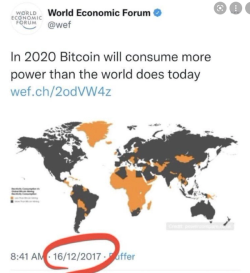
In 2020 Bitcoin will consume more power than the world does today

बिटकॉइन नेटवर्क का ऊर्जा के साथ संबंध शायद इसका सबसे विवादास्पद और गलत समझा गया पहलू है। एक ऐसी दुनिया में जहाँ राजनीतिक चर्चाएँ औद्योगिकीकरण और उपभोक्ता व्यवहार के रुझानों के कारण पर्यावरण पर मानव जाति के प्रभाव के प्रति अत्यधिक संवेदनशील होती जा रही हैं, वहाँ एक ऐसी तकनीक का उभरना जो अपने संचालन के लिए बड़ी मात्रा में ऊर्जा का उपयोग करती है, निश्चित रूप से सार्वजनिक जांच का केंद्र बनेगी। हालांकि, इस जांच का अधिकांश हिस्सा विशेष रूप से सूचनात्मक नहीं है, और कई मामलों में यह अत्यंत गलत है, जैसा कि ऊपर वर्ल्ड इकोनॉमिक फोरम के ट्वीट से स्पष्ट है।

आलोचक तर्क देते हैं कि बिटकॉइन माइनिंग की ऊर्जा-गहन प्रकृति — जिसे प्रूफ-ऑफ-वर्क (PoW) सर्वसम्मति तंत्र द्वारा संचालित किया जाता है — कार्बन उत्सर्जन में योगदान देती है, जिससे वैश्विक ऊर्जा ग्रिड पर अतिरिक्त दबाव पड़ता है, जो अंततः जलवायु लक्ष्यों को कमजोर करता है। बिटकॉइन की ऊर्जा खपत को उजागर करने वाली रिपोर्टें, जो कभी-कभी अर्जेंटीना जैसे पूरे देशों से भी अधिक होती हैं, इस चिंता को बढ़ाती हैं कि नेटवर्क स्थिरता प्रयासों का समर्थन करने के बजाय पर्यावरणीय क्षरण को बढ़ा रहा है।

हालांकि, एक बढ़ती हुई वैकल्पिक सोच यह सुझाव देती है कि बिटकॉइन माइनिंग वास्तव में ऊर्जा ग्रिड के आधुनिकीकरण और नवीकरणीय ऊर्जा स्रोतों की ओर संक्रमण को सुविधाजनक बनाने में सकारात्मक भूमिका निभा सकती है।

तो, क्या बिटकॉइन पर्यावरण के लिए शुद्ध रूप से लाभकारी हो सकता है? क्या यह ग्रिड की दक्षता और स्थिरता में योगदान कर सकता है, और इस प्रकार नवीकरणीय ऊर्जा उत्पादन की ओर संक्रमण को आगे बढ़ा सकता है?

4.1.1 सुरक्षा के रूप में ऊर्जा का उपयोग

बिटकॉइन नेटवर्क का मुख्य कार्य लेन-देन की एक विकेंद्रीकृत लेजर को बनाए रखना है। इसे सत्यापित करने के लिए किसी केंद्रीय प्राधिकरण की अनुपस्थिति में, नेटवर्क को लेजर की अखंडता सुनिश्चित करने और 'डबल-स्पेंड' को रोकने का एक तरीका चाहिए। सभी नेटवर्क प्रतिभागियों को किसी विशेष समय पर लेजर की स्थिति (किसके पास क्या है) पर सहमत होना चाहिए। यहीं पर माइनिंग की भूमिका आती है।

माइनर विशेष कंप्यूटर हार्डवेयर या ASICs (एप्लिकेशन स्पेसिफिक इंटीग्रेटेड सर्किट्स) का उपयोग करते हैं, जो एक विशाल वैश्विक नेटवर्क में तैनात होते हैं। ये ASICs बार-बार एक क्रिप्टोग्राफिक पहेली के समाधान का अनुमान लगाने के लिए डिज़ाइन किए गए हैं, जिसमें प्रति सेकंड क्विंटिलियन्स गणनाएँ करनी होती हैं। एक सफल अनुमान के परिणामस्वरूप माइनर को नए ढाले गए बिटकॉइन के रूप में इनाम मिलता है और नेटवर्क वास्तविक समय में क्रिप्टोग्राफिक रूप से सत्यापित करता है कि माइनर सफल रहा है। इसलिए इस प्रक्रिया को 'प्रूफ-ऑफ-वर्क' कहा जाता है।

सामूहिक रूप से, माइनरों का वैश्विक नेटवर्क विशाल मात्रा में कंप्यूटिंग शक्ति प्रदान करता है। यह डिज़ाइन के अनुसार होता है क्योंकि यह नेटवर्क को सुरक्षित बनाता है - कोई भी बुरा अभिनेता जो अपने लाभ के लिए नेटवर्क पर हमला या हेरफेर करना चाहता है, उसे नेटवर्क के अधिकांश हिस्से को नियंत्रित करने के लिए पर्याप्त कंप्यूटिंग शक्ति तैनात करनी होगी। यदि यह संभव भी हो, तो इसके लिए अत्यधिक वित्तीय संसाधनों की आवश्यकता होगी और फिर भी बिटकॉइन नेटवर्क को पर्याप्त समय तक बाधित करना असंभव के करीब होगा। इसलिए, इस प्रकार के हमले के सफल होने की संभावना ऊर्जा अवरोध के कारण लगभग शून्य हो गई है।

बिटकॉइन बिजली बर्बाद नहीं करता, इसका उपयोग सुरक्षा के लिए किया जाता है।
काइल टॉरपी

4.1.2 फंसी हुई ऊर्जा की तलाश

बिटकॉइन माइनर अत्यंत प्रतिस्पर्धी माहौल में अन्य खिलाड़ियों के खिलाफ 24x7 वैश्विक दौड़ में लेजर में अगला ब्लॉक जोड़ने और 'ब्लॉक इनाम' प्राप्त करने के लिए काम करते हैं। माइनरों के लिए यह व्यावसायिक रूप से महत्वपूर्ण है कि वे सबसे सस्ती ऊर्जा की तलाश करें जो प्रचुर मात्रा में हो और जिसकी मांग के लिए बहुत कम या कोई प्रतिस्पर्धा न हो। यह माइनरों को फंसे हुए या बर्बाद हो रही ऊर्जा स्रोतों की ओर ले जाता है।

इसका मुख्य कारण लागत-प्रभावशीलता है। बिजली माइनर के लिए मुख्य परिचालन लागत है क्योंकि यह अत्यधिक ऊर्जा-गहन है। फंसी हुई ऊर्जा का उपयोग करके – यानी ऐसी ऊर्जा जो अन्यथा अनुपयोगी रह जाती, जैसे नवीकरणीय स्रोतों से अतिरिक्त ऊर्जा या प्राकृतिक गैस फ्लेयरिंग – माइनर ऊर्जा लागत को काफी कम कर सकते हैं। फंसी हुई ऊर्जा अक्सर सस्ती होती है क्योंकि यह आसानी से उपलब्ध नहीं होती या इसकी मांग कम होती है। उदाहरण के लिए, उन क्षेत्रों में जहाँ जलविद्युत या पवन ऊर्जा की अधिकता होती है, वहाँ ऊर्जा वितरण के लिए बुनियादी ढांचे की कमी के कारण कीमतें गिर सकती हैं। इससे माइनरों को कम लागत वाली बिजली समझौतों को सुरक्षित करने के अवसर मिलते हैं, जिससे उनके मार्जिन में सुधार होता है।

बिजली समझौते माइनरों को फंसी हुई या बर्बाद हो रही ऊर्जा स्रोतों तक पहुँच सुरक्षित करने की अनुमति देते हैं, जिससे वे पारंपरिक ऊर्जा बाजारों की अस्थिरता से खुद को बचा सकते हैं। बिजली की कीमतें मौसमी मांग, जीवाश्म ईंधन की कीमतों और भू-राजनीतिक घटनाओं के कारण बदलती रहती हैं। फंसी हुई ऊर्जा माइनरों को अधिक स्थिर, पूर्वानुमानित ऊर्जा आपूर्ति प्रदान करती है, जिससे दीर्घकालिक योजना और लाभप्रदता अधिक संभव हो जाती है। फंसी हुई ऊर्जा का उपयोग करने से माइनर की कार्बन फुटप्रिंट कम होती है, जिससे पर्यावरणीय आलोचना भी कम होती है।

माइनर को लाभ होने के साथ-साथ, ऊर्जा उत्पादक को भी अतिरिक्त ऊर्जा के लिए एक विश्वसनीय ग्राहक मिलता है। ऊर्जा उत्पादकों, विशेष रूप से दूरदराज या संसाधन-समृद्ध क्षेत्रों में, के पास अतिरिक्त ऊर्जा बेचने के सीमित विकल्प हो सकते हैं। बिटकॉइन माइनर इस अन्यथा बर्बाद हो रही ऊर्जा के लिए एक आकर्षक 'अंतिम खरीदार' प्रदान करते हैं। इसलिए, ऊर्जा उत्पादकों और माइनिंग कंपनियों के बीच साझेदारी पारस्परिक रूप से लाभकारी हो सकती है, जिससे उत्पादकों को फंसी हुई ऊर्जा का मुद्रीकरण करने और माइनरों को सस्ती बिजली प्राप्त करने का अवसर मिलता है।

इसके अलावा, नवीकरणीय ऊर्जा स्रोत, जैसे सौर और पवन, अक्सर ऑफ-पीक समय के दौरान या प्रमुख ऊर्जा उपभोक्ताओं से दूर स्थानों पर अतिरिक्त ऊर्जा उत्पन्न करते हैं। बिटकॉइन माइनर इन स्रोतों के पास संचालन स्थापित कर सकते हैं, जिससे उस ऊर्जा का व्यावसायिक उपयोग हो सकता है जो अन्यथा बर्बाद हो जाती। यह विशेष रूप से उन पवन या सौर खेतों के लिए महत्वपूर्ण है जिनका उत्पादन अस्थिर होता है। यह जीवाश्म ईंधन-आधारित बिजली नेटवर्क से विपरीत है, जहाँ अनुपयोगी ईंधन को आसानी से उन स्थानों पर पहुँचाया जा सकता है जहाँ व्यावसायिक मांग है। इससे जीवाश्म ईंधन-आधारित बिजली कम आकर्षक हो जाती है क्योंकि यह शायद ही कभी इतनी सस्ती होती है कि लाभकारी माइनिंग का समर्थन कर सके।

4.1.3 ग्रिड स्थिरीकरण की चुनौती

एक बिजली उत्पादक के दृष्टिकोण से, ग्रिड स्थिरीकरण नवीकरणीय ऊर्जा ग्रिड के लिए एक महत्वपूर्ण चुनौती है, क्योंकि कई नवीकरणीय स्रोतों, जैसे सौर और पवन ऊर्जा, की प्रकृति अस्थिर होती है। पारंपरिक ऊर्जा स्रोतों (जैसे कोयला, गैस या परमाणु) के विपरीत, जो लगातार बिजली उत्पन्न कर सकते हैं, नवीकरणीय स्रोत पर्यावरणीय परिस्थितियों पर निर्भर करते हैं। इससे ऊर्जा उत्पादन में उतार-चढ़ाव आता है, जिससे वास्तविक समय में आपूर्ति और मांग का संतुलन बनाना कठिन हो जाता है।

उदाहरण के लिए, सौर और पवन ऊर्जा उत्पादन मौसम और दिन के समय पर निर्भर करता है। सौर ऊर्जा केवल तब काम करती है जब सूरज चमक रहा हो, और पवन टरबाइन केवल तब बिजली उत्पन्न करते हैं जब हवा चल रही हो। इससे बिजली उत्पादन में अस्थिरता आती है, जिससे हर समय बिजली की आपूर्ति और मांग का मिलान करना कठिन हो जाता है। नवीकरणीय ऊर्जा उत्पादन में अचानक गिरावट (जैसे हवा रुकने या बादल छाए रहने पर) बिजली की उपलब्धता में तेज गिरावट का कारण बन सकती है, जिससे ब्लैकआउट हो सकते हैं या बैकअप के लिए जीवाश्म ईंधन संयंत्रों की आवश्यकता पड़ सकती है।

इसके अलावा, उच्च नवीकरणीय ऊर्जा उत्पादन (जैसे धूप या तेज हवा वाले दिनों में) और कम मांग (जैसे हर सुबह 1-4 बजे के बीच) के दौरान, कुछ नवीकरणीय ऊर्जा को ग्रिड के ओवरलोडिंग से बचाने के लिए बंद करना पड़ता है। इससे नवीकरणीय ऊर्जा परियोजनाओं की आर्थिक व्यवहार्यता कम हो जाती है और अक्षमता उत्पन्न होती है।

अक्सर पूछा जाता है कि क्या बैटरियाँ या अन्य ऊर्जा भंडारण तकनीकें बिजली उत्पादन में अस्थिरता को कम करने में मदद कर सकती हैं। जबकि ये तकनीकें नवीकरणीय स्रोतों द्वारा उत्पन्न अतिरिक्त ऊर्जा को संग्रहीत करने में मदद कर सकती हैं, वे अक्सर महंगी होती हैं और उनकी क्षमता सीमित होती है। इससे ऊर्जा उत्पादन और खपत में उतार-चढ़ाव को लंबे समय तक संतुलित करने की क्षमता सीमित हो जाती है।

4.1.4 बिटकॉइन: स्थिरीकरणकर्ता

बिटकॉइन माइनिंग, अपनी लचीली ऊर्जा मांग के कारण, नवीकरणीय ऊर्जा ग्रिड को स्थिर करने के लिए एक प्रभावी मांग-पक्ष प्रबंधन उपकरण हो सकता है। बिटकॉइन माइनर ग्रिड की आवश्यकताओं के अनुसार अपनी ऊर्जा खपत को तेजी से समायोजित कर सकते हैं। अतिरिक्त नवीकरणीय ऊर्जा उत्पादन के समय, माइनर अपने संचालन को बढ़ा सकते हैं और अधिशेष ऊर्जा को अवशोषित कर सकते हैं। इसके विपरीत, उच्च मांग या कम नवीकरणीय ऊर्जा उत्पादन के समय, माइनर अपने संचालन को जल्दी से बंद या कम कर सकते हैं, जिससे आवश्यक सेवाओं के लिए ऊर्जा मुक्त हो जाती है। यह लचीलापन ग्रिड को संतुलित करने में मदद करता है, जिससे अस्थिर नवीकरणीय स्रोतों को महंगी भंडारण प्रणालियों या बड़े उपभोक्ता की मांग का अनुकरण करने वाले रेसिस्टिव लोड बैंकों की आवश्यकता के बिना एकीकृत करना आसान हो जाता है, जो अतिरिक्त अधिशेष ऊर्जा को गर्मी में बदल देते हैं।

इसके अलावा, कई बिटकॉइन माइनर डिमांड रिस्पॉन्स कार्यक्रमों में भाग लेते हैं, जहाँ वे ग्रिड पर दबाव के समय (जैसे हीट वेव या ठंड के दौरान) स्वेच्छा से अपनी बिजली खपत कम कर देते हैं। एक नियंत्रित लोड के रूप में कार्य करके, माइनर ब्लैकआउट को रोकने और यह सुनिश्चित करने में मदद कर सकते हैं कि ग्रिड स्थिर बना रहे, विशेष रूप से उच्च मांग के समय।

अधिशेष नवीकरणीय ऊर्जा को बंद करने के बजाय, बिटकॉइन माइनिंग इस अतिरिक्त ऊर्जा का उपभोग कर सकती है और प्रभावी रूप से इसका मुद्रीकरण कर सकती है। इससे उस ऊर्जा के लिए एक आर्थिक उपयोग का मामला बनता है जो अन्यथा बर्बाद हो जाती, जिससे नवीकरणीय ऊर्जा परियोजनाओं की समग्र दक्षता में सुधार होता है। उन क्षेत्रों में जहाँ नवीकरणीय ऊर्जा की हिस्सेदारी अधिक है, जैसे टेक्सास या आइसलैंड, बिटकॉइन माइनर नवीकरणीय ऊर्जा संयंत्रों के पास संचालन स्थापित कर चुके हैं, जिससे वे अतिरिक्त ऊर्जा को अवशोषित करने के साथ-साथ ग्रिड को स्थिर करने में मदद करते हैं।

टेक्सास में, बिटकॉइन माइनर इलेक्ट्रिक रिलायबिलिटी काउंसिल ऑफ टेक्सास (ERCOT) 2 के साथ मिलकर ग्रिड स्थिरीकरण प्रयासों में भाग लेते हैं। ये माइनर वास्तविक समय के ग्रिड हालात के अनुसार अपने संचालन को समायोजित करके बिजली की आपूर्ति और मांग को संतुलित करने में मदद करते हैं, जिससे यह सुनिश्चित होता है कि नवीकरणीय ऊर्जा को ग्रिड की विश्वसनीयता से समझौता किए बिना प्रभावी ढंग से एकीकृत किया जा सके। उदाहरण के लिए, 2021 के टेक्सास शीतकालीन तूफान के दौरान बिटकॉइन माइनर अपनी बिजली खपत कम करने में सक्षम थे, जिससे महत्वपूर्ण बुनियादी ढांचे और आवासीय उपयोग के लिए ऊर्जा मुक्त हो गई।

4.1.5 स्वच्छ ऊर्जा को प्रोत्साहित करना

अधिशेष नवीकरणीय ऊर्जा का मुद्रीकरण करने और अंतिम खरीदार के रूप में कार्य करने के अलावा, बिटकॉइन माइनर ऊर्जा प्रदाताओं के साथ दीर्घकालिक साझेदारी के माध्यम से नई नवीकरणीय ऊर्जा अवसंरचना में निवेश को प्रोत्साहित करने में मदद कर रहे हैं। इससे ऊर्जा आपूर्तिकर्ता को एक स्थिर और विश्वसनीय राजस्व स्रोत मिलता है, जिससे अतिरिक्त पवन, सौर और जलविद्युत परियोजनाओं के विकास को प्रोत्साहन मिलता है। बिटकॉइन माइनर की उपस्थिति ऐसी परियोजनाओं को अधिक वित्तीय रूप से व्यवहार्य बना सकती है क्योंकि वे एक स्थायी ग्राहक आधार प्रदान करते हैं। इसके अलावा, माइनर ऊर्जा के लिए तुरंत भुगतान कर सकते हैं, यानी बिजली स्रोत को ग्रिड से जोड़े जाने से पहले ही। इससे नए नवीकरणीय ऊर्जा परियोजना की पूंजी लागत कम होती है और भुगतान अवधि काफी घट जाती है। बिटकॉइन माइनर के गारंटीकृत उपभोक्ता के रूप में कार्य करने से, ऊर्जा प्रदाता बिना माइनर की उपस्थिति के संभवतः जितना बड़ा प्रोजेक्ट बना सकते थे, उससे बड़ा प्रोजेक्ट बनाने का विकल्प चुन सकते हैं।

नवीकरणीय ऊर्जा के लिए एक स्थायी खरीदार की आवश्यकता हाल ही में यूके में स्पष्ट हो गई - यह व्यापक रूप से रिपोर्ट किया गया है कि पवन फार्मों को बंद करने के लिए भुगतान किया जा रहा है और उनकी जगह गैस संयंत्रों का उपयोग किया जा रहा है।बर्बाद होती पवन ऊर्जा, एक वेबसाइट जो यूके में अप्रयुक्त पवन ऊर्जा की मात्रा को ट्रैक करती है, ने अनुमान लगाया है कि 2025 के पहले दो महीनों में उपभोक्ताओं के लिए इस कटौती की लागत £253 मिलियन थी, जो पिछले वर्ष की इसी अवधि की तुलना में £158 मिलियन की वृद्धि है।

बिजनेस मैटर्स का दावा है कि इस समस्या का कारण 'ऑफशोर विंड फार्म्स का तेज़ी से विस्तार है, जो ब्रिटेन की ट्रांसमिशन इंफ्रास्ट्रक्चर को अपग्रेड करने की गति से कहीं तेज़ है।' तेज हवा वाले दिनों में जब मांग कम होती है, तो बिजली नेटवर्क अतिरिक्त ऊर्जा को ट्रांसमिट नहीं कर सकता और नेटवर्क ऑपरेटर प्रभावी रूप से पवन ऊर्जा संयंत्रों को बंद करने के लिए मुआवजा देता है। इसके अलावा, यह गैस से चलने वाले बिजली संयंत्रों को, जो मांग केंद्र के करीब होते हैं, अंतर की पूर्ति के लिए भुगतान करता है।

इसके विपरीत, आइसलैंड में, जहाँ जियोथर्मल और हाइड्रोइलेक्ट्रिक ऊर्जा का प्रभुत्व है, बिटकॉइन माइनर्स ने नवीकरणीय ऊर्जा अवसंरचना के विस्तार में योगदान दिया है। क्षेत्र में उपलब्ध कम लागत वाली नवीकरणीय ऊर्जा ने बड़ी संख्या में माइनिंग ऑपरेशनों को आकर्षित किया है, जिससे दोनों क्षेत्रों के बीच एक सहक्रियात्मक संबंध बना है।

आइसलैंड सरकार ने अर्थव्यवस्था को प्रोत्साहित करने, रोजगार के अवसर पैदा करने और विदेशी निवेश आकर्षित करने में बिटकॉइन माइनिंग की क्षमता को पहचाना है। परिणामस्वरूप, उसने इस उद्योग का समर्थन किया है और इसकी वृद्धि को सक्रिय रूप से प्रोत्साहित किया है।
इंडस्ट्री लीडर्स मैगज़ीन

बिटकॉइन माइनिंग की भौगोलिक लचीलापन भी महत्वपूर्ण है। बिटकॉइन माइनिंग ऑपरेशनों को पारंपरिक उद्योगों की तरह भौगोलिक सीमाओं का सामना नहीं करना पड़ता। इन्हें दूरदराज के स्थानों में स्थापित किया जा सकता है जहाँ प्रचुर मात्रा में नवीकरणीय ऊर्जा स्रोत उपलब्ध हैं, लेकिन जनसंख्या केंद्रों या ट्रांसमिशन इंफ्रास्ट्रक्चर तक सीमित पहुँच है। यह उन्हें उन स्थानों में ऊर्जा का उपभोग करने के लिए आदर्श बनाता है जहाँ पारंपरिक उद्योग संभव नहीं होते, जिससे कम उपयोग वाले क्षेत्रों में स्वच्छ ऊर्जा के विकास को प्रोत्साहन मिलता है। इस तरह, बिटकॉइन माइनर्स ऊर्जा स्रोत के पास आते हैं, बजाय इसके कि ऊर्जा को उनके पास लाया जाए, जिससे संबंधित अवसंरचना लागतें बचती हैं।

बिटकॉइन माइनिंग स्वच्छ ऊर्जा के लिए निरंतर मांग पैदा करके, ग्रिड को स्थिर करने में मदद करके, और नवीकरणीय संसाधनों से समृद्ध क्षेत्रों में अवसंरचना विकास का समर्थन करके, नवीकरणीय ऊर्जा के विकास के लिए एक मजबूत आर्थिक प्रोत्साहन प्रदान करता है। जैसे-जैसे माइनिंग ऑपरेशन तेजी से नवीकरणीय ऊर्जा की ओर बढ़ रहे हैं, वे अधिक टिकाऊ ऊर्जा भविष्य की वैश्विक परिवर्तन में महत्वपूर्ण भूमिका निभा रहे हैं।

फ्लेरिंग का उन्मूलन?

अपशिष्ट ऊर्जा का उपयोग करना, जैसे कि फ्लेयर्ड प्राकृतिक गैस, न केवल पैसे की बचत करता है बल्कि पर्यावरणीय आलोचनाओं को भी कम करता है। फ्लेरिंग तब होती है जब तेल ड्रिलिंग स्थलों पर अतिरिक्त प्राकृतिक गैस (मीथेन) को जला दिया जाता है क्योंकि उसे पकड़ने और बेचने के लिए कोई अवसंरचना नहीं होती। कुछ अध्ययनों के अनुसार, मीथेन लगभग CO2 की तुलना में 120 गुना अधिक गर्मी को फँसाता है, इसलिए इसे जलाने की आवश्यकता होती है, जिससे यह प्रभावी रूप से CO2 में बदल जाता है। हालांकि, फ्लेरिंग 100% प्रभावी नहीं है और फिर भी मीथेन को वातावरण में जाने देती है। बिटकॉइन माइनर्स इस ऊर्जा का उपयोग अपने ऑपरेशनों को चलाने के लिए कर सकते हैं, जिससे फ्लेरिंग से होने वाले ग्रीनहाउस गैस उत्सर्जन में कमी आती है। प्राकृतिक गैस को जनरेटरों में जलाकर बिजली उत्पन्न की जाती है, जो सीधे कुएँ स्थल पर स्थित पोर्टेबल माइनिंग रिग्स को चलाती है।

तेल कंपनियों के लिए, यह अभ्यास एक अपशिष्ट उत्पाद को राजस्व स्रोत में बदल देता है। बिटकॉइन माइनर्स को प्राकृतिक गैस बेचकर या अपनी खुद की माइनिंग ऑपरेशन स्थापित करके, कंपनियाँ उस गैस से कमाई कर सकती हैं जो अन्यथा बर्बाद हो जाती। इससे तेल निष्कर्षण प्रक्रिया अधिक कुशल और लाभकारी बनती है।

इसके अलावा, जैसे-जैसे सरकारें पर्यावरणीय नियमों को सख्त करती हैं, तेल उत्पादकों पर उत्सर्जन कम करने का दबाव लगातार बढ़ता जा रहा है। फ्लेयर्ड गैस को पकड़ना और उपयोग करना कंपनियों को पर्यावरणीय कानूनों का पालन करने और कार्बन क्रेडिट अर्जित करने में मदद कर सकता है, जिससे यह समाधान न केवल आर्थिक लाभ के लिए बल्कि नियामक कारणों से भी आकर्षक बन जाता है।

क्रूसो एनर्जी सिस्टम्स एक अमेरिकी कंपनी है जो तेल उत्पादकों के साथ साझेदारी करके फ्लेयर्ड प्राकृतिक गैस से चलने वाले पोर्टेबल माइनिंग सिस्टम तैनात करती है। 2022 तक, क्रूसो ने नॉर्थ डकोटा और मोंटाना में तेल कुओं पर 98 से अधिक कंटेनर-आधारित डेटा सेंटर तैनात किए थे।

उस प्राकृतिक गैस का उपयोग करके जो अन्यथा फ्लेयर्ड हो जाती, बिटकॉइन माइनिंग वैश्विक स्तर पर हानिकारक मीथेन उत्सर्जन को कम कर सकती है, तेल उत्पादकों के लिए अतिरिक्त राजस्व उत्पन्न कर सकती है, और अधिक टिकाऊ ऊर्जा प्रथाओं को बढ़ावा दे सकती है। यह विधि एक पर्यावरणीय समस्या को अवसर में बदल देती है, यह दिखाते हुए कि बिटकॉइन माइनिंग के इर्द-गिर्द नवाचार ऊर्जा क्षेत्र के साथ कैसे मिल सकते हैं ताकि आर्थिक और पर्यावरणीय दोनों लाभ मिल सकें।

4.1.6 एक विकसित होती सकारात्मक कहानी

बिटकॉइन का ऊर्जा के साथ संबंध बहुआयामी और विकसित हो रहा है। बिटकॉइन माइनिंग को इसकी उच्च ऊर्जा खपत के लिए आलोचना मिली है, कुछ टिप्पणीकारों और पर्यावरणविदों ने ऐसे अध्ययन प्रस्तुत किए हैं जिनमें नेटवर्क की ऊर्जा खपत को पूरे देशों के बराबर बताया गया है, जबकि अन्य चिंता जताते हैं कि उद्योग की ऊर्जा मांगें जलवायु परिवर्तन को और बढ़ा सकती हैं। हालांकि, यह दृष्टिकोण पूरी तरह से इस संभावना की अनदेखी करता है कि बिटकॉइन माइनिंग नवीकरणीय ऊर्जा और ग्रिड दक्षता के संक्रमण में रचनात्मक भूमिका निभा सकता है।

बिटकॉइन माइनिंग, जिसकी अनूठी आवश्यकता सस्ती और प्रचुर मात्रा में बिजली की है, अब तेजी से नवीकरणीय ऊर्जा स्रोतों के साथ मेल खा रही है। जिन क्षेत्रों में पवन, सौर या जलविद्युत शक्ति प्रचुर मात्रा में है, वहाँ माइनर्स उस अतिरिक्त या फंसी हुई ऊर्जा का उपयोग कर सकते हैं जो अन्यथा बर्बाद हो जाती। यह गतिशीलता नवीकरणीय ऊर्जा परियोजनाओं की आर्थिक व्यवहार्यता में सुधार करती है, क्योंकि यह अतिरिक्त बिजली के लिए निरंतर मांग प्रदान करती है, विशेष रूप से ऑफ-पीक समय में।

फंसी हुई ऊर्जा की तलाश करना बिटकॉइन माइनर्स के लिए व्यावसायिक दृष्टिकोण से आवश्यक है क्योंकि यह लागत को कम करता है, पर्यावरणीय स्थिरता को बढ़ाता है, और अस्थिर ऊर्जा बाजार में परिचालन स्थिरता सुनिश्चित करता है। यह रणनीति न केवल माइनिंग को अधिक लाभकारी बनाती है, बल्कि उद्योग को ग्रिड प्रबंधन और नवीकरणीय ऊर्जा विकास में एक प्रमुख खिलाड़ी के रूप में भी स्थापित करती है।

बिटकॉइन माइनिंग नवीकरणीय ऊर्जा ग्रिड्स के सामने आने वाली कुछ प्रमुख चुनौतियों के समाधान प्रदान करता है। सौर और पवन ऊर्जा की अस्थायी प्रकृति अस्थिरता पैदा करती है, क्योंकि ऊर्जा उत्पादन मौसम की स्थिति पर निर्भर करता है। बिटकॉइन माइनर्स, अपनी लचीली और स्केलेबल ऑपरेशनों के साथ, ग्रिड को स्थिर करने में मदद कर सकते हैं, जब अधिक उत्पादन के समय अतिरिक्त ऊर्जा का उपभोग करके और उच्च मांग के समय अपनी खपत कम करके। इस डिमांड-रिस्पॉन्स क्षमता का पहले ही टेक्सास जैसे बाजारों में उपयोग किया जा चुका है, जहाँ माइनर्स ग्रिड ऑपरेटरों के साथ मिलकर ग्रिड स्थिरता सुनिश्चित करते हैं।
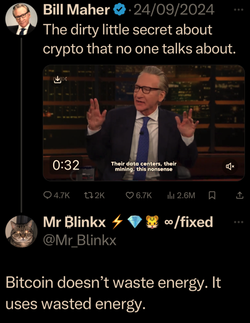
Bitcoin doesn't waste energy. It uses wasted energy.

तेल क्षेत्रों में मीथेन फ्लेरिंग को समाप्त करने की बिटकॉइन की क्षमता एक और अनदेखा लाभ है। उस फंसी हुई प्राकृतिक गैस को पकड़कर और उपयोग करके, जिसे अन्यथा जला दिया जाता, बिटकॉइन माइनर्स हानिकारक मीथेन उत्सर्जन को कम करने में मदद कर सकते हैं, जिससे एक पर्यावरणीय रूप से हानिकारक अपशिष्ट उत्पाद को एक मूल्यवान संसाधन में बदला जा सकता है।

बिटकॉइन माइनिंग की पर्यावरणीय जांच अपेक्षित और स्वागत योग्य है। हालांकि, यह तकनीक अब तेजी से नवीकरणीय ऊर्जा को अपनाने और ग्रिड दक्षता में सुधार के लिए अनूठे अवसर दिखा रही है।

जैसे-जैसे उद्योग परिपक्व हो रहा है, नवीकरणीय ऊर्जा प्रदाताओं और ग्रिड ऑपरेटरों के साथ अधिक सहयोग बिटकॉइन माइनिंग को अधिक टिकाऊ ऊर्जा भविष्य की वैश्विक बदलाव में एक प्रमुख खिलाड़ी बनने में मदद कर रहा है।

बिटकॉइन ऊर्जा बर्बाद नहीं करता। यह बर्बाद हो रही ऊर्जा का उपयोग करता है।

यह हमें वैश्विक स्तर पर फंसी या अप्रयुक्त ऊर्जा के विशाल भंडार को खोजने और उपयोग करने के लिए सक्रिय रूप से प्रोत्साहित कर रहा है। और, उन स्रोतों के चारों ओर अधिक बिजली अवसंरचना बनाकर, मानवता और पर्यावरण को भविष्य में लंबे समय तक लाभ होगा।

टिप्पणियाँ
  1. बिटकॉइन बिजली बर्बाद नहीं करता, इसका उपयोग सुरक्षा के लिए होता है, एक लेख जिसमें बताया गया है कि बिजली बिटकॉइन के सुरक्षा मॉडल की नींव है, बिटकॉइन मैगज़ीन, नवंबर 2015https://bitcoinmagazine.com/business/bitcoin-doesn-t-waste-electricity-it-s-used-for-security-1446482572
  2. टेक्सास में बड़े लचीले लोड्स में बिटकॉइन माइनर्स का हिस्सा 95% है, द माइनर मैग, फरवरी 2024।https://theminermag.com/news/2024-02-29/bitcoin-mining-map-north-america-texas/
  3. ग्रिड क्षमता की कमी 'बर्बाद पवन' लागत को £250 मिलियन तक पहुंचाती है, बिजनेस मैटर्स, मार्च 2025https://bmmagazine.co.uk/news/lack-of-grid-capacity-pushes-wasted-wind-costs-to-250m/
  4. आइसलैंड: एक अप्रत्याशित बिटकॉइन माइनिंग हब, इंडस्ट्री लीडर मैगज़ीन, सितंबर 2023https://www.industryleadersmagazine.com/iceland-the-unlikely-bitcoin-mining-hub/
  5. क्या कारण है कि मीथेन कार्बन डाइऑक्साइड की तुलना में अधिक शक्तिशाली ग्रीनहाउस गैस है? क्लाइमेट पोर्टल, दिसंबर 2023।https://climate.mit.edu/ask-mit/what-makes-methane-more-potent-greenhouse-gas-carbon-dioxide
  6. बिटकॉइन फ्लेयर फर्म क्रूसो ने प्रतिद्वंद्वी ग्रेट अमेरिकन माइनिंग को खरीदा, डेटा सेंटर डायनेमिक्स, अक्टूबर 2022https://www.datacenterdynamics.com/en/news/bitcoin-flare-firm-crusoe-buys-rival-great-american-mining/
4.2 बिटकॉइन और निवेश प्रबंधन

4.2.0 The Challenge for Investment Managers

Bitcoin is not only a new entrant to the institutional investment sector, it has unique characteristics that pose challenges for traditional finance around how to classify and evaluate it. Bitcoin is only 15 years old and, for most of that time, it was a small and relatively illiquid asset dominated by individual investors. Participation in the bitcoin market by institutional investors has, so far, been limited. For many years, the absence of clear legal and regulatory guidance was an obvious hurdle and perhaps a convenient excuse for staying away.

The launch of futures markets in bitcoin around the end of 2017 was the first step in legitimising the asset for regulated investors. However, it was the regulatory approval of Bitcoin ETFs, in January 2024, that finally demonstrated to the professional investment management sector that bitcoin is now an established asset class that demands attention.

Now bitcoin is becoming a more widely-appreciated asset class, the key challenge for institutional investors is how to evaluate and develop an investment strategy around it. Wealth managers are under increasing pressure from clients to offer, not only an opinion, but a credible framework with products that allow clients to participate in this new asset class. Otherwise, they risk losing significant business to rivals with a broader-minded approach to building wealth.

Until recently, it was challenging for investment managers to justify spending any time to study bitcoin, let alone allocating capital to it. However, with client interest ramping up, we may have reached a point where managers without a bitcoin investment strategy must provide a valid justification.

This module considers some of the ways traditional investment managers might consider bitcoin the asset, its prospects, valuation metrics and impact on portfolios. It is not intended to be prescriptive - the investment management community is very broad in scope and style and each manager will have its own investment framework and process.

4.2.1 Coming around to bitcoin

Institutional investors can be considered in two groups. The first group consists of wealthy investors that may be participating via an investment vehicle or a family office. The group also contains specialist investors or hedge funds that are, by their nature, able to deploy capital relatively quickly. They may have few stakeholders, making them less constrained and more nimble with regard to investment decisions and strategy. They may be less constrained by regulation and have a higher risk tolerance. This group is already more likely to have some exposure to bitcoin.

The second group can be thought of as the more traditional investment sector. It consists of regulated investment advisors, larger asset managers, banks, mutual fund operators, pensions, endowments and sovereign wealth funds. It tends to move much more cautiously and has a lower risk tolerance.

This group is also much more conservative. Its members will have long-established and detailed investment frameworks and processes. Managers may be constrained by detailed mandates that restrict the assets or markets available. Allocation decisions are often made by committees made up of portfolio managers, analysts and compliance staff where ideas are deeply-researched and documented according to strict criteria, all under the watchful eye of a financial regulator. 

It is easy to have sympathy for this group and the challenges it faces with bitcoin. By nature this group is conservative, resistant to change and, generally, this approach has served it well. In that environment, when a highly-innovative or disruptive technology comes along, the natural reaction is to be cautious, skeptical or to completely dismiss it, especially if much of the wider industry is doing the same. Therefore, in this highly-disciplined environment, it should be no surprise that this second group has moved much slower when allocating to a new asset like bitcoin. 

Readers of much of the traditional financial media’s coverage of the Bitcoin network and protocol have noted that many commentators struggle to see where it fits within the legacy financial system. This is understandable. Bitcoin emerged from outside the existing financial system. And, as a technology that reimagines the concept of money itself, its adoption has the potential to render much of traditional finance obsolete. Of course, this resembles the disruptive technology playbook within other industries.

Nevertheless, increased demand for exposure from clients is forcing managers to consider bitcoin exposure in portfolios or risk losing clients. This demand was a key driver in the launch of Bitcoin ETFs by large asset managers BlackRock, Fidelity and others. This gave investment managers a regulator-approved vehicle, allowing them to satisfy investor demand for bitcoin exposure in a way that is compatible with existing investment mandates.

After 15 years of negative coverage from mainstream and business media, Bitcoin is still defying many naysayer predictions. The network continues to grow and metrics such as the number of public addresses, the network hash rate and the dollar value transacted, all point to technology that continues to grow exponentially.

Therefore, it is becoming harder for investment managers to justify not having an allocation to bitcoin.

4.2.2 Bitcoin: An Acceptable Alternative Asset?

Depending on their mandate (e.g. single asset, single strategy or risk-weighted multi-asset funds etc), large traditional investment managers will have their own well-established criteria and framework for evaluating potential investments. These processes are disciplined and rigorous, as they should be. Therefore, it may be challenging for an investment manager to see whether holding bitcoin in a portfolio can fit an existing investment process because it cannot be valued using traditional metrics used for other asset classes. Therefore, part of the evaluation of bitcoin as an investment should run alongside a review of existing investment processes. 

From an academic perspective, the goal of effective investment management is to develop optimal portfolios at the ‘efficient frontier’. That is, the portfolios that offer the highest expected return for a defined level of risk, or the lowest measure of risk for a defined expected return. The key question for investment managers is whether an allocation to bitcoin can help achieve this goal.

Studies show that successful evaluation of risk versus return should place a portfolio at or near the efficient frontier. A common metric used to measure this is the Sharpe Ratio. It divides a portfolio’s excess return by a measure of a portfolio’s volatility, such as the standard deviation of excess return. A higher Sharpe is better when comparing portfolios.

It’s worth noting that portfolios at the efficient frontier usually exhibit a higher degree of diversification. That is, they contain a broad range of assets whose returns are not closely correlated in terms of price performance. Alternative assets tend not to be closely correlated with the major asset classes (stocks and bonds) and therefore can be an attractive prospect for investment managers seeking additional diversification in a portfolio. ‘Alternatives’, such as private equity, real estate, farmland, or even art and collectibles are increasingly on the watch-list of institutional portfolio managers as a diversification tool, especially given the significant underperformance of the bond market in recent years. Managers of the typical ‘60/40’ portfolio (60% stocks, 40% bonds) are under pressure to improve overall investment performance.

However, alternatives often come with a significant impediment. They may reside in markets that lack the depth of liquidity seen in larger stock or bond markets. It is challenging to find buyers or sellers in sufficient size. Even pricing an asset for portfolio purposes can be challenging as simply ‘marking to market’ can be unreliable in an illiquid market.

Bitcoin is an alternative asset that doesn’t have this drawback. It is a market valued in excess of $1 trillion and trades 24x7 globally. Volume traded is counted in tens of billions of dollars daily. Also, unlike other alternative investments, bitcoin is homogeneous, independently verifiable, easily divisible and has no counterparty risk, if held directly. 

4.2.3 Analysing and Valuing Bitcoin

Professional Investment managers will already have an established rigorous process for evaluating potential investments. In 2017, business systems analyst Brian Leemoon developed a framework for appraising Bitcoin technology using three well-established business analysis methods: SWOT, PESTLE and Porter's Five Forces. From an investment manager’s perspective, a summary example SWOT analysis for Bitcoin might look something like this:

Strengths
  • Most recognised digital asset, open payment network/protocol with longest history
  • Highly stable protocol with no major changes to monetary policy
  • Highly stable network with 99.99% uptime since inception
  • Most secure and decentralized digital asset network
  • Most valuable and liquid digital asset market with the largest user base
  • Fastest growing digital asset network - no. of addresses, hash rate, value transacted
  • Enabling economic participation in developing world
  • Positive symbiotic relationship with renewable energy and other ESG benefits
  • Establishing as a treasury asset for corporations, strengthening balance sheets
  • Regulatory landscape is improving. i.e. approval of ETFs in the US
Weaknesses
  • Highly-volatile asset price with significant price drawdowns
  • On-chain transaction costs are highly variable
  • Lack of market education around functionality and properties
  • Challenging to value by investors
  • Lack of clear regulatory guidelines in major markets 
  • Negative market perceptions and sensitivity to illicit or criminal use
  • Career/reputation risk associated with supporting Bitcoin within traditional finance sector
  • Could become illiquid if investor sentiments turns against the asset
  • 3rd-party custodians are vulnerable to cyberattack or theft
Opportunities
  • Becomes established as a store of value and global treasury reserve asset
  • Becomes more accepted as a medium of exchange for goods and services
  • Success of application layer protocols will drive significant user adoption 
  • User growth at a similar rate to the internet in the mid-1990s
  • Opportunity for improved investment returns through diversification (non-correlation)
  • Market dynamics ripe for demand - fiat monetary debasement likely to continue
  • Early-mover advantage potential for investment managers over competitors
Threats
  • Significant price rally leading to risks of a large price drawdown
  • Regulatory landscape in major markets turns against the technology
  • The network experiences a technical outage, impacting valuation perceptions
  • An ‘upgrade’ to the network results in unexpected technical problems
  • It is surpassed by another digital asset that has more user or regulatory support

This is not an exhaustive list and we should expect investors to hold varying views on the strengths and weaknesses etc. However, the exercise encourages analysts to gain a deeper understanding of the Bitcoin network, protocol and asset and consider what makes it investible. It is also important to revisit the analysis regularly since key elements of the ecosystem continue to develop.

The SWOT analysis also encourages analysts to make a comparison with the fiat monetary system. A general lack of acceptance of the problems associated with fiat money can be a roadblock to understanding Bitcoin. For decades, there has been very little discussion of fiat money’s drawbacks within investment or academic communities, largely because it is generally accepted that there is no credible alternative since the gold standard ended, giving way to a system of free-floating fiat currencies. That is, until Bitcoin came along.

Bitcoin has new and unique properties. Because of this there has been much debate around how to value it as an investment. A common critique is that it has no cash flows like stocks, bonds or real estate and it is, therefore, ‘uninvestable’. However, this may speak to the inflexibility of an investment process that requires rework to adapt to new ideas. It helps some investors to think of bitcoin (the asset) as a ‘digital gold’ with superior properties to physical gold. Gold also has no cash flows and has a long history of being used as money. Drawing a comparison of the monetary properties of gold, fiat and bitcoin can be instructive, similar to that contained in the 2018 article ‘The Bullish Case for Bitcoin’ by Vijay Boyapati.

In the absence of traditional measures of valuation, how should we consider the potential future value of bitcoin? 

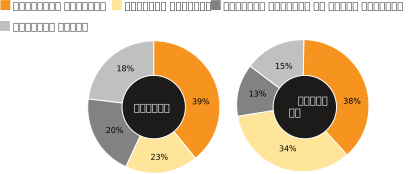
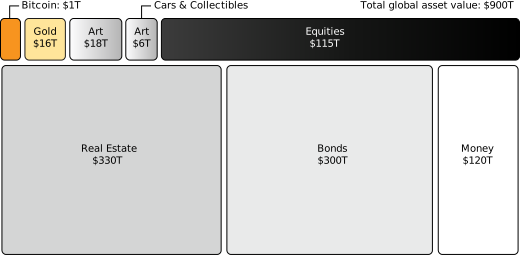
Analyst Jesse Myers4 at OnRamp suggests that because bitcoin can be thought of as new base money that can reprice all other asset classes, then the Total Addressable Market (TAM) for bitcoin is the entire world’s wealth (around $900T), that is, all value held in equities, bonds, real estate, money markets etc.

Global Wealth is Stored in Physical and Financial Assets
Global Wealth is Stored in Physical and Financial Assets (Sources: onceinaspecies.com; hope.com)

 Of course, the capture of a majority or even a large portion of the world’s wealth is not expected to happen anytime soon. This is a multi-decade story. So, in the meantime, how can we track that the Bitcoin network is trending in the right direction, so that this investment thesis for bitcoin (lower case b for the asset) remains intact?

For the Bitcoin network there are many metrics5 we can track to monitor activity on the network. Below are some examples. This is not an exhaustive list and a full description of each is beyond the scope of this module.

  • Hashrate of the network (the total combined computational power being used to mine and process transactions on the Proof-of-Work Bitcoin ledger)
  • Dollar value transacted on the network
  • Number of bitcoin on exchanges (a measure of scarcity of the available bitcoin for trading)
  • Number of users, active wallets on the network (base layer & layer 2 such as Lightning). It is worth noting that estimates of these can vary significantly, so it is important to choose a consistent methodology in order to monitor trends reliably. 
  • Number of active nodes on the network
  • HODL waves (the distribution of bitcoin holders based on how long they have held coins)
  • The trend of Bitcoin-related media publications, such as films, books or mainstream media articles.
  • The trend in the number of merchants accepting bitcoin payments in major economies. This can be tracked on btcmap.org 

Tracking a basket of metrics for the network helps a manager monitor if the investment thesis remains intact. In addition, tracking the progress of publicly traded related stocks (such as miners or companies offering bitcoin exposure) can provide additional supporting data. These stocks can also be valued using traditional metrics that professional managers will already be comfortable with, such as discounted cash flow models or ratios such as price/earnings, price/sales, price/earnings growth, price/free cash flow, or price/book value. 

4.2.4 Bitcoin’s impact on Portfolios

Despite being only 15 years old, by August 2025 bitcoin had established itself as the world’s 7th most valuable asset. While it’s important for investment managers to understand the nature of Bitcoin and its potential impact on the economy and society, the key question from a professional perspective is the potential impact on portfolios.

If we believe that Bitcoin can capture a significant portion of global wealth over the long-term, then it seems reasonable to have an allocation to it as a high-powered return enhancer. However, it is important to consider whether the return is worth the risk. This is captured by the Sharpe Ratio mentioned earlier. A manager should also consider diversification. That is, how correlated an asset’s investment returns are when compared with other assets in the portfolio, while also considering the risks around price volatility and drawdowns.

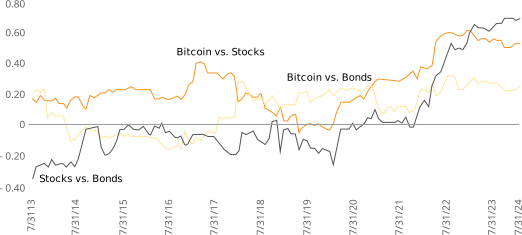
There is publicly available information on the impact of bitcoin on portfolios at Fidelity Investments or the Nakamoto Portfolio from Swan Research. In a study updated in June 20248, Fidelity conducted returns, volatility and correlation analysis of bitcoin relative to stocks, bonds and gold within a 60/40 stocks/bonds portfolio. It found that bitcoin did offer some diversification benefit, although correlations vary.

The chart below shows rolling 3-year correlations of bitcoin relative to stocks and bonds, from July 2013 to March 2024. It shows that, while correlations between stocks and bonds are increasing. A rolling 3-year correlation to stocks of 0.53 and to bonds of 0.26 through to March 2024 shows significant potential for diversification in a multi-asset portfolio.

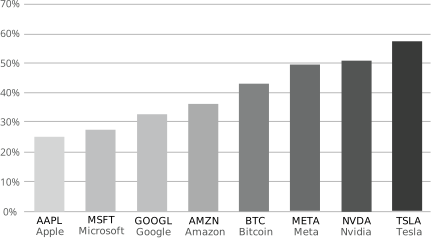
Magnificent Seven: 1-Year Volatility
Magnificent Seven: 1-Year Volatility (Source: Fidelity Investments and Bloomberg Finance)

The total market capitalization of bitcoin didn’t exceed $100B until mid-2016. Therefore measuring early correlations may be less meaningful since the bitcoin market lacked depth, liquidity and pricing efficiency in early years, especially prior to January 2018 when the first bitcoin futures contracts began trading.

From a returns perspective, Fidelity observed that since August 1, 2010 to March 31, 2024, bitcoin achieved annual returns of 178%, while noting that since the establishment of futures trading, annualized returns are around 29.6%. Of course, the past is no guarantee of the future. However, it is clear that bitcoin has potential to significantly enhance portfolio returns.

Bitcoin’s price volatility is often cited as a reason that investment managers steer clear of bitcoin as a portfolio constituent. It is a slightly odd criticism, since managing price volatility of individual assets within a portfolio is a well-understood attribute of a competent portfolio manager. Furthermore, Fidelity found that bitcoin’s annual price volatility is not dramatically different to the ‘magnificent seven’ group of high-performing technology stocks.10 At the end of 2023, there were 92 S&P stocks more volatile than bitcoin.

Rolling 3-Year Correlations of Bitcoin, Stocks, and Bonds (Aug. 1, 2010 - March 31, 2024)
Rolling 3-Year Correlations of Bitcoin, Stocks, and Bonds (Source: Fidelity Digital Assets; Bloomberg)

Fidelity also observed that bitcoin’s volatility is declining over time. This is to be expected as the market matures. A deeper and more liquid market allows for greater capital inflows with less impact on the market price.

High price volatility, measured by the standard deviation of returns, is also well-understood by investors as a by-product of high performing assets. As shown in the table below, for the period from 2020 to early 2024, bitcoin investors have been well-compensated for its volatility, showing a Sharpe ratio of 0.96 versus 0.65 for the S&P 500. The Sortino ratio is perhaps more instructive, since it only considers downside standard deviation of returns or “bad” volatility. Its value of 1.86 shows that the majority of volatility over the four years was to the upside. This is despite some significant price drawdowns over the period.

Feb 2020 - Feb 2024 CAGR Std. Deviation Sharpe Ratio Sortino Ratio
S&P500 13.6% 19.56% 0.65 1.01
Bitcoin 58.0% 72.9% 0.96 1.86

The bottom line is that bitcoin is a volatile asset. This is to be expected because it is new and on a long voyage of price discovery and user adoption. Professional investors are well-equipped to embrace this volatility and, given the potential for supernormal returns, manage it accordingly. They can determine the appropriate allocation, in line with their own investment framework and appetite for risk. And, to smooth out short-term volatility, holding bitcoin for at least one, 4-year, halving cycle could be an appropriate minimum holding period.

Is Bitcoin an Inflation Hedge ?

Because bitcoin is a fixed supply asset, supporters have long-argued that it serves as a hedge against inflation in fiat currencies. It is clear that over the very long-term bitcoin has served as a very effective hedge against the debasement of purchasing power in fiat money. However, critics point to the dramatic rise in the year-on-year CPI metric11 from early 2021 to a 40-year high in mid-2022 and question why the bitcoin’s price didn’t see significant upside over this period. So did bitcoin fail as an inflation hedge?

It is important to note that we have only observed such a significant rise in inflation once in the whole of bitcoin’s history, so we should be careful to draw conclusions. However, it is well understood that CPI is a backward-looking metric. That is, it reacts to price rises for goods and services that have already happened. In turn, those price rises are often a downstream result of increased money supply in the wider economy.

Money supply within the global economy rose dramatically during 2020 as a reaction to the COVID-crisis. Multiple large nations took the decision around the end of Q1 2020 to shut-down significant portions of their economies and, to plug the hole in tax revenue and to support many millions of people not working, they created trillions in new fiat money.

Bitcoin’s price also rose dramatically from mid-2020 to the end of Q1 2021, rising more than six-fold. Therefore, it appeared to foreshadow both the downstream increases in consumer prices and the CPI metric. Therefore, it functioned well as an alarm bell signalling a dramatic rise in global liquidity, leading to a future increase in CPI inflation.

4.2.5 The Shifting Narrative 

Since the start of 2024, there has been a significant shift in the narrative around bitcoin within traditional finance. The market entered 2023 with the overhang of the FTX collapse still present. As a result, large swathes of the industry were not considering bitcoin as a seriously investable asset.

Moving forward one year the narrative has shifted considerably. The US SEC approval of Bitcoin ETF products represents a transformative shift in the regulatory landscape. This development effectively opens the door to professional investors, allowing them to enter this asset class via a regulated product, issued by highly-regarded and long-established asset managers.

After just nine months of trading, Bitcoin ETFs were ranked the most successful ETFs ever launched. After just two full quarters of trading, they had already broken records for the most money attracted in the first year and the highest number of institutional holders.12 In the wake of the ETF approvals and their trading success, leading investment firms (such as Blackrock, Fidelity and Cantor Fitzgerald) are making considerably more positive market comments on the prospects for bitcoin. This piles on the pressure for investment managers that have yet to develop a coherent bitcoin strategy.

It is becoming increasingly difficult for professional investors to justify not having some exposure to bitcoin, if only in an intellectual sense. Moveover, the shifting narrative has helped to pull back the curtain on the fiat monetary system, further exposing its inherent flaw - it declines in purchasing power over time.

Ultimately, the role of Investment professionals is to manage risk. With that in mind, it is worth considering what ‘zero exposure’ to bitcoin is suggesting from a risk management perspective. 

Is it akin to a bet, with 100% certainty, that the Bitcoin network and protocol will fail? If so, is that sound risk management?

In the world of traditional finance, bitcoin sceptics remain in the majority. This should be no surprise. The sector is by nature conservative, operating as it does in a highly-regulated environment. Within this setting and moving in circles of where conformity is encouraged, there is little advantage to be gained in being an early-adopter of new and disruptive technology. Indeed, there may only be increased career-risk for trying to get ahead of the herd.

However, like other disciplines such as insurance or engineering where sound risk management is essential, the need to be effective should supersede the desire to be correct. Therefore, bitcoin-skeptical investment managers should seriously consider some exposure, due to the risk of significant overall underperformance if bitcoin continues to perform well over the long-term. The performance risk associated with zero exposure should not be ignored.

4.2.6 Bitcoin’s Future Impact on Investment Management

It is also worth considering what long-term impact the rise of bitcoin in portfolios may have on the investment management industry. 

Fiat money’s ‘store of value’ problem has been a key driver behind the growth of the professional investment management sector since the 1970s. The inability of fiat money to store purchasing power while residing in a simple savings account, has led to an explosion in investment products, directed at consumers seeking to grow or to simply maintain their purchasing power.

A side effect of this phenomenon is that the major asset classes - stocks, bonds and real estate, have all attracted significant valuation premiums thanks to their superior ability to store value over the long-term. Furthermore, as fiat money’s debasement has accelerated, capital flows toward these assets has ramped up further, leading to malinvestment and distorted valuations, which potentially lead to asset bubbles and poorer outcomes for investors. It is argued that this effect can also be observed in the valuations of alternative assets such as art, vintage cars and other collectibles.

In a future world where bitcoin is more recognised as a superior store of value versus other asset classes and establishes itself as a treasury reserve asset, what impact would this have on valuations in other asset classes?

The long-term impact could be dramatic: bitcoin could draw the ‘monetary premium’ from other asset classes, slowly at first, and then more quickly as its properties become more widely understood. In this scenario, a large swath of investment products become obsolete, with the result that the investment management sector declines in size. In time, the sector’s slice of the wider economy may shrink to resemble the proportion it held 50+ years ago.

Of course, not many commentators expect this scenario to play out soon - bitcoin’s global adoption is a multi-decade story. However, those investment management firms that are prepared already have a huge advantage over those that are not. Therefore, it is essential for all investment management firms to have ‘The Rise of Bitcoin’ on their Risk Registers. And, even the most skeptical managers should ask:

What if, like the rise of the internet, we can’t simply choose to opt-out?

Warning

Note that past performance is no guarantee of future results. Bitcoin is an asset that comes with high risks. Investors should keep in mind that its value has both the potential to significantly increase or decline in the future, as past performance has shown.

Bitcoin doesn't yet have the long-term histories of the stock and bond markets, which means it's tough to confidently estimate its returns. Note that bitcoin is still an emerging asset, and its impact on portfolios may evolve over time.

Note bitcoin is highly volatile, and may be more susceptible to market manipulation than securities. The future regulatory environment for bitcoin is currently uncertain.

Notes
  1. Boom or Bust, Bitcoin a valuation framework, Brian Leemoon, Wilkes University, December 2017.
  2. The Bullish Case for Bitcoin, March 2, 2018 by Vijay Boyapati contains a comparison of the monetary properties of Bitcoin, Gold and Fiat.
  3. Bitcoin’s potential full valuation, Jesse Myers, February 2003.
  4. There are many resources providing data and charts on the Bitcoin network. Bitbo is one example: https://charts.bitbo.io/index/
  5. The world’s top assets by market capitalisation are tracked here: https://companiesmarketcap.com/assets-by-market-cap/
  6. The Nakamoto Portfolio is a list of tools, research and open-source code that can help analysts assess the impact of bitcoin on portfolios.
  7. Considerations for including bitcoin in investment portfolios, Fidelity Institutional
  8. Correlation reveals the strength of return relationships between investments. A perfect linear relationship is represented by a correlation of 1, while a perfect negative relationship has a correlation of -1. A correlation of 0 indicates no relationship between the investments. Correlation is a critical component to asset allocation and can be a useful way to measure the diversity of a portfolio. 
  9. A Closer Look at Bitcoin’s Volatility, Fidelity Digital Assets
  10. United States Inflation Rate from TradingEconomics.com; source: U.S. Bureau of Labor Statistics https://tradingeconomics.com/united-states/inflation-cpi
  11. Bitcoin ETFs Are Making History: Wall Street Rushes In, But Opportunities Remain for Smart Investors, Yahoo Finance, Aug 28, 2024.

4.3 बैंकिंग और भुगतान

व्यापक मुद्रा उस बड़े धन के समूह का प्रतिनिधित्व करती है जिसका लोग और व्यवसाय एक-दूसरे के साथ लेन-देन करने, अपनी बचत रखने और जिसे हम अपनी 'मुद्रा' के रूप में परिभाषित करते हैं, में सीधे उपयोग करते हैं।
लिन एल्डन

4.3.0 परिचय

एक बार जब कोई नई तकनीक आपके ऊपर से गुजरती है, अगर आप भाप इंजन का हिस्सा नहीं हैं, तो आप सड़क का हिस्सा हैं।
स्टुअर्ट ब्रांड

बैंकिंग और भुगतान सेवाएँ तब से ही आपस में गहराई से जुड़ी रही हैं जब से बैंक अस्तित्व में आए। कई संस्थाएँ दोनों गतिविधियों में किसी न किसी स्तर पर संलग्न हैं। 2020 के दशक में सबसे बड़े बैंक सबसे बड़ी भुगतान सेवा कंपनियों के साथ कंधे से कंधा मिलाकर खड़े हैं और अक्सर उनके पास महत्वपूर्ण क्रॉस-शेयरहोल्डिंग्स होती हैं। उदाहरण के लिए, दिसंबर 2023 तक, बैंक ऑफ अमेरिका, जिसने 1958 में वीज़ा की स्थापना बैंकअमेरिकार्ड के रूप में की थी, वीज़ा इंक. का 1.53% मालिक था। मॉर्गन स्टेनली के पास 3.26% हिस्सेदारी थी (स्रोत: विकिपीडिया)।

19वीं सदी तक, बैंकों की भुगतान में भागीदारी, सोने द्वारा समर्थित कागजी मुद्रा जारी करने के अलावा, बहुत कम थी क्योंकि अधिकांश लेन-देन नकद में किए जाते थे। सदी के मध्य तक, बैंकों द्वारा समर्थित कागजी चेक उभर कर सामने आए और संयुक्त राज्य अमेरिका में बड़े लेन-देन के लिए नकद के स्थान पर मुख्य विनिमय साधन बन गए। टेलीग्राफ के आगमन ने वेस्टर्न यूनियन को 1871 में पहली मनी ट्रांसफर सेवा शुरू करने का अवसर दिया। ऐतिहासिक रूप से, बैंकों की मुख्य भूमिकाएँ बैंक खातों के माध्यम से धन के संरक्षक के रूप में और व्यक्तियों व व्यवसायों को ऋण प्रदान करने के रूप में रही हैं।

भुगतान सेवा प्रदाता क्या पीएसपी एक बैंक है? क्या पीएसपी को बैंकों की आवश्यकता है
बैंक ऑफ अमेरिका हाँ हाँ
वेस्टर्न यूनियन नहीं हाँ
वीज़ा नहीं हाँ
पेपैल नहीं हाँ
बिटकॉइन नहीं नहीं

डिजिटल संचार और इंटरनेट के उदय ने बैंकिंग प्रणाली के भीतर और बाहर दोनों जगह भुगतान में भारी नवाचार उत्पन्न किया है, पेपाल इन नए भुगतान प्रदाताओं का एक उदाहरण है। हालांकि, ब्लॉकचेन लेजर पर स्थिर सिक्कों के आगमन तक, बैंकिंग प्रणाली अभी भी सभी भुगतान समाधानों के नीचे मौजूद थी। यूएसडीटी, जिसे टेथर भी कहा जाता है, अब बैंकिंग प्रणाली को उन भुगतानों से अलग करने की अनुमति देता है जो अमेरिकी डॉलर के रूप में मूल्यांकित और बाजार द्वारा मूल्यित होते हैं। भुगतान का यह डिसइंटरमीडिएशन तकनीक का एक ऐसा तत्व है जो बैंकिंग और भुगतान को बदल सकता है। बैंकों की भूमिका में एक और अधिक महत्वपूर्ण परिवर्तन पूरी तरह से अलग मुद्रा इकाई - बिटकॉइन - में मूल्य हस्तांतरण के उदय और विकास से प्रेरित हो सकता है।

इस अध्याय का उद्देश्य यह विचार करना है कि बिटकॉइन के उदय का बैंकिंग और भुगतान उद्योगों पर क्या प्रभाव पड़ सकता है। इसका उद्देश्य बैंकों और भुगतान सेवा कंपनियों को इस तटस्थ, अनुमति रहित और वैश्विक मूल्य हस्तांतरण तकनीक से उत्पन्न होने वाले खतरों और अवसरों की पहचान करने का आधार भी प्रदान करना है।

4.3.1 जोखिम

परिवर्तन के सबसे महत्वपूर्ण कारण राजनीतिक घोषणापत्रों या मृत अर्थशास्त्रियों की घोषणाओं में नहीं मिलते, बल्कि उन छिपे हुए कारकों में मिलते हैं जो शक्ति के प्रयोग की सीमाओं को बदलते हैं। अक्सर, जलवायु, स्थलाकृति, सूक्ष्मजीवों और तकनीक में सूक्ष्म परिवर्तन हिंसा की तर्कशक्ति को बदल देते हैं।
जेम्स डेल डेविडसन

यहाँ हम उन सामान्य वित्तीय या परिचालन व्यावसायिक जोखिमों की चिंता नहीं कर रहे हैं जिन्हें बैंकिंग, भुगतान सेवाएँ और अन्य कंपनियाँ निगरानी और प्रबंधन करने की आवश्यकता महसूस कर सकती हैं। इस खंड में हम उन रणनीतिक व्यावसायिक जोखिमों पर विचार करते हैं जो उभर सकते हैं और बिटकॉइन के उदय से उद्योग में एक सदी में एक बार होने वाला परिवर्तन कैसे आ सकता है। यदि हम उद्योगों को इस तकनीक के उदय से प्रभावित होने की संभावना और प्रभाव के अनुसार रैंक करें, तो बैंकिंग और भुगतान सूची में सबसे ऊपर होंगे।

इतिहास तकनीकी नवाचारों के उदाहरणों से भरा पड़ा है जिन्होंने मानव समाज के विकास और शासन के तरीके को बदल दिया। 'द सॉवरेन इंडिविजुअल', जेम्स डेल डेविडसन और विलियम रीज़-मोग की 1997 की किताब, यह बताती है कि तकनीकी परिवर्तन कैसे पश्चिम में चर्च द्वारा शासित दुनिया से आज के राष्ट्र-राज्यों की ओर बदलाव का कारण बने। वे प्रमुख तकनीकी नवाचारों के रूप में मुद्रण प्रेस के उदय और हिंसा के ईंधन के रूप में बारूद के उपयोग की पहचान करते हैं, जिसने बड़े पैमाने पर हिंसा के प्रतिफल को बदल दिया।

एक महत्वपूर्ण अवलोकन यह है कि इस बात का कोई प्रमाण नहीं है कि चर्च या आम जनता ने वह परिवर्तन चाहा या शुरू किया जो हुआ। पीछे मुड़कर देखने पर यह अपरिहार्य लगता है कि चर्च के सूचना नियंत्रण से उत्पन्न शक्ति कम हो जाएगी क्योंकि नई अर्थव्यवस्था ने लिखित सामग्री के उत्पादन पर उसका एकाधिकार समाप्त कर दिया।

मुद्रण प्रेस ने जानकारी की पुनरुत्पादन लागत को कम कर दिया, और इस प्रकार लिखित सामग्री के उत्पादन का विकेंद्रीकरण बढ़ा।

इतिहास से पता चलता है कि बड़े परिवर्तन लाने वाली तकनीकें सरकारी ढांचे, संस्थानों, नेतृत्व या लोगों द्वारा लोकतांत्रिक प्रक्रियाओं के माध्यम से शुरू नहीं की गई थीं। अधिकतर हमने देखा कि लोग और संस्थाएँ व्यर्थ में इसका विरोध, अवरोध और गोद लेने में देरी करती रहीं। 20वीं सदी में हम इसे ऑटोमोबाइल, बिजली, क्रिप्टोग्राफी, ईमेल और इंटरनेट के शुरुआती प्रतिक्रियाओं में देख सकते हैं।

बाजारों द्वारा नई तकनीकों को अपनाने से यह तय हुआ कि लोग कहाँ रहते हैं, कैसे काम करते हैं और कभी-कभी वे अपनी संस्कृति, देश या नेतृत्व इकाई को किस रूप में देखते हैं। कई मामलों में इसने उस इकाई के आकार और संरचना को ही बदल दिया। तकनीक द्वारा व्यापक सामाजिक परिवर्तन के अन्य उदाहरणों में कृषि, बिजली, ऑटोमोबाइल और इंटरनेट का उदय शामिल है।

इस प्रमाण का हवाला इस निष्कर्ष का समर्थन करने के लिए दिया गया है कि तकनीक कानून से ऊपर होनी चाहिए। कानून बाद में अनुकूलन कर सकता है, लेकिन कारण की दिशा दिखाती है कि कानूनी साधन परिवर्तन को न तो उचित रूप से और न ही स्थायी रूप से रोक सकते हैं, और न ही कानूनी साधन इसे उत्पन्न कर सकते हैं। कानूनों में बदलाव तकनीकी परिवर्तन का परिणाम हैं, कारण नहीं, और नई तकनीकी नवाचार को न तो वोटिंग से, न शासक के आदेश से और न ही बिना आत्म-हानि के रोका जा सकता है।

कानून कई तकनीकों की प्रगति को रोकने में असमर्थ रहा है, जिन्हें उनके जन्म के समय समाज रोकना चाहता था। जहाँ यह किया गया, वहाँ आमतौर पर उस राष्ट्र की संपत्ति मध्यम से दीर्घकाल में कम हो गई।

4.3.2 ऋण और मुद्रा सृजन

यह अच्छा ही है कि देश के लोग हमारे बैंकिंग और मौद्रिक प्रणाली को नहीं समझते, क्योंकि अगर वे समझते तो मुझे विश्वास है कि कल सुबह से पहले ही क्रांति हो जाती।
हेनरी फोर्ड

अधिकांश बैंक ऋण सृजन में शामिल हैं और यह संबंधित उपभोक्ता और वैश्विक बैंकिंग गतिविधियों के साथ मिलकर उनकी आय का एक बड़ा स्रोत है।

Bank of America Segment Breakdown
बैंक ऑफ अमेरिका खंड विभाजन (स्रोत: बैंक ऑफ अमेरिका 10-K)

नोबेल पुरस्कार विजेता अर्थशास्त्री फ्रेडरिक हायेक ने तर्क दिया कि 20वीं सदी में मुद्रा का केंद्रीकरण राष्ट्र-राज्यों के केंद्रीकरण का एक प्रमुख कारण था। बिटकॉइन का उदय इसे उलट सकता है, जिसे कई लोग समर्थन करते हैं और राजनेता भी केवल औपचारिक समर्थन देते हैं, लेकिन वे इसे लागू करने में असमर्थ रहे हैं।

20वीं सदी से पहले सम्राट, राजा, रानियाँ और सरकारें हमेशा धन की उपलब्धता से सीमित थीं। वे अक्सर इन सीमाओं से लड़ने के लिए सिक्कों की गुणवत्ता घटाने या सिक्के काटने जैसी रणनीतियों का सहारा लेते थे। हालांकि, क्योंकि इन उपायों में प्रयास और समय लगता था, इसलिए ये सीमाएँ कुछ हद तक काम करती थीं। धन, जिसे मुद्रा मापती है, ऊपर से केंद्रीय रूप से नहीं, बल्कि एक विकेंद्रीकृत अर्थव्यवस्था से उत्पन्न होता है। 20वीं सदी तक मुद्रा की प्रकृति इस प्रवाह को दर्शाती थी और इसलिए वह स्वयं 'वास्तविक' थी। इस मुद्रा का रूप, उसकी विशिष्ट तकनीक, समय और स्थान के अनुसार मानव समाज के विकास का हिस्सा थी।

20वीं सदी के शुरुआती हिस्से से ही मुद्रा की 'वास्तविकता' को हटाने के प्रयोग किए गए, जो 1971 में डॉलर की सोने में परिवर्तनीयता को 'अस्थायी रूप से' निलंबित करने के साथ पूरी तरह से वास्तविकता से अलग हो गया।

मैंने सचिव कॉनली को निर्देश दिया है कि अमेरिकी डॉलर की परिवर्तनीयता को अस्थायी रूप से निलंबित कर दें, सिवाय उन राशियों और शर्तों के जिन्हें मौद्रिक स्थिरता और संयुक्त राज्य अमेरिका के सर्वोत्तम हित में निर्धारित किया जाए।
रिचर्ड निक्सन

मुद्रा एक तकनीक है और बिटकॉइन, एक डिजिटल मुद्रा के रूप में, मानव इतिहास के सबसे बड़े तकनीकी नवाचारों में से एक हो सकता है।

...मुद्रा मूल रूप से एक तकनीक है, जैसे कोई अन्य बुनियादी मशीन - कील, लीवर या पहिया।
बिजनेस इनसाइडर

खेती, छपाई प्रेस या बारूद के आविष्कार के बराबर पैमाने पर। परोपकार को छोड़कर, पैसा सभी स्वैच्छिक मानवीय क्रियाओं के लिए प्रेरक है और इसलिए यह संभव है कि 8 अरब लोगों के लिए इस तकनीक में एक नया समाधान मानव इतिहास में सबसे प्रभावशाली तकनीकी नवाचार साबित हो सकता है।

पैसा शक्ति है, यह एक तकनीक है, और इस प्रकार यह कानून से भी ऊपर है, और इसलिए तर्क के अनुसार यह कानून बनाने वाली संस्थाओं से भी ऊपर है। पैसे का विकेंद्रीकरण शक्ति के विकेंद्रीकरण को बढ़ावा देगा।

मुद्रा की स्थिरता के आशीर्वाद के लिए जो दंड चुकाना पड़ता है, उनमें से एक यह है कि कानून खुद को मौद्रिक प्रणाली में अप्रत्याशित और क्रांतिकारी परिवर्तनों के लिए तैयार नहीं पाता।
फैनोर जे. ईडर

आज राष्ट्र एक या अधिक मुद्राओं को कानूनी निविदा के रूप में निर्दिष्ट करते हैं। यदि बाजार स्थानीय या अंतरराष्ट्रीय स्तर पर किसी अन्य चीज़ को पसंदीदा मुद्रा के रूप में निर्धारित करता है, तो सरकारों को ऐसी स्थिति का सामना करना पड़ सकता है जहाँ स्थानीय मुद्रा की मांग वैश्विक, तटस्थ 'वास्तविक' मुद्रा की मांग से पीछे रह जाए। हम फिर से देखेंगे कि वास्तविक मुद्रा एक बाजार द्वारा निर्धारित वस्तु है जो विधायी परिवर्तन का कारण बन सकती है, और यह स्वयं कानून द्वारा नहीं बनाई जाती। राष्ट्र हमेशा कम मांग वाली मुद्रा को निर्दिष्ट करने वाले निविदा कानून बनाए रख सकते हैं, लेकिन उन्हें ऐसे विकल्पों के आत्म-हानिकारक परिणामों पर विचार करना चाहिए :

इतिहास दिखाता है कि आप खुद को उन परिणामों से अलग नहीं कर सकते जब दूसरे आपके मुकाबले अधिक मजबूत मुद्रा रखते हैं।
सैफेदीन अमूस

ऊपर प्रस्तुत तर्क दिखाता है कि कैसे एक विकेंद्रीकृत, वैश्विक और तटस्थ मुद्रा शक्ति के विकेंद्रीकरण को बढ़ावा दे सकती है। अब हम यह देखते हैं कि बिटकॉइन, एक विकेंद्रीकृत मौद्रिक संचार तकनीक, गैर-मौद्रिक संचार और मीडिया के विकेंद्रीकरण का भी अग्रदूत कैसे हो सकता है।

4.3.3 भुगतान का मध्यस्थता रहित होना

यदि आप क्रेडिट बुलबुले को खोलने की कोशिश करते हैं लेकिन [बैंक] भुगतान और इसलिए वाणिज्य के लिए पूरी तरह से आवश्यक हैं... तो कोई पूर्व निर्धारित... कारण नहीं है कि ऐसा क्यों होना चाहिए [हो]
एलन फैरिंगटन

बिटकॉइन की डिज़ाइन, इसकी बेस लेयर ब्लॉकचेन, कुछ खुले सेकंड लेयर और उच्च लेयर पर ऐप्स के साथ, व्यक्तियों को एक-दूसरे के साथ डिजिटल मूल्य का लेन-देन करने में सक्षम बनाती है बिना किसी तीसरे पक्ष पर निर्भर हुए। इससे पहले कभी भी मध्यस्थता रहित डिजिटल भुगतान संभव नहीं था। हालांकि, पीयर टू पीयर भुगतान की क्षमता को डिज़ाइन करना यह नहीं दर्शाता कि सभी या अधिकांश भुगतान ऐसे ही होंगे। जैसे-जैसे बिटकॉइन का प्रभाव बढ़ेगा, भुगतान किस हद तक पीयर टू पीयर होंगे, यह बाजार से उभरेगा। बाजार आंशिक रूप से उन लोगों द्वारा आकार लेता है जो सेवाएं प्रदान करते हैं, जिसमें मौजूदा बैंकिंग और भुगतान संस्थान भी शामिल हो सकते हैं। यदि ये संस्थान भाग नहीं लेते हैं, तो बाजार नए खिलाड़ियों के साथ उभरेगा जो मांग के अनुसार सेवाएं प्रदान करेंगे।

पीयर टू पीयर तरीके से एक विकेंद्रीकृत मुद्रा का डिजिटल लेन-देन करने की क्षमता भविष्य में मुद्रा और भुगतान के केंद्रीकरण के लिए एकाधिकार या अल्पाधिकार शक्ति के उपयोग के खिलाफ नियंत्रण के रूप में कार्य करेगी। इसका अर्थ है कि मौजूदा बैंक और भुगतान संस्थानों की सेवाएं प्रदान करने में भागीदारी बिटकॉइन के समग्र सिद्धांत के लिए खतरा नहीं है।

जब से पहली बिटकॉइन एक्सचेंज ऑनलाइन आईं, वे कई बिटकॉइन धारकों के लिए संरक्षक के रूप में कार्य करती रही हैं। इसलिए इन एक्सचेंजों से किसी व्यक्ति के स्वयं के कस्टडी वॉलेट या सीधे व्यापारी को किए गए किसी भी बिटकॉइन भुगतान को एक्सचेंजों द्वारा मध्यस्थता की गई है। हालांकि, एक बार स्वयं के कस्टडी में होने पर भुगतान पीयर टू पीयर किए जा सकते हैं और कई बिटकॉइन धारक इसी तरह लेन-देन भी करते हैं।

लाइटनिंग नेटवर्क का विकास एक कम लागत, त्वरित और अंतिम निपटान लेयर 2 भुगतान समाधान के रूप में हुआ है, जिससे भुगतान मध्यस्थों का एक नया और विविध समूह उभरा है। वे लाइटनिंग पर संरक्षित फंड्स की सुविधा प्रदान करते हैं, जिन्हें फोन ऐप्स के माध्यम से त्वरित और आसान आमने-सामने या ऑनलाइन बिटकॉइन भुगतान के लिए एक्सेस किया जा सकता है। व्यक्ति स्वयं का स्वयं संरक्षित लाइटनिंग नोड चला सकते हैं, लेकिन यह केवल ऑन-चेन बिटकॉइन रखने की तुलना में अधिक तकनीकी रूप से चुनौतीपूर्ण है। लाइटनिंग वॉलेट्स दैनिक खर्च के लिए ऑन-चेन फंड्स की तुलना में अधिक उपयुक्त हैं, और वे बैंक के चालू/चेकिंग खाते की तरह अधिक दिखते हैं, न कि बचत या निवेश खाते की तरह। चालू खातों की तरह, और उन्हीं कारणों से, इन वॉलेट्स में केवल छोटी राशि ही रखी जाती है जो अल्पकालिक खर्च के लिए आवश्यक होती है। कई बिटकॉइन धारकों ने यह दिखाया है कि वे लाइटनिंग का उपयोग करते समय सुविधा के लिए स्वयं कस्टडी का समझौता करने में सहज हैं, क्योंकि वे केवल छोटी राशि के साथ काउंटरपार्टी जोखिम ले रहे हैं।

प्रणालीगत जोखिम में कमी

आज अधिकांश डिजिटल भुगतानों का निपटान, चाहे भुगतान सतह पर जैसा भी दिखे, बैंकों को या तो आंतरिक रूप से या अन्य बैंकों के साथ लेन-देन करने की आवश्यकता होती है। ऐसा इसलिए है क्योंकि वित्तीय प्रणाली को एक पिरामिड के रूप में संरचित करने की आवश्यकता होती है, जिसमें शीर्ष पर केंद्रीय बैंक होता है, जिसके नीचे बैंक उस मुद्रा में डिजिटल भुगतान का प्रबंधन करते हैं, जिसके लिए केंद्रीय बैंक जिम्मेदार है। इसका अर्थ है कि जब बैंक संकट होता है, तो किसी बैंक को विफल होने देने के परिणामस्वरूप भुगतान नेटवर्क के लिए प्रणालीगत जोखिम उत्पन्न होता है।

क्रेडिट कार्ड प्रोसेसिंग, बिक्री के समय:

  1. ग्राहक भुगतान के लिए कार्ड प्रस्तुत करता है
  2. भुगतान अनुरोध भुगतान प्रोसेसर को भेजा जाता है
  3. भुगतान प्रोसेसर अनुरोध कार्ड एसोसिएशन (वीजा, मास्टरकार्ड) को भेजता है
  4. कार्ड एसोसिएशन अनुरोध ग्राहक के कार्ड जारीकर्ता बैंक को भेजता है
  5. जारीकर्ता बैंक भुगतान को स्वीकृत या अस्वीकृत करता है
  6. कार्ड एसोसिएशन प्रतिक्रिया भुगतान प्रोसेसर को भेजता है
  7. भुगतान प्रोसेसर प्रतिक्रिया व्यापारी टर्मिनल को भेजता है, जो भुगतान को स्वीकृत या अस्वीकृत करता है

भुगतान का अंतिमकरण, कुछ समय बाद:

  1. भुगतान प्रोसेसर अपने बैंक को व्यापारी के बैंक को (नेट) भुगतान करने का निर्देश देता है
  2. ग्राहक अपने बैंक को कार्ड जारीकर्ता बैंक को (नेट) भुगतान करने का निर्देश देता है

बैंकिंग प्रणाली का भुगतान के साथ घालमेल एक अनावश्यक जोखिम पैदा करता है, जो तब प्रकट होता है जब कोई क्रेडिट संकट आता है और राजनीतिक रूप से बैंकों को बचाने की आवश्यकता होती है, अन्यथा पूरी अर्थव्यवस्था भुगतान प्रक्रियाओं के विफल होने के कारण ढह जाएगी। यह स्वयं क्रेडिट निर्माण प्रक्रिया में नैतिक संकट पैदा करता है।

लाइटनिंग नेटवर्क प्रोसेसिंग
  1. व्यापारी टर्मिनल लाइटनिंग इनवॉइस क्यूआर कोड प्रस्तुत करता है
  2. ग्राहक अपने स्मार्टफोन पर अपने लाइटनिंग वॉलेट से इनवॉइस क्यूआर कोड स्कैन करता है और फंड भेजता है
  3. लेन-देन को लाइटनिंग नेटवर्क के नोड्स द्वारा वास्तविक समय में अंतिम रूप दिया जाता है, जो बिटकॉइन को तरलता की एक श्रृंखला के माध्यम से पास करते हैं

नोट: यह प्रक्रिया केवल सूचना और पैसे का संचार करती है

भुगतान का अंतिमकरण बिक्री के समय ही हो जाता है

  • व्यापारी को तुरंत फंड मिल जाता है, जबकि मौजूदा प्रणाली में इसमें दिन या सप्ताह लग सकते हैं
  • बैंकों की आवश्यकता नहीं
  • कोई क्रेडिट जोखिम नहीं
  • कोई प्रणालीगत जोखिम नहीं

मुद्रा की जिम्मेदारी और डिजिटल भुगतान प्रक्रिया के बीच वास्तविक विभाजन को सक्षम करके, बिटकॉइन डिजिटल भुगतान और बैंकिंग के बीच निर्भरता को काफी हद तक कम करने, यदि पूरी तरह से नहीं हटाने, का अवसर प्रदान करता है, जिससे समग्र वित्तीय प्रणाली अधिक लचीली बनती है। इसका अर्थ यह हो सकता है कि समाजों को अब बैंकिंग क्षेत्र में हुए नुकसान को सामाजिक बनाने या अर्थव्यवस्था की भुगतान प्रणालियों के टूटने की दुविधा का सामना नहीं करना पड़ेगा। बिटकॉइन के लिए कोई एक पक्ष जिम्मेदार नहीं है, हालांकि कई व्यक्ति, कंपनियां और गैर-लाभकारी संगठन इसके विकास में योगदान करते हैं। बिटकॉइन का मूल्य संस्थागत संरचनाओं से नहीं, बल्कि बाजार से आता है।

4.3.4 खतरे

भुगतान

भुगतान प्रणालियों को व्यापक बैंकिंग प्रणाली से अलग करने में स्पष्ट सामाजिक और आर्थिक स्थिरता का लाभ है। यदि बैंक अब वैश्विक भुगतान प्रणाली के केंद्र में नहीं रहे, तो जो बैंक खराब ऋण निर्माण के कारण दिवालिया हो जाते हैं, उन्हें बचाने की आवश्यकता काफी कम हो जाएगी। अपनी सफलता के लिए, बैंकों को अपने ऋण देने के तरीकों के लिए अधिक जिम्मेदार बनना पड़ सकता है, क्योंकि जो बैकस्टॉप अभी मौजूद है, वह काफी कम या पूरी तरह से हट सकता है।

यह न केवल बैंकों की कुछ कमाई के लिए खतरा है जो वे भुगतानों से कमाते हैं, बल्कि उनके बचत और ऋण व्यवसाय के लिए भी व्यापक प्रभाव डालता है।

संभावना है कि भुगतान प्रदाताओं का एक अधिक विविध समूह होगा, जिसमें कुछ उपभोक्ता व्यक्तिगत या सामुदायिक बिटकॉइन लाइटनिंग सेवाएं चलाकर स्वयं अपने प्रदाता बन जाएंगे। कई नए प्रवेशकों के साथ, बैंकों और मौजूदा भुगतान सेवा प्रदाताओं को अपनी कमाई बनाए रखने के लिए आकर्षक सेवाएं विकसित करनी होंगी।

अंतरराष्ट्रीय प्रेषण और विदेशी मुद्रा

बिटकॉइन और स्थिर मुद्रा समाधान विदेशी भुगतानों और अंतरराष्ट्रीय प्रेषण से जुड़ी घर्षण और लागत में उल्लेखनीय कमी प्रदान करते हैं। यह बैंकों और भुगतान सेवा प्रदाताओं के लिए कमाई के लिए एक महत्वपूर्ण खतरा हो सकता है।

विदेशी मुद्रा बाजारों का आकार द्वितीय विश्व युद्ध के बाद से लगभग शून्य से बढ़कर 2022 के अंत में $7.5 ट्रिलियन प्रतिदिन हो गया है, जिसमें लगभग सारी वृद्धि 1971 में ब्रेटन वुड्स विनिमय प्रणाली के अंत के बाद हुई है। बैंक और भुगतान सेवा प्रदाता इन बाजारों में सेवाएं प्रदान करके महत्वपूर्ण कमाई करते हैं।

https://www.cls-group.com/media/psfny5au/cls_fx_policy_02_fall_of_bretton_woods_fx_50years_afloat_shapingfx_series_oct2023.pdf

बचत और ऋण

उपभोक्ताओं को अब भुगतान में उपयोग के लिए बैंकों में मूल्य संग्रहीत करने के लिए मजबूर नहीं किया जाता है। यह केवल बैंकों की 'बहुत बड़े हैं इसलिए विफल नहीं हो सकते' स्थिति के लिए खतरा नहीं है जैसा कि ऊपर 3.4.1 में उल्लेख किया गया है, बल्कि यह उनके द्वारा ऋण के रूप में कर्ज बनाने की क्षमता को भी प्रभावित कर सकता है।

बैंकों द्वारा बनाए जा सकने वाले क्रेडिट की मात्रा में कमी उपभोक्ता और वैश्विक बैंकिंग दोनों में आय को काफी हद तक कम कर सकती है।

4.3.5 अवसर

जहाँ बिटकॉइन बिना मध्यस्थता के बचत और भुगतान को संभव बनाता है, वहीं कुछ लोग सुविधा के लिए आंशिक या पूर्ण रूप से कुछ काउंटरपार्टी जोखिम लेने में भी मूल्य देख सकते हैं। बैंकों और भुगतान सेवा प्रदाताओं के लिए अपने मौजूदा बाजार प्रभाव का लाभ उठाकर ऐसे ग्राहकों को आकर्षित करने वाले सफल उत्पाद बनाने का बड़ा अवसर है।

भुगतान

बिटकॉइन भुगतान क्षेत्र व्यापारी और ग्राहक दोनों दृष्टिकोण से तेजी से विकसित हो रहा है। बैंकों और भुगतान सेवा प्रदाताओं के लिए अपने मौजूदा प्लेटफार्मों पर नवाचार कर मूल बिटकॉइन भुगतान समाधान सहजता से पेश करने के बड़े अवसर हैं। यह अनिवार्य है कि यह अंततः होगा, लेकिन इसमें देर करने का खतरा नए खिलाड़ियों के लिए भविष्य में बाजार हिस्सेदारी प्राप्त करने के अवसर खोलता है, जो पहले से ही ऐसे समाधान प्रदान कर रहे हैं और विकसित कर रहे हैं। कुछ समाधान ओपन सोर्स हैं, कुछ स्वामित्व वाले हैं, और कुछ बीच में हैं जहाँ कोड ओपन सोर्स है, लेकिन ऑपरेटर ओपन सोर्स कोड को अपनी स्वामित्व वाली समाधान की रीढ़ के रूप में लागू करने का विकल्प चुन सकते हैं।

ऐसे समाधान भौगोलिक रूप से सीमित या वैश्विक रूप से उपलब्ध हो सकते हैं। ये आमतौर पर कम भुगतान शुल्क और अंतिम निपटान के लिए तेज़ समय के साथ आते हैं - अक्सर एक सेकंड से भी कम में। ये बिचौलियों को हटा देते हैं और पत्राचार तथा केंद्रीय बैंकों को दरकिनार कर ग्राहकों और व्यापारियों को बेहतर और अधिक कुशल भुगतान सेवाएँ प्रदान करते हैं।

माइक्रोपेमेंट्स और स्ट्रीमिंग माइक्रोपेमेंट्स आज की प्रणालियों और मुद्रा तकनीक का उपयोग करके आर्थिक रूप से संभव नहीं हैं। बिटकॉइन के ऊपर लेयर्स जैसे लाइटनिंग नेटवर्क इन कार्यक्षमताओं को आर्थिक रूप से उचित लागत पर प्रदान कर सकते हैं। ऐसे भुगतान समाधानों के विकास से कई क्षेत्रों में विकास पर सकारात्मक प्रभाव पड़ सकता है। ऐसा ही एक क्षेत्र है व्यक्तिगत समाचार लेख पढ़ने के लिए माइक्रोपेमेंट्स या वीडियो मीडिया देखने के लिए स्ट्रीमिंग भुगतान। इससे ग्राहक अनुभव में सुधार हो सकता है क्योंकि विज्ञापन हस्तक्षेप कम होगा और मीडिया संगठनों को प्रत्यक्ष राजस्व में वृद्धि मिलेगी। माइक्रोपेमेंट्स के विकास से उपभोक्ताओं के लिए मौजूदा उत्पादों और बाजारों में मूल्य जोड़ने और प्रदाताओं के लिए लाभ बढ़ाने के और भी कई क्षेत्र हो सकते हैं। ये पूरी तरह से नए उत्पादों और बाजारों के विकास को भी सक्षम कर सकते हैं।

कृत्रिम बुद्धिमत्ता एजेंट मौजूदा प्रणाली में भुगतान नहीं कर सकते या प्राप्त नहीं कर सकते क्योंकि उनकी कोई मानव या कानूनी पहचान नहीं होती। ऐसे उत्पादों को विकसित करने और आकार देने का अवसर है जो एआई एजेंटों को भुगतान भेजने और प्राप्त करने में मदद करें। मौजूदा बैंक और भुगतान सेवा प्रदाता ऐसी तकनीक विकसित कर सकते हैं जो इसमें प्रगति लाए। चूंकि यह बाजार अभी अस्तित्व में नहीं है, यह कोई खतरा नहीं है, लेकिन यह एक छूटा हुआ अवसर हो सकता है। बिटकॉइन को कार्य करने के लिए मानव पहचान की आवश्यकता नहीं होती, इसलिए संभावना है कि एआई एजेंट बिटकॉइन पर आधारित तकनीक का उपयोग कर किसी बिंदु पर भुगतान भेजने और प्राप्त करने की क्षमता प्राप्त करेंगे।

अंतरराष्ट्रीय प्रेषण और विदेशी मुद्रा

बैंकों और भुगतान सेवा प्रदाताओं के पास बिटकॉइन और स्थिर सिक्का समाधानों का लाभ उठाकर उपभोक्ताओं और व्यवसायों के लिए अपनी सेवाओं को सुव्यवस्थित करने, लागत कम करने, विश्वसनीयता बढ़ाने और भुगतान में देरी को कम करने का अवसर है। जितनी जल्दी वे इसमें शामिल होंगे, उतना ही वे इन नई तकनीकों द्वारा दी जा रही 'लोकतंत्रीकरण' को कम करने और अपने मौजूदा बाजारों में अच्छी हिस्सेदारी बनाए रखने में सक्षम होंगे। समय पर ऐसा न करने से इन बाजारों में उनकी आय का क्षरण बढ़ सकता है।

बचत

बैंकों के पास नए खाते विकसित करने और प्रदान करने का अवसर है, जो साधारण से लेकर जटिल तक हो सकते हैं और ग्राहकों को अलग-अलग कस्टडी लाभ दे सकते हैं। ग्राहकों को स्व-कस्टडी और सुविधा के बीच समझौता करना होगा और बैंक विभिन्न ग्राहकों को संतुष्ट करने के लिए उत्पादों का एक मैट्रिक्स विकसित कर सकते हैं। कई ग्राहक कुछ बिटकॉइन की स्व-कस्टडी करने के साथ-साथ अपने कुछ पैसे के लिए बैंकों में खाते रखने में भी खुश हो सकते हैं।

विभिन्न खातों में प्रदाता और ग्राहक के लिए अलग-अलग लाभ हो सकते हैं, यहाँ कुछ संभावित उदाहरण दिए गए हैं:

  • शेयर की गई कस्टडी शुल्क के साथ, लेकिन प्रदाता को ग्राहक की संपत्ति को उधार देने के लिए उपयोग करने का अधिकार नहीं है
  • मुफ्त कस्टडी खाते जहाँ प्रदाता को पूर्ण रिजर्व लेंडिंग के लिए उपयोग करने का अधिकार है
  • कस्टडी खाते जिनमें बिटकॉइन में ब्याज मिलता है यदि प्रदाता को आंशिक रिजर्व के विरुद्ध उधार देने और/या ट्रेडिंग बाजारों या भुगतान चैनलों में तरलता प्रदान करने की अनुमति है।
क्रेडिट

बिटकॉइन संपार्श्विक के आधार पर क्रेडिट के नए रूपों का विस्तार करने के अवसर हो सकते हैं। नीचे कुछ उदाहरण सुझाए गए हैं:

  • बिटकॉइन संपार्श्विक पर साझा कस्टडी या नियंत्रण के प्रमाण के साथ फिएट (जैसे US$) क्रेडिट
  • ऊपर के समान बिटकॉइन क्रेडिट
  • असुरक्षित बिटकॉइन क्रेडिट।

4.3.6 गतिविधि

पहचाने गए खतरों और अवसरों का आलोचनात्मक विश्लेषण करें।

4.4 प्रौद्योगिकी उद्योग पर प्रभाव

Bitcoin is an ideal antidote to fiat currency depreciation. Bitcoin’s fixed supply, open-source software, and distributed network resist inflation. Moreover, as an energy currency, it necessitates energy consumption for acquisition, underscoring its unique value preservation.
Jack Mallers

4.4.0 Introduction

The technology industry is at the forefront of Bitcoin adoption. As is often said, and described in the above quote - it combines everything people don’t understand about computers with everything they don’t understand about money. The quote also describes some of the key aspects of Bitcoin that need to be understood to perceive its true value. This puts the technology industry in a good position to benefit from its adoption, but also at the forefront of the changes that will occur across the business lifecycle.

 If we look at any typical business this may take the form of:

  • Business Strategy – how does any business need to adapt 
  • Business Plan – How will this be achieved
  • What to sell – What products or services and associated capabilities are required to achieve this
  • How to win – Go to market strategy and sales 
  • Security – Any implications to Governance, regulatory and Compliance
  • Talent management – what skills will be needed
  • Customer Success – Engagement, onboarding, management and retention
  • Continuous innovation – how to keep up with the rapidly changing ecosystem

4.4.1 Business Strategy – how does the business need to adapt?

Bitcoin represents a new technology that is in the process of global adoption. Although at first glance it may not appear so, it can potentially affect all aspects of any business including those that are technology focused. 

It is the first truly scarce digital asset and has created a new market of ‘crypto-coins’ or ‘alt-coins’ which are all trying to emulate it or build something new using the underlying technologies. One of the more obvious of these is the blockchain, which provides a key capability for managing digital money, but is otherwise mostly a solution looking for a problem to solve.

An entire ecosystem is being created around Bitcoin to enable not just sound money for a digital age, but smart contracts, payment systems and other solutions based on the protocol.

To understand how Bitcoin may affect their business, technology providers need to therefore have an understanding of:

  • Encryption
  • Bitcoin as the pioneer and leader in the space
  • The Blockchain trilemma and the required trade-offs
  • Security considerations 
  • Open source software management
  • Networking aspects 
  • Cryptography
  • Usage and impact on customers – payments etc.

Source: https://www.solulab.com/cryptocurrency-tech-industry-impact/

Security and privacy - Encryption and cryptography

The bitcoin network security is multi-layered. When you send bitcoin, the transaction is encrypted using SHA-256 hashing. The mining function also uses hashing to create a valid block approximately every ten minutes. 

Bitcoin transactions can be kept private, but this requires an understanding and application of capabilities such as:

  • Not reusing addresses
  • Avoiding the use of KYC and not using personal email addresses
  • Using a wallet connected to your own node
  • Broadcasting on-chain connections over Tor
  • Use of Lightning
  • Using Coinjoin features
  • Use of secure software such as wallets

Security focused technology companies are well-placed to understand and apply these capabilities to keep customers and their own bitcoin safe. 

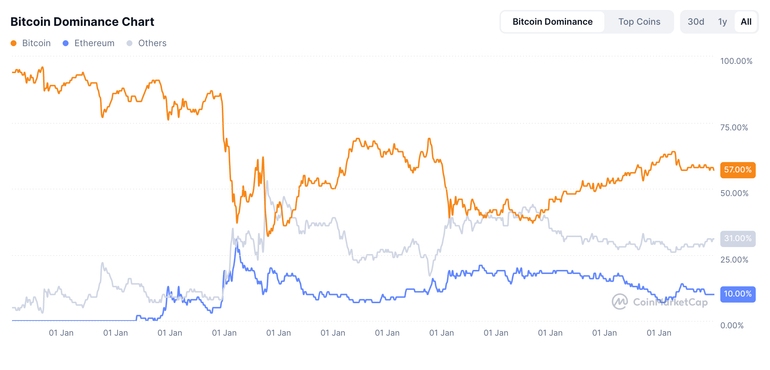
Bitcoin as the pioneer and leader
BTC Dominance Chart
Source: coinmarketcap.com

Bitcoin is the pioneer technology and stood alone in the first years of its existence. The crypto industry grew up around it with competitors either trying to replace it or to use the underlying technologies to create new solutions. This has occurred in waves of adoption and has occurred twice in Bitcoins’ history as shown in the chart above. Both times the dominance of Bitcoin has recovered as these ‘alt-coins’ have failed to deliver on their promises. Gaining an understanding of why this occurs as a repeated pattern will help to guide internal investments as well as providing consulting opportunities for customers.

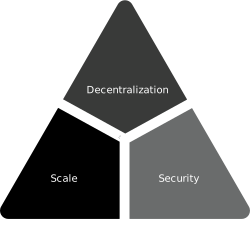
Blockchain trilemma and trade-offs
Blockchain trilemma: Decentralization, Scale and Security.

The blockchain trilemma refers to the challenge of achieving three critical aspects of blockchain technology: security, scalability, and decentralisation.

The trilemma suggests that optimising one aspect often compromises the others, making it difficult to achieve all three simultaneously. Bitcoin optimises for security, with the hash rate protecting the network only growing higher, and decentralisation, allowing for a truly global network that has no central authority overseeing it. This is at the expense of scalability, the number of transactions supported per second is relatively low. This problem is left to be solved at the higher layers such as Lightning, in a similar way to the TCP/IP multi-layered approach.

Open source software management
Bitcoin is an open source project and the source code is available under an open (MIT) license, free to download and use for any purpose. Open source means more than simply free to use. It also means that bitcoin is developed by an open community of volunteers.
Andreas Antonopulos

That “open community of volunteers” collaborates through developer platforms like GitHub. Through public repositories, they organise the software’s development transparently. The code and its history are always available. The whole setup has similar characteristics to the blockchain, the open ledger at the heart of the Bitcoin network.

The open source ethos is present all over the Bitcoin ecosystem; from clients like Bitcoin Core and Bitcoin Knots, to DIY miners like the BitAxe, to wallets like Wasabi, Green Wallet, or Blink.

Any technically capable company or individual can get involved with these projects, add value and build solutions on top of it. 

A good source of reference for Bitcoin related development is Jameson Lopp, who has been involved in Bitcoin since the early days.

Networking aspects

The Bitcoin network comprises nodes that interconnect in a mesh network with a "flat" topology. There is no server, no centralised service, and no hierarchy within the network. A node is a computer connected to other computers which follows rules and shares information. A 'full node' is a computer in Bitcoin's peer-to-peer network, which hosts and synchronises a copy of the entire Bitcoin blockchain. Nodes are essential for keeping a cryptocurrency network running, the code for which is contained in the Bitcoin Core software. Miners are a specialised subset of the nodes that carry out the hashing function and create blocks. As the Lightning diagram above shows, there is an ecosystem of companies supplying the hardware and/or software to provide these function, that any technology company could choose to get involved with.

Usage and impact on customers

As the diagram also shows a part of the ecosystem comprises companies that provide payments infrastructure, wallets, mining pools and applications that provide value to the consumer such as Podcasts and Exchanges. Any of these areas are potential avenues to explore for a technology company, whether it’s to understand the opportunities it may present or threats to the existing business.

How does the business need to change?

With an understanding of these key aspects, a business will be in the position to consider how the existing strategy may need to change, for example answering the key questions outlined in ‘Playing to Win’:

  • Winning aspiration – what is the purpose of our business and guiding aspirations and how does Bitcoin fit into this?
  • Where will we play? – what geographies, product categories, and segments can we succeed in based on an understanding of the Bitcoin ecosystem.
  • How will we win? – value proposition and competitive advantage based on current capabilities.
  • What capabilities must be in place? – what specific capex and investment is required.
  • What management systems are required? - how will changing the form of money/treasury asset impact the business and internal systems.

An example approach would be to carry out a SWOT analysis, which may include: 

Strengths

  • What skills and technologies are available in-house to apply to the Bitcoin industry?

Weaknesses

  • What skill or additional investment might need to be made to address these changes?

Opportunities

  • What new businesses are forming around Bitcoin?
  • How does AI and Bitcoin/Lightning work together?

Threats

  • What is our competition doing to address this space?
  • What new competition might arise as Bitcoin matures?
  • What risks does this create for the current business?

Completing a similar analysis using this or other frameworks will help to understand how Bitcoin might affect the business, and what changes need to be made.

4.4.2 Business Plan – how will this be achieved?

As shown in the example ecosystem for Lightning, the IT industry is key to the Bitcoin economy, and there are many different opportunities to add value depending on the answer to the questions of where will you play and how you will win, such as: 

  • Layer 2s/3s network infrastructure development
  • Involvement in Open source software development
  • Development of new hardware solutions
  • Application and software development
  • Implementation of AI and Bitcoin solutions
  • Enhancing IT security and privacy for the Bitcoin network
  • Bitcoin mining and energy analysis

4.4.3 What to sell- What products or services could be created or adapted to this new business model?

Some examples of companies that are innovating in this space are:

Fountain is a Podcast App that offers several innovations to Podcasting.

The App is linked to a Lightning wallet powered by CashApp or Strike, which allows users of the app to send and receive ‘sats’- small amounts of bitcoin.

Listeners can choose to stream sats to the producer by the minute while they are listening. They can also ‘boost’ podcasts that they like by sending sats to the podcaster along with a message. Boosts get displayed as comments so that other listeners can read and respond to them. When you send a Boost it will appear on the show and episode page under activity. The more you Boost, the higher it appears on the episode page. It will also be seen by other users who follow you on Fountain in their Discover feed.

The Podcasters can therefore earn sats over lightning for listener engagement, and can select to split this automatically with any contributors to the show. 

For the user, every minute that is spent consuming content, creating content, or watching ads, increases the value of the platform being used.. Think about the ones used every day. Youtube, Twitter, Facebook, Instagram, TikTok - all of these platforms would lose their value without the time and attention given to them, but none of them reward the user for staying. On the Fountain app, users can be rewarded for liking, listening to promoted content or simply listening to a podcast.

Companies can consider diverting marketing funds – famously traditionally 50% of which is wasted but difficult to know which 50% - to adopt a similar model.

MicroStrategy Incorporated is an American company that provides business intelligence, mobile software and cloud based services. The firm develops software to analyse internal and external data in order to make business decisions and to develop mobile applications. 

In August 2020, MicroStrategy invested $250 million in bitcoin as a treasury reserve asset, citing declining returns from cash, and is now using bitcoin to provide incentives to employees. MicroStrategy is one of the foremost organisations developing and deploying solutions in this direction, and in 2023, Microstrategy announced a number of initiatives in this area:

  • Rewarding employees for attendance on conference calls. By integrating lightning with Zoom , as meetings and conferences are scheduled, such as the company day, employees who attend and stay for the entire duration of the webinar get SATs.
  • Reward sharing knowledge with Salesforce integration. Employees are also rewarded for providing useful knowledge in the form of articles that customers can read to answer the questions they have about the products of MicroStrategy. Employees are also paid for answering questions in real time with sats.
  •  Reward for consuming content with Wistia integration. Video content created by the marketing team, which explain the vision and mission of MicroStrategy, as well as the feedback of customers on how the company’s products are useful, are hosted on Wistia while employees are paid to consume these contents. The aim is to help its employees “understand its vision, understand the new capabilities of the product, and understand our customers’ use cases” while they are rewarded with Sats.
  • The reward for learning with Adobe LMS integration. The Microstrategy staff said that due to the importance of the personal development of its staff to the company, a learning system was created and integrated with the Adobe Learning Management System, which also works with the Lightning reward. 

Microstrategy noted that these capabilities will be made available to customers of the Microstrategy platform.

Since the initial investment in bitcoin, Microstrategy has invested heavily to become one of the largest holders of bitcoin, and has seen its shares outperform against industry peers. The subsequent increased value of stock options held by the staff was described in an interview as having had a positive impact on employee retention. 

Source: https://cryptotvplus.com/2023/05/how-microstrategys-sats-rewards-spark-employee-motivation/

As these two examples show, using Bitcoin and Lightning offers opportunities not only for offering internal rewards for employees but also for external services. Technology companies are in a good position to be able to adopt these for themselves, as well as helping customers deploy solutions itself. 

The potential products or services to offer would be highly dependent on the part of the technology industry that the company is involved in, but some examples are:

  • Software companies - SaaS subscription payments using SATS streaming
  • Security vendors – targeted services to detect cryptojacking
  • MSPs – Blockchain/Bitcoin education programs for customers
  • Social media platforms - charge for usage instead of relying on advertising revenue
  • Stream sats to users (e.g. for filling out surveys or for spending time on the platform or website) instead of spending on marketing and advertising
  • FinOps companies adopting Bitcoin rails for payments
  • Data Center providers delivering heat/mining solutions for AI/BTC
  • Heating companies incorporating mining
  • Renewable energy companies incorporating mining

It is also important to realise that major investments have been made in the ‘alt-coins’ that have claimed to be designed to provide new and innovative solutions, but have failed to gain any real traction to date. The best of these ideas will most likely find their way onto the Bitcoin network.

4.4.4 How to win – go to market strategy and sales

A digital marketing strategy should include a plan for using online channels to establish an internet presence and achieve specific marketing objectives. Ultimately, the goal is to boost the visibility of any business and attract new customers using a variety of channels. As shown in the examples above, disruptive micropayments can also make new marketing models viable. 

The marketing strategy and plan should be adapted to include the Bitcoin related initiatives agreed to, with clear goals and objectives defined. 

Goals may be:

  • Establish thought leadership on Bitcoin in related technology area to the business
  • Attract new customers with Bitcoin focused products and services
  • Increase brand awareness in the Bitcoin space 

The marketing plan may include initiatives such as:

  • Build a new website landing page focused on Bitcoin and/or Lightning
  • Embed Bitcoin messaging into existing marketing campaigns
  • Product or service launches related to Bitcoin
  • Grow social media following on targeted platforms related to Bitcoin content
  • Contributing to open source software 
  • Utilise the opportunity for sats streaming to encourage consumption of marketing or educational content

4.4.5 Security – any impact on Governance, regulations and compliance requirements

Does the use of Bitcoin and related open source protocols impact the way we think about IT risk and compliance?

Security and compliance are critical to the success of Bitcoin, which relies on hashing, cryptography and encryption. As an open source protocol, the code is available for anyone to scrutinise and make contributions to. Technology companies can be well-positioned to contribute to this ecosystem. 

Depending on the selected solutions the company is focused on, there may well be other aspects of security and compliance to consider, such as financial transaction regulations or customer privacy. 

4.4.6 Talent management – what new skills will be required

Many early Bitcoiners came from the IT industry, possibly because early adopters needed to have a high level of technical knowledge to appreciate how Bitcoin provides security and scarcity.

As described in the introduction, a cliché is that Bitcoin combines everything you don’t understand about computers with everything you don’t understand about money. The latter may be something that needs further internal education, but the technology industry is obviously well placed compared to other verticals to identify and provide the appropriate skills required. Depending upon the specific area of focus, new technical skills may need to be identified around networking, encryption or cryptography within the company. 

Understanding of the technical aspects of Bitcoin is also lacking generally, and technology companies are well placed to help educate the market. 

To be able to deliver effective education and training for both internal development and support as well as to the market, the financial aspects of Bitcoin also need to be understood. This may not fall into the comfort zone of a typical technology focused company, but will be needed to deliver effective education and training to potential customers on why it is important and why the new products and services the company is offering are of value. 

4.4.7 Customer management – engagement, onboarding and retention

The entire purpose of any company is to deliver positive outcomes to their target customer base and to translate that into profits. Technology companies have often put in place a ‘Customer success team’ to focus on managing each customer through the entire lifecycle, from building awareness through to preference, onboarding and customer management, and ultimately loyalty.

However this function is managed, it will now need to incorporate Bitcoin. This may include:

  • Customer Education workshops on Bitcoin 
  • Input to service development from the customer base
  • Upselling new Bitcoin related services to the existing customer base
  • Managing customer satisfaction related to the new services
  • Gathering case studies and testimonials related to Bitcoin solutions

This will require new skills and possibly new processes to be put in place.

4.4.8 Innovation

Bitcoin is early on in its adoption and development, and is therefore on a steep curve with constant innovation in many parts of the industry. It is therefore important for any technology company to stay on top of this innovation to remain relevant in the industry. As the technology industry already evolves at a fast rate, a culture of continuous innovation should already be in place, and Bitcoin needs to be incorporated into this process.

4.4.9 Summary

The Internet elevated the 'IT Department' to the C-Suite through the role of CTO as it became clear that IT was not 'just a tool' but was transforming (or obsoleting) operating models. Bitcoin is building on this further as it transforms the financial side of a business. Every large/medium-sized company is now a software business and, within 10-15 years, every company may well be a Bitcoin business too.

Technology companies are well placed to both understand and benefit from this adoption of Bitcoin. This can take many forms based on the company profile and target market, but will require a level of understanding and investment in many parts of the company to succeed.

4.5 Professional Services

4.5.0 Introduction

I think that the Internet is going to be one of the major forces for reducing the role of government. The one thing that’s missing, but that will soon be developed, is a reliable e-cash, a method whereby on the Internet you can transfer funds from A to B without A knowing B or B knowing A. The way I can take a $20 bill, hand it over to you, and then there’s no record of where it came from. You may get that without knowing who I am.
Milton Friedman

Many companies and people missed the importance of the internet when it first started and continued to do so as it evolved to deliver the wide range of capabilities we take for granted today, that have revolutionised many aspects of our lives. Early users - around the time of this quote - struggling to send emails over a slow dial-up modem would have found it hard to imagine walking around with a mobile device providing on-demand access to the broad range of applications available today. 

Cloud technologies had a similar disruptive effect, starting with the launch of basic storage services a few years before Bitcoin was launched, initially being perceived as simply a variation of offsite hosting, but becoming the predominant platform for delivering IT services and continuing to develop new capabilities and features at an accelerated rate that is hard to keep up with.

The missing link for unlocking the next stage of value from the internet, as Friedman pointed out early on, is a reliable digital equivalent to cash that can be used to pay for value delivered over the internet, which Bitcoin delivers. It has grown organically, with no marketing budget or large companies behind it, on a faster adoption curve than the internet to become the ‘e-cash’ Friedman saw as this missing link. It allows people and companies to transact with each other globally without requiring permission or systems from the Government. It will unlock a new wave of innovation and collaboration globally, and companies that understand this and adopt it earlier will be the biggest beneficiaries.

4.5.1 Bitcoin for Professional services providers

Professional services generally describe businesses that offer services and expertise instead of a manufactured good. If you are one of them, then this chapter describes the potential impact on this industry, how having a trust-less form of digital cash available globally may affect the way you do business, and the types of services that can be offered to capitalise on this development. 

Why consider Bitcoin? 

Bitcoin can offer up new avenues for existing services, have an impact on how current services may need to adapt, and offer the possibility to build new adjacent services based on your current skills and industry knowledge.

Adding bitcoin to the discussion with existing customers

In the current environment, bitcoin is still more of a B2C play. A Professional services company with customers such as hotels or restaurant chains can consult with those clients to incorporate bitcoin payments for their end customers. 

As the market matures, adding Bitcoin as a payment option for their own services could also advertise capabilities in this space. Bitcoin holders tend to be keen to search out and use services from companies for which they can pay in Bitcoin.

How Bitcoin might affect existing services

For professional services organizations, the rise of a Bitcoin economy could demand a more collaborative approach where vendors, suppliers, consumers and even competitors will have a more transparent exchange of data and insight to the shared ecosystem. Bitcoin is all about the ecosystem it serves, levelling the playing field and re-distributing power and accountability to those who interact within it. As an example, Nostr (Notes and other stuff transmitted by relay) is a new social media platform that provides a direct link between the user community for the exchange of information and value using Bitcoin. 

In the same way the Cloud has enabled global collaboration and provided greater access to IT resources to a broader consumer base, Bitcoin can enable access to a transparent and open form of money to a global audience. Professional services organisations will need to look at the solutions they offer to consider how this change may affect the way they deliver existing services and products to their customers.  

New services based on the Bitcoin ecosystem

In addition to affecting existing services, Bitcoin and the ecosystem that is being built upon it offers the opportunity to create new services as alternate or entirely new revenue streams for professional services companies. Some examples of these are provided below:.

Accounting

Background

While bitcoin may not be a conventional holding among corporate treasurers, a greater understanding of bitcoin may help to explain why corporate treasurers of large, publicly traded companies have started to embrace it in recent years. Many of bitcoin’s properties, such as a maximum supply of 21 million tokens and verifiable scarcity on a public blockchain, may make it an attractive aspirational store of value. This critical segment of a portfolio could potentially be a valuable hedge against growing fiscal deficits, currency debasement, and geopolitical risks. As corporate treasurers grapple with new economic headwinds, bitcoin’s unique properties have acted as tailwinds.

Traditionally, corporate treasuries have managed cash conservatively by allocating most of the capital to what are often perceived as low-risk assets (e.g., bank deposits, money market funds, treasury bills, commercial paper, and repurchase agreements). However, uncertain economic factors including inflation, interest rates, and heightened geopolitical risks may be causing corporations to reconsider the viability of such strategies. 

Investment analyst and writer Lyn Alden describes three types of inflation: monetary inflation, asset inflation, and consumer price inflation (CPI). Monetary inflation (an increase in the broad money supply as measured by M2) does not guarantee but is a precursor to asset inflation (an increase in the price and valuation of investable assets) and consumer price inflation (an increase in the price level of non-financial goods and services).

Depending on the type of business, corporations could be impacted by both asset price inflation and consumer price inflation. For example, asset price inflation could lead to an increase in the value of assets a company may want to invest in or acquire, and consumer price inflation could lead to greater inventory costs relative to the purchasing power of cash.

Why Corporate Treasurers May Look to Invest in Bitcoin 

Professional services firms should be aware of the growing number of corporates that are adding bitcoin to their balance sheets, and why, for example MicroStrategy, and Metaplanet.Understanding the advantages of being able to use your balance sheet as a driver of shareholder value adds value to the advice that a professional services firm can provide to its clients.

Regulations

Numerous regulatory developments around the world regarding digital assets have given investors more confidence in bitcoin as an investment. With ever increasing market data and price history, digital asset-friendly regulations such as the European Union's (E.U.) Markets in Crypto Assets (MiCA) legal framework, and the U.S. SEC’s approval of a spot bitcoin exchange-traded product in January 2024 have offered investors and companies some assurance and clarity for which they have been looking.

FASB Accounting Rule Change

In December 2023, the Financial Accounting Standards Board (FASB) updated its guidelines for how companies should account for and report bitcoin and other digital assets on their corporate balance sheets. These new rules benefit companies that hold bitcoin by allowing them to use fair value accounting, finally allowing companies to also mark assets up to market. Previously, companies were only allowed to mark digital asset positions down. The new guidelines could give a better view of the company's financial statements and financial health by showing a more accurate representation of the true value of bitcoin held.

Bitcoin Price Performance Over Time

As a thought experiment, consider what the average S&P 500 company’s balance sheet would look like if they had invested just 1% of their corporate treasury balance in bitcoin over the last five years. Assuming an average treasury size of $10 billion, consider if a 1% ($100 million) allocation to bitcoin was made in June 2019 at $10,000. Despite an initial drawdown and periods of volatility, the bitcoin position would have eventually recovered and grown to approximately $700 million by June 2024. While the company could face short-term earnings volatility, the company’s long-term financial performance would be significantly enhanced, especially during high inflationary periods that have followed the onset of the COVID-19 pandemic.

Opportunities

The current uncertain and high-inflation economic environment has been pushing forward-thinking corporate treasurers to consider adding bitcoin to their balance sheets. The series of balance sheet allocations to bitcoin from Block Inc., MicroStrategy, Stone Ridge Holdings Group, and others represent a trend that could continue to grow as businesses weigh the risks of diminished liquidity due to elevated interest rates and the potential loss of purchasing power of cash due to central bank monetary and fiscal stimulus.

Companies that choose to allocate to bitcoin can benefit from outperformance due to bitcoin’s value rising over time, and accountants that understand the potential benefits and implications of this approach stand to benefit.

Financial services

Background

The convergence of the financial services and technology industries has created a level of uncertainty, with innovations such as peer-to-peer payment technology disrupting infrastructure, operations and business models.

While these innovations drive more customer-focused solutions at lower costs, they are also putting unprecedented pressure on financial institutions to become more responsive and agile.

The Financial technology (Fintech) industry includes a broad array of companies that utilise technology to deliver innovative services such as online payments, mobile applications, often working with traditional currencies and payment systems. 

Crypto currencies use blockchains and cryptography to deliver alternative digital currencies, which are designed to provide transparency, security and borderless transactions. This market has evolved over several years to include different solutions and is the basis for Central Bank Digital Currencies (CBDCs) being developed by Governments around the world. This has led to some confusion in the market with different solutions vying for attention from businesses and Government. None of these solutions provide the desired benefits of a decentralised, open-source and permissionless form of money except Bitcoin. 

Opportunities
  • Global FX transfers: The existing financial rails used to transfer money around the world are expensive, cumbersome and slow, as well as not being available to all potential participants. This opens up the opportunity to offer cheaper, more transparent and efficient financial transfers between any two parties globally. This could be based on the US Dollar using solutions such as USDT (Tether), or using bitcoin directly via the Lightning Network. 
  • Advisory services: Adoption of Bitcoin as the best solution to meet customer needs – an understanding of the superior properties of Bitcoin as a store of value and the ecosystem being built around it - offers the opportunity to provide advisor services to clients on how they can benefit from bitcoin adoption, as well as positioning it against the alternatives. 

Audit and assurance service

Background

Blockchain technology has the potential to impact all record keeping processes, including the way that transactions are initiated, processed, authorised, recorded and reported. This may have an impact on activities such as financial reporting and tax reporting. Chartered accountants will need an understanding of the technology used to create and confirm Bitcoin transactions and how these are stored on the blockchain ledger in comparison to traditional ledgers. 

Although outside the scope of this module, other alternative solutions based on the idea of blockchains do exist, such as CBDCs, ‘stablecoins’ and other smart contract focused solutions. An understanding of these solutions and the potential impact if a client has chosen to deploy them will also necessitate an understanding of how these work. This expertise will be critical to answering questions such as whether they are decentralised and public or ‘permissioned’ and managed by a consortium of protocol owners, as an example for supply chain management This will have an impact on what validation techniques may be required for an effective audit trail. 

  • Smart contracts: Smart contracts are a method to automate the contracting process and enable monitoring and enforcement of contractual promises with minimal human intervention. Automation can improve efficiency, reduce settlement times and operational errors. Because using smart contract technology requires the translation of all contractual terms into logic, it may also improve contract compliance by reducing ambiguity in certain situations. However it may require a level of technical knowledge to implement and monitor which the team does not currently possess. A CPA auditor may be required to verify the interface between smart contracts and external data sources that trigger business events. Without an independent evaluation, users face the risk of unidentified errors or vulnerabilities. 
  • ESG reporting: Engaging with bitcoin could allow corporations to gain positive advantage in their ESG reporting, which is now a compulsory and large part of their required regulatory reporting. The KPMG paper which was written in 2022 describes how Bitcoin mining can encourage the adoption of renewable energy, balance energy grids utilising intermittent renewable energy sources, reduce methane emissions and help to recycle the heat generated by data centres.
Opportunities

To take on the new role, an auditor may need a new skill set:

  • Understanding of technical programming languages
  • Effective methods of data collection from the Bitcoin blockchain for audit usage
  • Implementation differences between solutions and the impact this has on trust and ownership of the protocol
  • Auditing a smart contract for compliance to regulations and third-party controls
  • Dispute arbitration for smart contracts according to any applicable legal framework
  • Understanding of the ESG implications of bitcoin adoption

Financial Advisors

Background

As well as holding digital assets directly, many wealthy individuals and family offices are allocating a portion of their new investments to funds that invest in specific digital assets or digital asset projects. While the new bitcoin spot ETFs enable the ability to hold investments which track the performance of bitcoin without taking on the custody risks attached to holding the asset itself, the most secure way to protect long term value is to learn how to hold the asset directly.

Encouragingly, it seems regulators have generally accepted that digital assets like bitcoin are here to stay and so, rather than considering whether they should be outlawed or not, they are focusing now on striking a balance between developing the industry and protecting investors. It is essential to obtain comprehensive local and holistic advice on the multijurisdictional regulatory treatment of a digital asset investment strategy and the interplay of one regime with another.

Different jurisdictions also have varying ways of treating digital assets and the gains derived from them for tax purposes. A similar approach to the regulatory analysis outlined above will need to be adopted for tax, with specialist local tax advice being obtained as well as a more holistic international perspective.

Concerns around data security necessitate the implementation of strong cyber security measures to ensure that both financial assets and personal information are adequately protected.

Most family offices retain a third-party specialist crypto custodian to hold their cryptocurrency and the relevant private keys. A service provider should have in place the most robust security systems currently available, require multiple layers of authentication from various internal stakeholders to execute any trade, and have insurance which covers the loss of the asset in the event of fraud or a cyber attack.

Opportunities

Advisors to family offices and wealthy individuals can offer a variety of services based on this market dynamic:

  • Digital asset security management
  • Cyber security advisory
  • Bitcoin secure storage advisory
  • Tax implications 
  • Bitcoin as part of an overall portfolio management
  • The development of new legal and compliance protocols, such askey signing ceremonies for transfers

Marketing consultancy

Background

There are many professional services companies focused on providing marketing services, from helping customers in defining a strategy and creating content, to building websites and driving traffic to them. 

Any digital marketing strategy should include a plan for using online channels to establish an internet presence and achieve specific marketing objectives. Ultimately, the goal is to boost the visibility of any business and attract new customers using a variety of channels. 

One example of a new channel which is closely aligned with Bitcoin is Nostr.. Like Bitcoin, this is a decentralised open-source platform where the user retains ownership of data by using a private key. Nostr's censorship-resistant architecture ensures that business communications, marketing messages, and customer interactions are free from external interference. This is particularly valuable for businesses operating in industries where regulations are strict or where freedom of speech is a concern. Moreover, Nostr's use of a single private key to access multiple interfaces simplifies account management, providing peace of mind by being able to switch between different applications seamlessly. Integration with Bitcoin and Lightning also enables global transaction and micro-payments – a feature of Lightning that opens up new methods of marketing.

Opportunities

Assisting customers with their marketing may include initiatives to:

  • Establish thought leadership on Bitcoin in related technology area to the business
  • Attract new customers with Bitcoin focused products and services
  • Increase brand awareness in the Bitcoin space 

The marketing plan may include initiatives such as:

  • Build a new website landing page focused on Bitcoin and/or Lightning
  • Embed Bitcoin messaging into existing marketing campaigns
  • Manage Product or service launches related to Bitcoin
  • Grow social media following on targeted platforms related to Bitcoin content and evaluate the use of newer platforms such as Nostr
  • Contribute to open-source software 

Building a depth of knowledge in these areas will open up new types of marketing services that can be developed and sold to the existing or new client base.

Services targeted at the Small Business Sector

Benefits for SMB:

  • Inflation hedge
  • Access to global markets
  • Lower transaction fees
  • Near instant settlement
  • Enhanced security
  • Financial independence
  • Censorship resistance

For a professional services business, there are several potential benefits to Bitcoin adoption that the SMB sector should be interested in, and services can be designed to meet each of these:

  • Market reach: the online Bitcoin community will travel further and research online to buy from companies that adopt Bitcoin. This can open up a new potential customer base for a smaller company.
  • Taking Bitcoin as payment can settle faster with lower fees than conventional methods of payment. 
  • Bitcoin can also enhance security for online transactions due to the inherent features of the underlying technology, as well as not being reliant on the traditional banking system, making it resistant to censorship
  • Keeping some or all of the received Bitcoin in a secure wallet can help to preserve wealth, especially in countries with fast depreciating fiat currencies, making it a good long term investment opportunity
Opportunities

As smaller companies will tend to rely on fewer service companies compared to an enterprise, if a professional services organisation is targeting this market then it would be beneficial to be able to advise them on all aspects of Bitcoin adoption.

Healthcare

Being ahead of where an industry is heading will enable Professional Services companies in that sector to continue to deliver value to their clients. A couple of examples in healthcare can illustrate how innovation based on Bitcoin can disrupt an industry sector by solving real problems in the market.

Secure Data management – example Nostr 

The ownership and secure sharing of patient data is a key concern with standards such as HIPAA in the United States being put in place to ensure that the data is adequately protected. 

The healthcare industry can potentially benefit significantly from Nostr's decentralized and secure nature. As highlighted in a recent pilot project in El Salvador, the Nostr-based SALUD protocol aims to revolutionize how patient data is managed and shared. By decentralizing health data, Nostr ensures that patients retain ownership of their medical records while allowing healthcare providers to access accurate and tamper-proof data when needed.

This approach addresses significant concerns with current healthcare data management systems, where patient information is often controlled by centralised entities that may monetize or misuse the data. With Nostr, the risk of data breaches or unauthorised access is minimised, and patients can opt out of data sharing if they wish without losing control over their information.

A second example of how Bitcoin can be incorporated into new approaches to Healthcare is CrowdHealth.It has created a platform that leverages Bitcoin’s costs and settlement advantages through an integration to a Lightning wallet to make and receive payments. These payments are owned by the contributors, who can then call on the community if they face a large medical bill. 

These are examples of how the rapidly developing Bitcoin ecosystem is disrupting one specific industry, and many more examples can be found in other industries. Professional services organisations that are focused on a specific industry may be able to either benefit from helping that industry adopt such solutions, or be the innovator that brings these types of solutions to new industry verticals as the market evolves.

4.5.3 Building out the Bitcoin ecosystem

Bitcoin is and has always been the lead blockchain, but the required focus at layer one on security and decentralisation initially left a gap for other capabilities in the market, which other blockchain based solutions emerged to try and fill. For various reasons these have not seen a great deal of commercial success over the years, and the Bitcoin ecosystem has now grown to a stage where these new types of capabilities can be built on it without adversely impacting the underlying core layer one technology. 

In addition, many Bitcoin users are long-term holders, viewing it as a store of value or a form of digital gold. Bitcoin maximalists are a large subset of this community who believe that it is the only cryptocurrency that will stand the test of time. They argue that Bitcoin’s decentralised nature, security, and first-mover advantage make it superior to all other digital currencies, differentiating them from alternative blockchains.

There is also a huge and growing amount of value secured within the Bitcoin network by these holders, so growing Bitcoin’s native ecosystem will not be a matter of attracting new users. Instead, projects will need to capitalise on the vast reservoir of users, developers, and capital already on the network. This gives rise to several opportunities to expand the Bitcoin ecosystem upon which professional services can be built:

  1. Enhance Scalability: There are already several scaling solutions operating on the Bitcoin network, such as the Lightning Network. However, others are also being built to target different problems. For example to deliver comprehensive scaling solutions offering secure, decentralised and efficient platforms for smart contracts.
  2. Facilitate Smart Contracts: Imagine a contract that runs itself automatically, with no need for lawyers or middlemen. That’s what Bitcoin smart contracts do. Bitcoin smart contracts are self-executing contracts with the terms of the agreement directly written into digital code. They automatically execute and enforce the contract when predetermined conditions are met, without the need for intermediaries.
  3. Foster Interoperability: Building bridges and connectors that allow seamless interaction between Bitcoin and other blockchains. This would enable users to move assets across chains effortlessly and tap into the best features of each network. An example would be USDT – a stablecoin that can be transferred across many different blockchains where users will typically choose the lowest price. Enabling USDT held on one of these alternate blockchains to be transferred to Lightning and Bitcoin can enable interoperability and migration of value to the more secure Bitcoin network.
  4. Integrate User Friendly Experiences: As the ecosystem grows, there is a need for tools that simplify the development and deployment process for developers. This includes better wallets, development frameworks, and debugging tools. Beyond this, user friendliness is essential for those users who may be less technologically literate to interact and participate in the ecosystem.
  5. Education and Community Building: A strong community is the backbone of any successful blockchain project. Investing in education, workshops, and community-driven initiatives can help users discover, developers build, and investors connect.
Opportunity

This opens up a number of potential services that can be created for the market to advise consumers and other businesses around the Bitcoin ecosystem, which is already happening around the world:

  • Advisory
  • Education
  • Buy, hold and sell Bitcoin

4.5.4 The Future

What might happen in the future?

The previous section has provided several examples of the types of services that are being offered in the market today, but what kind of solutions may become available in the future that companies could build professional services around to consult, analyse, design and implement to meet evolving customer requirements?

E-Voting

One example of the potential applications that can be built on Bitcoin is securing Government elections. 

  • Current situation and challenge: Democratic elections are designed to ensure that power is transferred in accordance with the outcomes, and that the elected government reflects the will of the people.This requires that eligible voters can participate in the process free from intimidation, that all votes are counted properly, no counterfeiting of votes is possible and that the outcome is transparent. Around the globe, elections are often perceived as not meeting this goal, with 
  • Existing proposals: Governments have tried various means to ensure fairness of the election process, requiring Voter ID, or independent counting of votes using a paper based approach, but challenges still remain. Governments like the EU are ‘investigating’ ways to use alternative blockchains and protocols to achieve the end-goal of a transparent and tamper-proof electronic voting system. However, this still requires trust in whoever is creating and running the system and will be developed according to the Government timescale. 
  • Bitcoin based alternatives have already been developed that use its open-source capabilities to deliver the desired outcome of a transparent, tamper-proof method of running elections.

Guatemala

  • Thanks to OpenTimestamps, a tool created by bitcoin developer Peter Todd a few years ago, Guatemalan tech startup Simple Proof is able to safeguard key documents about the country’s presidential elections from fraud and tampering. Todd’s tool, which leverages hash functions and the bitcoin blockchain, is able to timestamp pieces of information and make it easier to spot attempts at fraud and manipulation’

Open source decentralised electronic voting protocol: HodlParman – an active proponent for Bitcoin – recently announced:

  • ‘I've been working on a decentralised electronic voting protocol that's fully peer to peer, eliminates the possibility of electoral fraud or double voting, keeps votes private, and is verifiable by anyone. It benefits from Nostr relays, and Bitcoin’s clock, and DOES NOT require a blockchain or token’ 

As we can see, there is the ‘conventional’ approach to solving a known problem, in this case electoral trustworthiness, which is still being developed and will not necessarily resolve all of the issues, and a new approach based on the Bitcoin ecosystem that has already been developed and is available that has the potential to resolve them. Gaining an understanding of these types of solutions and how they can be used to deliver services to the market, including in this case Government, will provide potential new revenue streams.

Sats rewards

The ability to deliver small amounts of bitcoin for payment at virtually no cost opens up different avenues for companies to explore, around which a Bitcoin focused services company could provide advisory services for such as:

  • Using platforms such as Microstrategy for employee rewards
  • Bitcoin-friendly podcast platforms such as Fountain, rewards for attending live streaming using NOSTR and zap streaming
  • Paying people to complete surveys to encourage participation
Summary

The Professional services industry is broad in scope, covering businesses of all sizes, focus and reach. Whatever the focus, these examples have hopefully shown that Bitcoin and the associated ecosystem has the potential to drastically affect this industry, changing the way services are delivered and opening up new opportunities. Professional service organisations that take the time to understand these dynamics early can get ahead of the curve.

References
  1. https://kpmg.com/us/en/articles/2023/bitcoin-role-esg-imperative.html
  2. https://medium.com/@primalcapital/growing-the-bitcoin-ecosystem-afb424e0ff0f
  3. https://www.fidelitydigitalassets.com/research-and-insights/adding-bitcoin-corporate-treasury
  4. https://www.pathcheck.org/en/blog/notes-and-other-stuff-over-relays-nostr-for-health

Some example companies offering Bitcoin services: 

  • River
  • Swan
  • CoinCorner
  • Strike
  • Relai
  • Musqet

4.6 Government

Excluding altruism, money is the motivation driving all voluntary human action. Bitcoin is a neutral, global money with rules, but no rulers. If it can’t be coerced, and doesn’t fail, the geopolitical implications are unparalleled.
James Dewar

4.6.0 Introduction

Once a new technology rolls over you, if you're not part of the steamroller, you're part of the road.
Stewart Brand

The purpose of this chapter is to point out to governments, government agencies, and government employees that ignoring Bitcoin is burying your head in the sand and hoping that either it is coercible or it will fail. If neither of these outcomes eventuate then it will hugely transform the incentive structures for all future human action. The people who inhabit the geography of existing nation states whose governments act first to understand and enact appropriate policy could gain a substantial advantage.

It could be that Bitcoin is coercible and/or it fails, but unless a government learns about the technology and reaches that conclusion through knowledge without prejudice they are taking a huge risk, the consequences of which will be borne by the citizens on behalf of whom they are currently expected to act. After receiving notification by reading this chapter, that would be gross negligence and a dereliction of duty by today’s governments, their agencies and employees. If you don’t want that responsibility stop reading now, and resign.

Governments can be defined as the entities which exert, or seek to exert, a monopoly of violence over their geographical territory. This arrangement has been arrived at for protection against external physical threat, and to preserve order internally. As societies and economies have developed, governments have tended to expand their roles internally. One of the roles that emerged, fitfully at first, from the late 19th century on was control over money via central banking. The purpose of this chapter is not to make a case for or against central banking and government control of money, but rather to highlight that it may not be possible to exert this power in the future. Anyone who understands the centrality of control of money to the exertion of other powers will recognise the loss of such central control as a substantial tailwind towards decentralising power within nation states. 

History teaches us that short of war or pestilence, significant societal change has more often been driven by technology than law because such change was seldom sought in advance by the people or their leaders. Indeed even had such change been sought, law has no capacity to discover or invent technology.

A lot of the power that nation states have acquired over the last century from taking (historically unprecedented) control of money may have to be ceded. This is not a threat to the people, but it may be for the structure of government and institutions. The leaders of our institutions need to learn about Bitcoin and its implications so that they can understand how the interests of the geography and people who currently constitute their nation state may be affected. 

Only in this way will they be able to choose policy actions that optimise the future for their geography and people. Education and humility will be required by all to optimise decision making. There is no hiding from this, changes will be forced upon us at some point anyway, and a better outcome can be achieved by anticipating them. The game theory at play may mean embrace early or lose out. 

This is a litmus test for our current politicians and institutional leaders. Are they mainly driven by the desire to improve the future for the geography and people that currently constitute their nation state? Or, are their priorities shaped by other motivations, be it personal, business or ideological?

By learning about Bitcoin governments can plot a chart for the benefit of their current and future citizens. This chapter aims to provide some areas for consideration to help get the planning process underway.

4.6.1 Technology vs Law

The most important causes of change are not to be found in political manifestos or in the pronouncements of dead economists, but in the hidden factors that alter the boundaries where power is exercised. Often, subtle changes in climate, topography, microbes, and technology alter the logic of violence.
James Dale Davidson

History is replete with examples of technology innovation changing how human societies evolved and were governed. The Sovereign Individual, a 1997 book by James Dale Davidson and William Rees-Mogg, explores how technology changes drove the change in the West from a world governed by the Church to one of the nation states we inhabit today. They identify the key technology innovations as the emergence of the printing press and the use of gunpowder as a fuel for violence which changed the returns to violence at scale.

An important observation is that there is no evidence that either the Church or the people at large wanted or instigated the change that occurred. In retrospect it appears inevitable that the power that emerged from the Church’s control of information would ebb as the new economics removed its monopoly on producing written materials.

The printing press lowered the cost of reproducing information, and thus increased the decentralisation of the production of written material. 

History suggests that technology that drove large change was not instigated by the governmental framework, the institutions, the leadership or by the people via democratic processes. More often we see that people and institutions tended to vainly resist, obstruct and delay its adoption. In the 20th century we can observe this in the early responses to the use of automobiles, electricity, cryptography, email and the internet.

The embracing of new technologies by markets drove the reshaping of where people lived, how they worked and sometimes the very structure of what they regarded as their culture, country or leadership entity. In many cases it changed the scale and construction of that very entity itself. Other examples of technology driving wide scale societal change include the rise of electricity, automobiles and the internet.

Taxation and debt are also structured by law and therefore respond to technology. This can be observed through the past. Historically taxation was limited to things like stamp duties and excise / import duties as the necessary technology to support income taxes and others did not yet exist.

This evidence is cited to support the conclusion that technology must therefore be superordinate to law. Law can catch up afterwards, but the flow of causation shows legal means can’t reasonably or durably stop change, and nor can legal means cause it. Laws changing are an effect of technology change, not the cause, and new technology innovation can’t be voted in, decreed by a ruler or indeed prevented without self-harm.

The truth is incontrovertible. Malice may attack it and ignorance may deride it, but, in the end, there it is.
Winston Churchill

Successful technologies are a kind of “truth”. As such, law has been unable to prevent the advance of many technologies which at the time of their inception the society seemed to wish to prevent. Where this has been achieved it has usually reduced the wealth of that nation in the medium to long term.

4.6.2 Decentralisation

There can be little doubt also that the ability of central governments to resort to this kind of finance is one of the contributory causes in the advance of the most undesirable centralisation of government.
Friedrich A. Hayek

Hayek argued that the centralisation of money that occurred during the 20th century was an underlying driver of the centralisation of nation states. The rise of Bitcoin may push this into reverse, something which many people support and indeed to which politicians pay lip service, but have been seemingly unable to deliver.

Prior to the 20th century emperors, kings, queens and governments were always constrained by access to money. The wealth that money measures emerges not from above, but from a decentralised below. Until the 20th century the nature of money reflected this reality and thus was itself ‘real’. The form of this money, its specific technology, varied in time and place as part of the evolution of human societies.

Since the early part of the 20th century experiments were undertaken to remove the ‘realness’ of money, culminating in its full dissociation from reality in 1961 when the dollar’s convertibility to gold was “temporarily” suspended.

I have directed Secretary Connally to suspend temporarily the convertibility of the American dollar except in amounts and conditions determined to be in the interest of monetary stability and in the best interests of the United States.
Richard Nixon

Money is a technology and Bitcoin, as a digital money, may be one of the biggest technology innovations in human history.

...money is, at root, technology as much as any other basic machine like the wedge, lever or wheel.
Business Insider

Perhaps money is comparable in scale to the invention of farming, the printing press or gunpowder. Excluding altruism, money motivates all voluntary human action and therefore it is possible that a new solution in this technology for 8 billion people may turn out to be the most impactful technology innovation in human history.

Money is power, it is a technology, and as such it is superordinate to law, and therefore by deduction it is also superordinate to lawmaking institutions. The decentralisation of money will drive the decentralisation of power.

One of the penalties paid for the blessings of stability of the currency is that the law finds itself unprepared for unexpected and revolutionary changes in the monetary system.
Phanor J. Eder

Today nations specify one or more moneys as legal tender. If the market were to determine something else as a preferred money either locally or internationally then governments may face a situation where the demand for the local tender currency is outpaced by the demand for the global, neutral ‘real’ money. We will again observe that real money is a market determined good which may cause legislative change, and is not itself created by law. Nations could always choose to keep tender laws that specify the less demanded money, but would be well-advised to consider the self-harming consequences of making such choices :

History shows it is not​ possible to insulate yourself from the consequences of others holding money that is harder than yours.
Saifedean Ammous

The argument presented above shows how a decentralised, global and neutral money can drive decentralisation of power. Now we turn to how Bitcoin, a decentralised monetary communications technology, may also be a precursor of the decentralisation of non monetary communications and media. 

Decentralisation of communications

Bitcoin is a decentralised, open and neutral network communications protocol which the market appears to value increasingly as money.

There are features of this protocol which may also produce a new paradigm in human communications beyond money. We are beginning to see communication and social media solutions emerge and gain traction which deploy some of these features, for example Nostr and Keet. This may be the beginning of a major decentralisation of services as compared with how the internet is used today. These media services are also likely to have Bitcoin transactability natively embedded.

In light of the recent debates, particularly in the developed world, regarding freedom of speech and censorship, the decentralisation of communications should not be ignored by governments, and it should inform policy today irrespective of Bitcoin itself.

It may be that it is counter-productive for governments to be too coercive seeking to ban, shut down, censor or otherwise interfere with the current centralised solutions. The harder that government acts, the faster alternative solutions are likely to grow. In anything resembling the existing developed world free societies, these alternative solutions will be far more costly to surveil, and hence practically unsurveillable for the mass population.

Therefore the optimum approach may be to seek to work with existing centralised solutions voluntarily with a focus only on commonly accepted major harms and not on issues regarding widely held alternative narratives or on individual citizens. A global commitment to complete freedom of speech on existing platforms will reduce the push to the emerging decentralised ones.

4.6.3 Internationalisation

Internationalisation through properties

Bitcoin is digital property and therefore occupies no physical space and has no geographic footprint. Further, Bitcoin is not a legal construct. Therefore Bitcoin is a unique innovation that has become valuable property but which has no domicile either physically or legally.

The world has experienced a period in the near past when it was on one monetary standard - the gold standard. Although countries maintained their own currencies, the exchange rates rarely changed as they were valued based on the weight of gold that each represented. However, gold's costly and slow physical portability eventually brought this period to an end. It also limited the internationalisation that gold could deliver beyond simply a common measure of value. Gold’s survival as a global monetary standard was limited and ultimately undermined by its occupance of physical space.

Internationalisation through social network

The Bitcoin community has developed as a global social network. Domicile may vary the freedoms that people have by geography, for instance ability to access the open internet, or the list of apps approved on the Apple App Store, or Google Play Store. Domicile may also affect the legal status and regulation of Bitcoin as an asset and medium of exchange. However, the common culture and knowledge that has developed and is growing in the Bitcoin community is a shared global experience. 

Consequences of internationalisation
Astronaut falling into a black hole
Astronaut falling into a black hole (schematic illustration of the spaghettification effect)

It would seem unconscionable for any of the free world to implement policies that restricted people’s freedom of movement to the level of making moving to other countries illegal. Such an authoritarian move would signal the demise of the developed world and history would suggest that it would not be sustainable long before revolution.

Given the above, the combination of the non-geographic nature of Bitcoin and the global social network will unleash an unprecedented competitive force onto nation state governments to deliver value for money services to their citizens or face a falling customer base. This need not be a ‘race to the bottom’ as some may cast it, but rather an explosion of diversity, and with a strong emphasis on high quality and productive delivery in return for taxes raised at whatever level the market will bear.

The more competitive environment in which nation state governments will find themselves combined with the growth of a new money that is coordinating human action globally will act as a pull outwards. Combined with the decentralisation of money and communications acting as a draw inwards, nation state governments may find themselves becoming stretched from both sides. Areas of competence may separate into regions or communities internally, and disintegrate outwards. The size and scope of nation state governments is likely, on average, to reduce. Whatever the resulting size in a given jurisdiction, the tax paying citizens will be less supplicants and more customers and will thus demand that services are value for money.

The decentralisation inward, and the stretch outward may pull some nation states apart much like spaghettification in a black hole. Bitcoin is at once both localising and globalising.

We already see within the bitcoin economy the seemingly contradictory effects of being at once both a localising and a globalising force. There is more globalism, less intermediation and more decentralisation with both more localised and international economies and social networks, with much less in between.

Here is a, non-exhaustive, list of specific issues upon which governments might want to consider the effects of this internationalisation: 

  • Taxation / budgets
  • Money supply / banking system
  • Defence / prosecution of war
  • International governmental structures
  • Regional / local governmental structures
  • Economic structures
  • Charities, non profits, religious and community organisations
  • Education / academia

4.6.4 Ethics 

The most important ethical issues vary based on geopolitics. We consider two perspectives: The developed world perspective and the Global South perspective. That the existing financial system poses different problems for citizens simply based on where they live may itself be considered an ethical issue related to human equality.

Developed world perspective - wealth inequality and the environment

The Cantillon Effect is named after Richard Cantillon, an 18th century Irish-French economist who first wrote down his observation. The effect describes the uneven effect monetary inflation has on goods and assets in an economy. When new fiat money is injected into an economy its effects are felt by different people and industries at different times. Typically assets grow in value, benefiting the wealthy, whilst the asset poor experience general price inflation.

The existing monetary system is a significant underlying cause of the growth of the wealth gap between the rich and the poor. The ability for the wealthy and politically connected to exploit the existing system for their benefit, at the cost of the less well-off, is a feature of how the existing system of money works. This mechanism is also driving a decline in the middle class, with the few becoming rich, and the many becoming poorer. A return to a neutral money which can only be gained through work, irrespective of the wealth of the person concerned, will stop the increase in these wealth gaps and start to redress them leading to less unequal societies.

Bitcoin appears to provide a number of benefits across an ESG framework. Throughout its short history, new and innovative ways of leveraging the network and its native asset continue to emerge, such as helping to stabilize energy grids, reduce greenhouse gas emissions, and even assist with providing sustainable heat to commercial and residential properties.
KPMG

Bitcoin may be a critical contributor to helping to mitigate climate change due to its economically viable interaction with energy production and use. The paper also notes significant Social and Governance benefits associated with Bitcoin,

In a world where money cannot be created to drive consumption of resources, the resources available will be consumed in a more efficient and less wasteful way. We are likely to see a change in the balance of economic incentives between new production and “repair and reuse” with the latter rising relatively. This would drive a reduction in consumerism without economic calamity as the money is no longer based on debt. We would see more sustainable use of resources and growth in wealth for those that work, consume less than they earn and save that excess in hard money.

Global South / developing world - financial exclusion and poorly run national currencies
Some of us are born into monetary regimes with good policies and wise rulers…But many of us suffer under poor or poorly run monetary regimes…we have as little control of which monetary institutions we’re born into as we have over the biological mothers who bear us.
Resistance Money, Andrew Bailey, Bradley Rettler, Craig Warmke

In the Global South we observe from the perspective of poorly run currencies with high inflation, low international convertibility and low levels of financial inclusion. In many sizable countries half or more of the population are unbanked. A neutral, permissionless and fixed supply global currency has much to offer to such populations.

High inflation makes it hard for citizens to save. Saving is an important factor in being able to build capital in an economy and the absence of it seriously impairs real growth and sustainability. Instead, economies become dependent on external capital or more usually debt to drive production. Such debt usually comes with conditions which drive the type of economic development that the lender considers beneficial and which may not be what the local market would have developed organically. That the debt is centrally organised also provides an opportunity for unethical leaders to siphon some off for personal gain.

High inflation drives a raising of time preference as people discount the future at a higher rate. Lowering time preference is key to the growth of civilisation and economies. Low inflation, and lower time preference make it easier for people to plan and invest for the future.

Excluding substantial numbers of the global population from having access to global money exchange also tends to exclude them from participation in global markets. This harms their ability to provide for themselves by supplying goods and services to willing buyers. Their exclusion also harms customers who could benefit from competitive advantages that those currently excluded could offer; we all lose, some more than others.

4.6.5 Evaluating policy options

Change is the law of life. And those who look only to the past or present are certain to miss the future
John F. Kennedy

Whatever response governments take to this issue, the depth and breadth of its implications mean that the rise of Bitcoin should be added to national risk registers. 

4.6.5.1 Resist - Fighter

Some elements of government policy, but more especially those of financial regulators, appear to have taken this position over much of the time since Bitcoin has had a value that gained attention. Where regulations have appeared they have tended to be reactive, slow and to have the effect of stymying growth. However, this may not be intended and may simply be the consequence of an insufficiently strategic approach from governments, and hence regulators below.

If Bitcoin does continue to rise, the history books will see that driving opportunities to others will have been a huge disservice to the populations living in the countries that took this approach. The rise of the internet was fought a little, very early on, in the developed world, but wisdom quickly prevailed and much of the commercial and technological benefits have been developed, built and gained by those countries that embraced it when it was young. 

4.6.5.2 Ignore - Gambler

This option appears to have been the one taken by most governments from 2009-2024 with some notable exceptions such as El Salvador and Bhutan. Despite the work policy institutes such as the Bitcoin Policy Institute in the US and Bitcoin Policy UK, most governments have remained largely ignorant of the issues and are thus missing both mitigating actions and opportunities from the Rise of Bitcoin. Where regulation has been forthcoming it has tended to be reactive rather than strategically thought through.

Deliberate ignorance cannot be an acceptable stance as it is gambling with the futures of the people that inhabit the geographies for which the government is currently responsible. Being supportive of misinformation and using political oratory to belittle a substantial technology cannot be an ethical or professional way of conducting the politics of government. Laughing at Bitcoin as ‘magic internet money’ may have been reasonable in the first few years when it was merely a geeky collectible or had a very low value, but that is no longer an acceptable position to take.

4.6.5.3 Delay - Laggard

Attempting to delay the rise of Bitcoin is a realistic option. However, it will come at the price of a worse outcome for the people who today and in future inhabit the geographies that such a government is responsible for. Given this risk, it should only be pursued from a position of knowledge and informed expertise.

There may be areas where injecting some topic-specific and internationally coordinated delay could be beneficial in smoothing the inevitable transition. One example would be that by reducing the attempts to censor or place undue burdens on centralised social media companies, the move to uncensorable solutions could be delayed. This may reduce the costs of managing international financial and other large scale crimes for an extended period.

4.6.5.4 Embrace - Innovator
If it’s going to win, back it. History is kind to leaders that back winners.
James Dewar

If Bitcoin does continue to rise as a global money the early winners will be :

  • Individuals who embraced Bitcoin early
  • Business and their shareholders who embraced Bitcoin early
  • Citizens of countries whose governments embraced Bitcoin early

In the long term everyone will benefit, but the initial outsized benefits will flow into countries whose governments adopt this option.

By embracing Bitcoin now governments can : 

  • Support education of their citizens
  • Develop Bitcoin law and regulation from a strategic angle
  • Encourage, or at least remain neutral, the growth of new industries 
  • Anticipate the reshaping of the economy - size of financial sector, reduction in importance and power of mega corporations
  • Manage the impact on government funding 
Will Bitcoin render obsolete the politician that believes their role is to rule rather than to serve?
Darren Freemantle

4.7 चैरिटी और गैर-लाभकारी संगठन

करोड़पति के लिए अपने अधिशेष धन को दान में खर्च करना विलासिता में खर्च करने की तुलना में समाज के लिए अधिक हानिकारक है। क्योंकि विलासिता में खर्च करने पर वह मुख्य रूप से खुद और अपने निकटतम सर्कल को नुकसान पहुँचाता है, लेकिन दान में खर्च करने पर वह समाज पर और भी गंभीर चोट पहुँचाता है।
जॉन ए. हॉब्सन

4.7.0 परिचय

सरकारें न केवल आय और पूंजी के कई रूपों पर कर लगाने की अपनी शक्ति खो देंगी; वे पैसे पर अपने नियंत्रण की शक्ति भी खोने के लिए अभिशप्त हैं।
जेम्स डेल डेविडसन

जैसा कि सरकारों पर केंद्रित अध्याय में चर्चा की गई है, बिटकॉइन का उदय राज्य द्वारा कल्याण सेवाओं के वित्तपोषण पर महत्वपूर्ण दबाव डाल सकता है। यह अतिरिक्त दबाव उसी समय विकसित होने की संभावना है जब कई पश्चिमी अर्थव्यवस्थाएं वृद्ध होती आबादी का सामना कर रही हैं।

राज्य के एक फंडर और/या प्रदाता के रूप में हटने के साथ-साथ उनकी आबादी की बढ़ती जरूरतें, परोपकारी गतिविधियों और उन्हें समर्थन देने के लिए दान की आवश्यकता को बहुत अधिक बढ़ा देंगी। एक ऐसी दुनिया में जहाँ वित्तीय संपत्तियाँ स्वयं-हिरासत में और अमूर्त रूप में रखी जा सकती हैं, उच्च स्तर का जबरन कराधान केवल तभी टिकाऊ है, भले ही लोकतंत्रों में चुनावी सहमति हो, जब स्वतंत्रता पर वर्तमान में अस्वीकार्य स्तर की आवाजाही पर प्रतिबंध लगाया जाए। ऊपर दिए गए उद्धरण को द सॉवरेन इंडिविजुअल से देखें, या इसे पूरा पढ़ें।

हालांकि, चैरिटेबल और गैर-लाभकारी संगठनों के लिए भी अवसर हैं। ऐसा नहीं है कि उनकी सेवाओं की अब मांग नहीं रहेगी, बल्कि इसके विपरीत है। और जो लोग सीखने और दूरदर्शिता के कारण इस परिवर्तन के दौरान संपन्न होंगे, वे भी अपने पूर्ववर्तियों (जैसे रॉकफेलर और कार्नेगी) के रास्ते पर चलेंगे और परोपकारी बनेंगे, क्योंकि वे आवश्यकता को देखेंगे और साधन प्राप्त करेंगे।

4.7.1 जोखिम

मुझे कानून द्वारा गरीबों को इतना देना पड़ता है कि मैं स्वेच्छा से योगदान देने में सक्षम नहीं हूँ... यह भीतर की दानशील भावना को रोकता और कमजोर करता है; और यह भावना, जब इसका अभ्यास नहीं होता... और कमजोर होती जाती है, और समय के साथ शायद पूरी तरह समाप्त हो जाती है।
थॉमस एल्कॉक

चैरिटियों के सामने जो जोखिम हैं, वे निम्नलिखित टिप्पणियों से उत्पन्न होते हैं:

  • जनसांख्यिकीय परिवर्तन (विकसित देशों में) के कारण स्वास्थ्य और कल्याण सेवाओं की सामाजिक मांग में वृद्धि
  • राज्य की मौजूदा सेवाएँ प्रदान करने की क्षमता में कमी
  • राज्य की मौजूदा सेवाओं का समर्थन करने के लिए चैरिटियों को वित्तीय सहायता देने की शक्ति में कमी

उपरोक्त कारणों से यह जोखिम उत्पन्न होता है कि चैरिटियाँ और गैर-लाभकारी संगठन एक ही समय में सेवाओं की बढ़ती मांग का सामना कर सकते हैं जब उनके लिए वित्तपोषण का एक प्रमुख स्रोत घट रहा हो।

20वीं सदी के दौरान, राज्य अधिकांश विकसित देशों में स्वास्थ्य और कल्याण सेवाओं का प्रमुख प्रदाता बन गया, जो पहले मुख्य रूप से चैरिटियों, सामुदायिक समूहों और धार्मिक संस्थाओं का क्षेत्र था। द्वितीय विश्व युद्ध के बाद कल्याणकारी राज्य का उदय राष्ट्र-राज्य सरकारों की शक्ति में वृद्धि पर आधारित रहा है। यदि यह उलट जाता है तो सामाजिक प्रावधान में अंतराल खुलेंगे और लोग इन अंतरालों को भरने के लिए संगठित होने का प्रयास करेंगे।

एक सभ्य समाज के लिए यह घृणित है कि अस्पतालों को निजी दान पर निर्भर रहना पड़े।
एन्यूरिन बेवन

हालांकि कई लोग, जिनमें राजनेता भी शामिल हैं, चैरिटियों पर निर्भरता को 'घृणित' या इसी तरह की नैतिक दलीलें देते रहे हैं, यह हो सकता है कि ऐसी सोच रखना एक अस्थायी विशेषाधिकार था। किसी भी स्थिति में, ऐसी अवधारणाओं को बौद्धिक रूप से चुनौती दी गई है। यह संभव है कि जिनके कंधे सबसे चौड़े हैं, वे जबरन नहीं बल्कि परोपकारी भागीदारी के माध्यम से सबसे बड़ा बोझ उठाएँ, यह नैतिक और सामाजिक रूप से दोनों ही लाभकारी सिद्ध हो सकता है।

वैश्विक तकनीक और उत्पादकता में वर्तमान और भविष्य की प्रगति का अर्थ है कि ऐसा परिवर्तन 20वीं सदी से पहले की दुनिया की ओर लौटना नहीं होगा। आज वांछित सुरक्षा जाल प्रदान करने के लिए संसाधन पहले की तुलना में कहीं अधिक हैं। वास्तव में, बिटकॉइन, बेहतर संसाधन आवंटन निर्णय, पूंजी वृद्धि और कम समय प्राथमिकता को बढ़ावा देकर, स्वयं वैश्विक अर्थव्यवस्था की उत्पादन क्षमता बढ़ाने के लिए एक नया आधार प्रदान करेगा।

4.7.2 खतरे

परिवर्तन जीवन का नियम है। और जो केवल अतीत या वर्तमान को देखते हैं, वे निश्चित रूप से भविष्य को चूक जाते हैं।
जॉन एफ. केनेडी

वित्तपोषण

वे चैरिटियाँ या गैर-लाभकारी संगठन जो केंद्रीय या स्थानीय सरकार से वित्तपोषण प्राप्त करते हैं, उन्हें इन प्रवाहों में कटौती का सामना करना पड़ सकता है क्योंकि वित्तीय शक्ति इन राजनीतिक संस्थाओं से दूर विकेंद्रीकृत हो रही है।

वही जोखिम उन संगठनों पर भी लागू होता है जो अपने वित्तपोषण का एक बड़ा हिस्सा उन कंपनियों से प्राप्त करते हैं, जो स्वयं बिटकॉइन के उदय से चुनौतियों का सामना कर सकती हैं। विशेष रूप से, हम उन कंपनियों को उजागर करेंगे जो आज वित्तीय सेवाओं के क्षेत्र में काम करती हैं। यदि ये वित्तपोषण करने वाले संगठन स्वयं सक्रिय रूप से इस उभरती तकनीक की योजना और प्रतिक्रिया नहीं कर रहे हैं, तो उनकी परोपकारी गतिविधियों का समर्थन जारी रखने की क्षमता कम हो सकती है।

वे चैरिटियाँ जो अपने कुछ वित्तपोषण का स्रोत निवेश, वसीयत या बंदोबस्ती से प्राप्त करती हैं, वे देख सकती हैं कि बिटकॉइन के कारण उनकी वास्तविक आय में गिरावट आ सकती है, क्योंकि यह उनकी वर्तमान मौद्रिक प्रीमियम को कम कर देता है। विशेष रूप से, यह रियल एस्टेट, सोना और शेयरों को प्रभावित कर सकता है। बांड भी न केवल अधिक ऋणी राज्यों के कारण, बल्कि एक नई मौद्रिक संपत्ति के उदय से प्रतिस्पर्धा के कारण भी अपनी वास्तविक मूल्य खो सकते हैं।

वित्तपोषण की जनसांख्यिकी समय के साथ हमेशा बदलती रही है और यह कोई नई बात नहीं है। हालांकि, बिटकॉइन के उदय के कारण जो हो सकता है, वह यह है कि प्रतिस्थापन पीढ़ियों के मूल्य और दृष्टिकोण में अंतर अतीत की तुलना में बहुत अधिक हो सकता है।

मांग में वृद्धि

जैसे-जैसे सरकारें कुछ स्वास्थ्य और कल्याण सेवाएँ प्रदान करने में कम सक्षम होती जाएँगी, समाज में असंतुष्ट मांग की मात्रा बढ़ती जाएगी। लोग इस मांग को पूरा करने के लिए छोटे, स्थानीय सामुदायिक संगठनों की ओर अधिक देखेंगे। नए संगठन उभरेंगे, जिन्हें नए जुड़े दाताओं का समर्थन मिलेगा।

विकसित विश्व वृद्ध होती आबादी और घटती प्रजनन दर के कारण एक जनसांख्यिकीय समय बम का सामना कर रहा है। ये प्रवृत्तियाँ सरकारों को और अधिक कर्ज में धकेल रही हैं और कई मामलों में बिना वित्तपोषित भविष्य की देनदारियों का बोझ बढ़ा रही हैं। कई वर्तमान मांगें पूरी नहीं हो रही हैं, और ऐसे वादे किए जा रहे हैं जो लगभग निश्चित रूप से पूरे नहीं होंगे। यह अल्पकालिक राजनीतिक सुविधा से प्रेरित है, लेकिन इसका दुर्भाग्यपूर्ण परिणाम यह है कि अपेक्षाएँ वास्तविकता से कहीं अधिक बढ़ जाती हैं। ऐसी अपेक्षाएँ भविष्य की मांग का स्रोत हैं क्योंकि जब वे पूरी नहीं होतीं, तो लोग निजी व्यवस्था करने में असमर्थ होते हैं, भले ही वे ऐसा कर सकते थे यदि उन्हें पहले से वादे न मिले होते।

4.7.3 अवसर

इस अनुभाग में हम कुछ संभावित अवसरों को उजागर करते हैं जो बिटकॉइन चैरिटियों और गैर-लाभकारी संगठनों को प्रदान कर सकता है। ये संपूर्ण नहीं हैं, लेकिन अधिकांश संगठनों के लिए अवसर हैं और इनका उद्देश्य विचारों को प्रेरित करना है।

एक प्रमुख अंतर्दृष्टि यह है कि यदि बिटकॉइन अपनी राह पर चलता रहा और एक अत्यधिक मूल्यवान वैश्विक संपत्ति और मुद्रा बन गया, तो आज पहले से ही इसमें शामिल एक जनसांख्यिकीय समूह है, जिनकी पंक्तियों से कल के कई परोपकारी उभरेंगे। वे एक प्रेरित और प्रतिबद्ध समूह हैं, जिनमें से कई पहले से ही समझते हैं कि बड़ी संपत्ति के साथ बड़ी जिम्मेदारी आती है। वे उन चैरिटियों के साथ जुड़ने और समर्थन करने के लिए अधिक इच्छुक होंगे, जो नैतिक रूप से खुद को जरूरतमंदों की मदद के लिए प्रस्तुत करती हैं, चाहे वह आवश्यकता वर्तमान हो या भविष्य में उभरती हो, जैसे-जैसे सरकारें पहले किए गए वादों को पूरा करने में असमर्थ होती जाएँगी।

नई मांग और नए वित्तपोषण समूह के साथ, यह विचार करना उचित हो सकता है कि एक सहायक चैरिटी या गैर-लाभकारी संगठन शुरू किया जाए। एक नया स्वतंत्र सहायक संगठन बेहतर फोकस प्राप्त कर सकता है और वितरण और फंडरेज़िंग दोनों में तेजी से नवाचार कर सकता है। आप बिटकॉइनर कर्मचारियों को भी पा सकते हैं जो अपना समय स्वेच्छा से देने के लिए तैयार हों, साथ ही परोपकार को वित्तीय रूप से समर्थन देने के साधन भी प्रदान कर सकते हैं, क्योंकि संपत्ति होने से लोग अपने समय के भी मालिक बन जाते हैं।

बिटकॉइन दान स्वीकार करें और लक्षित करें

बिटकॉइन स्वीकार करना बिटकॉइन जनसांख्यिकीय के साथ जुड़ने का एक आसान, कम लागत वाला तरीका है। अब दुनिया भर में कई व्यवसाय ऐसा कर रहे हैं ताकि वे अतिरिक्त राजस्व उत्पन्न कर सकें, विभिन्न सोशल मीडिया और ऑनलाइन सेवाओं का उपयोग करके, अक्सर मुफ्त में, खुद को प्रचारित कर सकें। बिटकॉइन स्वीकार करके, संगठन खुद को ऐसे बढ़ते वैश्विक बाजार के लिए खोल रहे हैं, जिसमें लोग समय के साथ अधिक संपन्न होते जा रहे हैं। यह बाजार वर्तमान में अपेक्षाकृत आसानी से लक्षित किया जा सकता है क्योंकि यह सोशल मीडिया और ऑनलाइन प्लेटफार्मों पर काफी एकजुट है।

कुछ कर क्षेत्रों में, व्यवसायों में बिटकॉइन खर्च करने पर पूंजीगत लाभ कर देना पड़ता है। हालांकि, चैरिटियों को दान कर मुक्त हो सकता है, जिससे व्यवसायों की तुलना में घर्षण कम हो जाता है।

इस वैश्विक समुदाय के भीतर प्रतिष्ठा बनाना वर्तमान में आने वाले कुछ वर्षों की तुलना में बहुत आसान होगा, जब यह बहुत बड़ा हो जाएगा और आपकी चैरिटी सैकड़ों में से एक होगी जो बिटकॉइन स्वीकार कर रही है। इसके अलावा, जिन लोगों के साथ आप आज जुड़ते हैं, वे भविष्य में परोपकारी बनने वालों में उन लोगों की तुलना में बड़ा हिस्सा होंगे, जो बाद में बिटकॉइन अपनाते हैं। इस जनसांख्यिकीय के साथ जुड़ना बिटकॉइन वसीयतों के साथ-साथ स्वयंसेवा जैसे अन्य गैर-वित्तीय समर्थन के लिए भी एक वैश्विक अवसर खोलता है।

कोष प्रबंधन

वे चैरिटियाँ और गैर-लाभकारी संगठन जो अपनी कुछ आय निवेश या/बंदोबस्ती से प्राप्त करते हैं, उनके लिए निवेश मिश्रण में बिटकॉइन का आवंटन शामिल करने से दिए गए जोखिम के लिए बेहतर रिटर्न मिल सकता है, क्योंकि यह शार्प अनुपात को बढ़ाता है। अधिक जानकारी के लिए अध्याय 7.3 'कोष प्रबंधन' देखें।

डिलीवरी में नवाचार

कई व्यवसाय जो बिटकॉइन के साथ जुड़ते हैं, वे विशेष रूप से इस बाजार को लक्षित करने वाले उत्पाद और सेवाएँ पेश करते हैं ताकि राजस्व और वफादारी को और बढ़ाया जा सके। चैरिटियों के लिए यह अवसर है कि वे देखें कि बिटकॉइन तकनीक उनकी सेवा डिलीवरी को बेहतर बनाने के लिए एक मंच कैसे प्रदान कर सकती है।

हम यहाँ केवल एक उदाहरण प्रस्तुत करते हैं ताकि विचार को स्पष्ट किया जा सके और आपके नवाचार प्रक्रिया में मदद मिल सके।


‘बैंक’ रहितों को बैंकिंग सुविधा दें: बिटकॉइन भुगतान कार्ड, जो किसी चैरिटी द्वारा प्रदान और रिचार्ज किए जाएँ, उन लोगों की मदद कर सकते हैं जिनके पास बैंक खाता नहीं है, चाहे वह पहचान संबंधी समस्याओं के कारण हो या लाभहीनता के कारण, ताकि वे खाद्य बैंक जैसी सेवाओं का उपयोग कर सकें, साथ ही अपनी गोपनीयता और गरिमा बनाए रख सकें। ऐसा समाधान स्वतंत्र जीवन से संबंधित कौशलों को भी बढ़ावा दे सकता है, जैसे कि स्टोर में बजट आधारित निर्णय लेना। यह प्राप्तकर्ताओं को वित्तीय प्रबंधन का अनुभव देने का आधार प्रदान कर सकता है, भले ही उनके पास वर्तमान में बैंकिंग की सुविधा न हो। यह यह भी सुनिश्चित करने में मदद कर सकता है कि भुगतान जल्दी और लागत-कुशलता से स्थानीय जरूरतमंद क्षेत्रों तक पहुँच जाए।

डिलीवरी संरचना

स्थानीय समुदायों को अधिक शामिल करने के लिए संरचनाओं का विकेंद्रीकरण करने पर विचार करें। एक अधिक विकेंद्रीकृत संरचना जमीनी स्तर से जुड़ाव को बढ़ावा दे सकती है और अधिक विकेंद्रीकृत दुनिया की ओर बढ़ने को बेहतर दर्शा सकती है।

मांग में वृद्धि

अपने संगठन के परोपकारी उद्देश्यों और उन क्षेत्रों के बीच सामंजस्य की पहचान करें जहाँ वर्तमान में आवश्यकताओं की पूर्ति नहीं हो रही है, या जहाँ सरकार वर्तमान में कुछ आवश्यकताओं को पूरा कर रही है लेकिन भविष्य में वित्तीय चुनौतियों का सामना करने पर वह अपनी सेवाएँ वापस ले सकती है या कम कर सकती है।

इन क्षेत्रों में अपनी सेवाओं का विस्तार करने के लिए प्राथमिकता तय करें और योजनाएँ बनाएं।

4.7.4 गतिविधि

बिटकॉइन जनसांख्यिकी को लक्षित करते हुए एक फंडरेज़िंग अभियान डिज़ाइन करें।

कुछ बातें जिन पर आप विचार कर सकते हैं:

  • इस तकनीकी परिवर्तन से उभरने वाले परोपकारी लोग आपसे जुड़ना क्यों चाहेंगे?
  • इस जनसांख्यिकी के क्या मूल्य हैं?
  • आपका चैरिटी / अभियान इन मूल्यों से कैसे जुड़ता है?
  • बिटकॉइन के प्रति कौन सी प्रतिबद्धता सबसे अधिक दान आकर्षित कर सकती है?
  • इस जनसांख्यिकी का भौगोलिक वितरण क्या है?
  • आज और भविष्य में इस जनसांख्यिकी के भीतर धन के स्तर क्या हैं?
  • आप उनसे कैसे संवाद कर सकते हैं और उन्हें कैसे पहुँचा सकते हैं?
  • आप इन समूहों के साथ दीर्घकालिक संबंध और विश्वास कैसे विकसित कर सकते हैं?

↑ विषय-सूची पर वापस